
Close Menu
Daily Guardian EuropeDaily Guardian Europe
  • Home
  • Europe
  • World
  • Politics
  • Business
  • Lifestyle
  • Sports
  • Travel
  • Environment
  • Culture
  • Press Release
  • Trending
What's On

Rutte rebuffs Russian nuclear threats to NATO – POLITICO

September 30, 2026

European preference in defence is a ‘luxury’ debate, NATO chief tells Euronews

September 30, 2026

Qatar and UAE back Ethiopian government as fighting spreads beyond Tigray

September 30, 2026

BMW’s strategy: Job cuts, AI and a €2bn bet on ‘Made in Germany’

September 30, 2026

Macron and Sanchez say UK would be ‘welcome’ back in EU – POLITICO

September 30, 2026
Facebook X (Twitter) Instagram
Web Stories
Facebook X (Twitter) Instagram
Daily Guardian Europe
Newsletter
  • Home
  • Europe
  • World
  • Politics
  • Business
  • Lifestyle
  • Sports
  • Travel
  • Environment
  • Culture
  • Press Release
  • Trending
Daily Guardian EuropeDaily Guardian Europe
Home»Business
Business

Exclusive: Italy proposes no fees for digital euro payments under €10

By staffSeptember 8, 20263 Mins Read
Exclusive: Italy proposes no fees for digital euro payments under €10
Share
Facebook Twitter LinkedIn Pinterest Email

Published on
08/09/2026 – 13:55 GMT+2

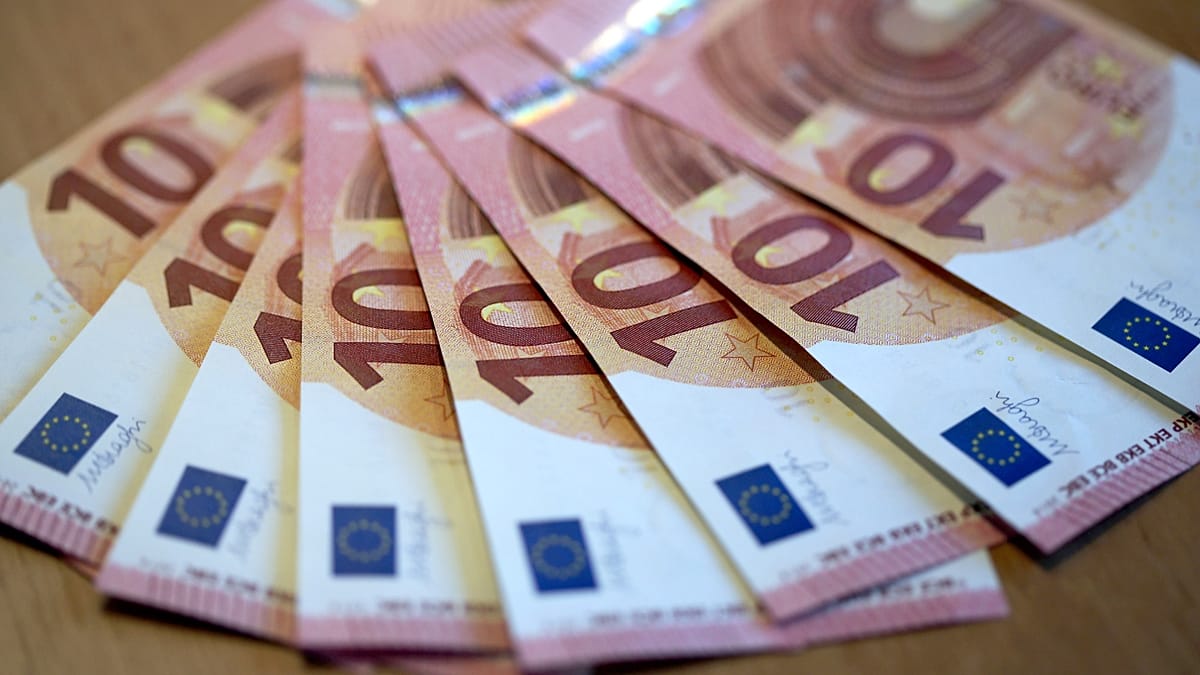
Italy has proposed introducing an exemption for digital euro transactions under €10 in a move that would favour small businesses, according to sources consulted and documents seen by Euronews

The move is viewed favourably by the central banking community, in particular by the European Central Bank (ECB), a source from the banking sector told Euronews.

The digital euro is a digital form of payment, expected to complement cash, with the ECB aiming to be ready for a potential first issuance in 2029, assuming the necessary regulation is adopted this year.

As Europe mainly relies on US-based payment schemes such as Visa and Mastercard, the EU is pushing for greater strategic autonomy in payments, with the digital euro seen as one potential solution.

It will have legal tender status, meaning merchants will generally be required to accept it, subject to certain exceptions. For this reason, legislators are negotiating how fees should be distributed among market participants, so that small merchants are not disadvantaged by the adoption of the new digital currency.

The distribution of fees among market participants, known as the “compensation model”, is among the most delicate parts of the negotiations in Brussels, alongside the “holding limits”, meaning the maximum amount of digital euro that can be held in a wallet.

“The proposal is a merchant service charge cap up to €0.02 for low value transactions, applicable especially to small merchants. But we’re open to consider a net zero, as de facto this would be the result anyway,” an EU diplomat told Euronews on condition of anonymity.

“Such a solution would also make the framework simpler,” the diplomat added.

According to internal documents seen by Euronews in relation to the negotiations, the fee scheme will be temporary, allowing the ECB to gather sufficient data before proposing a new model, if appropriate. The need for better data on payment fees has also been highlighted by the European Court of Auditors. In a 2025 report, the ECA found that the European Commission lacked sufficient data on merchant service charges and costs to effectively monitor the impact of existing price interventions in the payments market.

Other negotiation documents indicate that small merchants typically pay higher fees than large companies because they have weaker bargaining power with international payment schemes. These schemes are difficult for merchants to refuse, particularly when they are widely used. According to an ECB analysis, small merchants can pay three to four times more in fees than larger merchants.

The matter will be analysed by member states, the European Parliament and the European Commission during the next round of negotiations in Brussels, according to an internal document seen by Euronews.

Negotiators will meet again in Brussels on Thursday, 10 September, for further discussions.

Share. Facebook Twitter Pinterest LinkedIn Tumblr Email

Keep Reading

BMW’s strategy: Job cuts, AI and a €2bn bet on ‘Made in Germany’

Inflation accelerates again in Italy: September rate hits 4.2%, a three-year high

UK growth revised up to 0.5%: What drove the stronger figures?

Exclusive: Germany shields parts of Deutsche Börse from EU oversight

Fuel prices above two euros: who will foot the biggest bill in Portugal?

Diesel taxes in Europe: Which countries charge the most?

Stellantis to halt four French plants for several days over supply shortage

IEA could consider more oil reserve releases as Europe faces tough winter

France’s public debt soars to a record 119% of GDP

Editors Picks

European preference in defence is a ‘luxury’ debate, NATO chief tells Euronews

September 30, 2026

Qatar and UAE back Ethiopian government as fighting spreads beyond Tigray

September 30, 2026

BMW’s strategy: Job cuts, AI and a €2bn bet on ‘Made in Germany’

September 30, 2026

Macron and Sanchez say UK would be ‘welcome’ back in EU – POLITICO

September 30, 2026

Subscribe to News

Get the latest Europe and world news and updates directly to your inbox.

Latest News

‘There is no immediate threat to NATO territory,’ NATO’s Rutte tells Euronews

September 30, 2026

Video. ‘Let workers have a say’: Protesters target OpenAI conference

September 30, 2026

These 10 airlines have the best in-flight wifi – and only one is European

September 30, 2026
Facebook X (Twitter) Pinterest TikTok Instagram
© 2026 Daily Guardian Europe. All Rights Reserved.
  • Privacy Policy
  • Terms
  • Advertise
  • Contact

Type above and press Enter to search. Press Esc to cancel.