
Published on •Updated
The G7’s proposed release of up to 100 million barrels of oil to curb soaring energy prices aims to complete the outstanding portion of the 400-million-barrel emergency release coordinated by the International Energy Agency (IEA) in March, according to an internal document seen by Euronews.
“Of its 400 million barrels, 326 million have been released. Because some members over-delivered, the 100 million barrels in the G7 statement can be covered within the existing action if everyone fulfils their commitments,” reads the document.
The IEA members backed accelerating the March releases and completing them “as soon as possible” at an IEA meeting alongside the European Commission on 7 October.
The rush followed an ultimatum from Washington, which pressured Europe to release more of its crude oil and diesel or face an export ban on diesel. Global oil markets remain volatile with ongoing disruption in the Middle East, and Brent crude oil traded at $105 on Thursday.
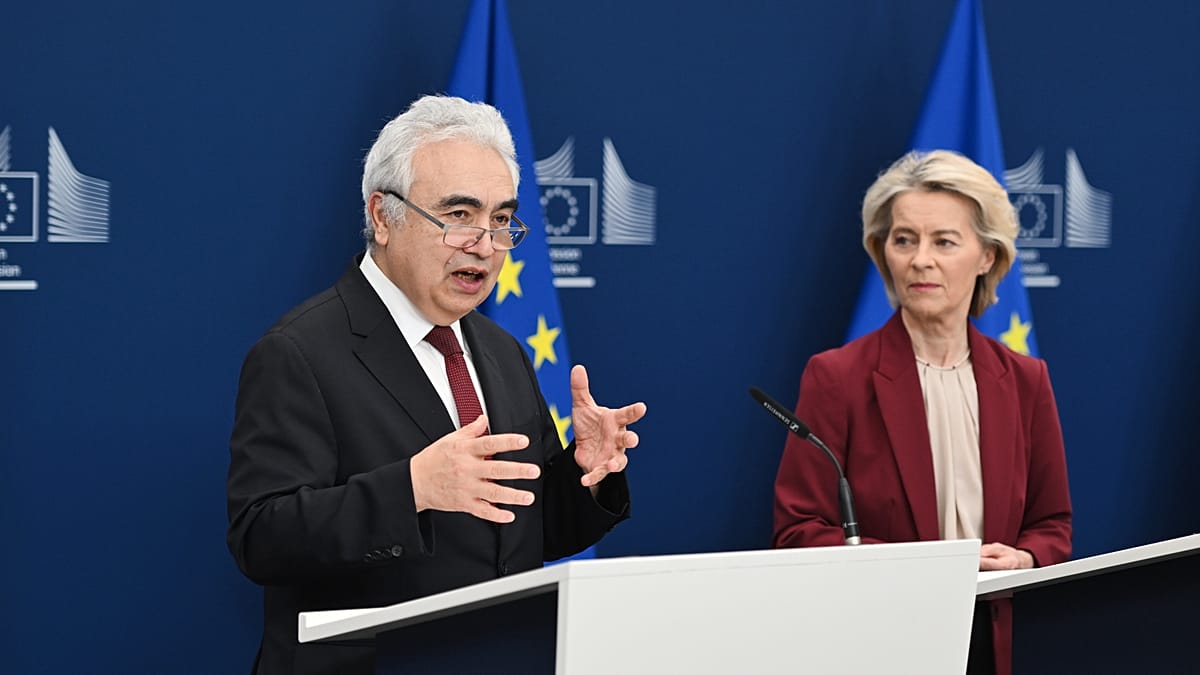
IEA chief Fatih Birol said that Middle Eastern crude flows are recovering significantly. However, refined-product flows, like diesel or jet fuel, remained severely constrained, with disruptions to Russian refining capacity and China’s export ban adding to the squeeze.
At the IEA-EU meeting, all participants backed prioritising diesel stocks given the current tightness in the market, with IEA data showing “a real physical disruption in diesel supply”.
Several European governments have already fulfilled their obligations, while others still have national procedures to complete. While the political agreement exists, delivery depends on national decisions over how strategic stocks are counted and released.
Greece, Italy and Portugal have met their pledged commitments. Emergency oil stocks from France, Germany, the Netherlands and Spain are under assessment.
Portugal questioned how effectively the IEA handles the emergency release and said it will only consider new commitments once all members have delivered their existing ones, noting that about 50 million barrels remain pending at EU level, according to the document.
Greece wants to know how much time the March release has bought so far.
Demystifying G7’s language
The internal document seen by Euronews clarifies the G7’s somewhat ambiguous wording in its latest announcements.
On 2 October, the group said it would fulfil its commitments through a 100 million barrel coordinated release over four months, including a substantial front-loaded diesel release within the first 20 days. It linked the move to the “immediate and full implementation” of the March 2026 commitments.
The Commission referred Euronews’ questions about the details of the latest G7 announcement to the IEA. But the IEA didn’t reply to Euronews’ requests for clarification on volumes and refined products.
In its 7 October statement, the G7 said participants in the IEA-EU meeting “emphasised their commitment to delivering on the March 2026 Collective Action”.
The March action was an extraordinary response to the Middle East supply shock, which followed the United States and Israeli military attacks against Iran on 28 February and the closure of the Strait of Hormuz.
IEA members originally agreed to make 400 million barrels available to the market, with the bulk of the contribution coming as crude oil and European countries supplying a greater share of refined products.
Fresh, new release could come
The IEA said members still hold around 1.1 billion barrels of publicly held emergency stocks, including more than 200 million barrels of diesel.
The Paris-based agency didn’t rule out further releases if necessary. For now, it is trying to squeeze the remaining barrels from the mechanism agreed seven months ago.
The IEA said the March releases had already helped plug part of the supply gap, but stressed that diesel markets remain particularly tight, making the October action different in emphasis from March.
The next political test comes on 15 October, when the IEA Governing Board gathers governments to settle the details of the operation, including volumes, timing and the type of refined oil products to be released.