
Eurozone inflation spiked to 3.8% year-over-year in September, marking the highest rate in three years and topping economists’ forecasts of a 3.6% rise.
The jump came almost entirely from one corner of the shopping basket.
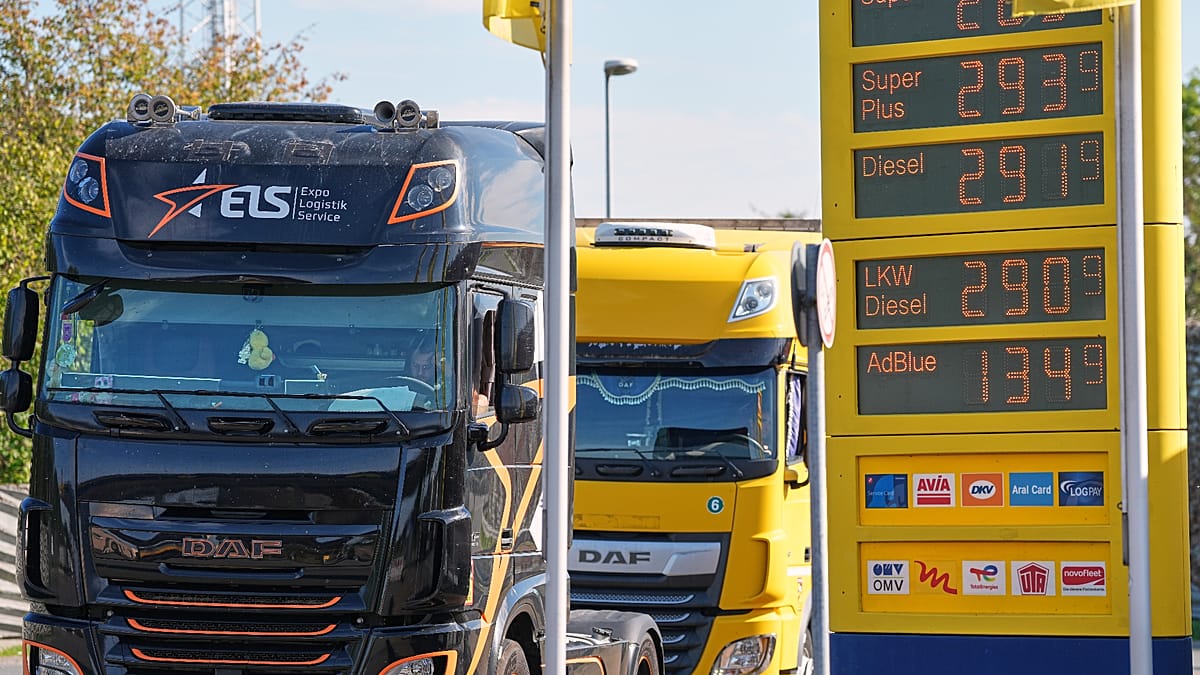
Energy costs explained close to half of the inflation rate.
The flash estimate from Eurostat showed prices rising 0.6% in September alone compared with August.
The reading is the highest since September 2023, when inflation ran at 4.3%. It is also almost double the European Central Bank’s 2% target, the level the ECB considers consistent with stable prices.
Core inflation told a calmer story. Stripping out energy, food, alcohol and tobacco, whose prices swing sharply from month to month, it edged up to 2.5% from 2.4%, exactly in line with forecasts.
That gap leaves the ECB with a central question. Is this an energy shock that will fade, or the start of broader price pressure?
Energy prices drove the eurozone inflation spike
Energy prices rose 18.8% from a year earlier, up from 14.3% in August. In September alone, energy prices climbed 3.9%.
Energy carries a weight of about 9% in the euro area inflation basket. At an 18.8% annual rate, it added roughly 1.7 percentage points to the 3.8% headline figure.
Services inflation rose to 3.2% from 3.0%. Services are the largest piece of the basket, accounting for about 47% of the eurozone inflation basket, and cover items such as rents, restaurants, travel and insurance.
Food, alcohol and tobacco prices increased 1.4%, up from 1.1% in August. Within that group, inflation for unprocessed food such as fresh fruit, vegetables and meat jumped to 4.0% from 2.7%.
Non-energy industrial goods, which include cars, clothing and household appliances, rose 1.1%, down slightly from 1.2%. It was the only major category where annual inflation slowed.
Where was eurozone inflation highest?
Lithuania recorded the highest annual inflation rate in the euro area at 6.1%, up from 5.6% in August.
Bulgaria, which joined the euro on Jan. 1, 2026, followed at 5.6%. Cyprus and Luxembourg both posted 5.2%, ahead of Greece at 5.1% and Spain at 5.0%.
In total, six of the euro area’s 21 member countries recorded inflation of 5% or more. Ten countries were at or above the 3.8% euro area average.
At the other end, Malta had the lowest rate at 2.4%, followed by Finland at 2.6% and Latvia at 2.9%. Latvia was the only member country where annual inflation eased in September.
Italy and France saw the sharpest moves among big economies
Inflation accelerated in all four of the euro area’s largest economies.
Italy posted the biggest increase among them. Its annual rate climbed to 4.1% from 3.2%, and Italian prices rose 2.0% in a single month, the largest monthly increase in the bloc.
France followed, with inflation rising to 3.4% from 2.6%. As a result, French inflation is now higher than Germany’s, where the rate rose to 3.3% from 2.9%.
Spain remained the highest of the four. Its inflation rate reached 5.0%, up from 4.6% in August.
What Eurozone inflation means for the ECB
The ECB raised its three key interest rates by 25 basis points on 10 September.
The deposit facility rate now stands at 2.50%. It was the ECB’s second increase this year, after a similar move in June.
Higher interest rates make borrowing more expensive for households and companies. That tends to slow spending. Over time, slower spending eases pressure on prices.
The ECB’s September projections see headline inflation averaging 3.0% in 2026, 2.5% in 2027 and 2.1% in 2028.
Policymakers meet next on 28-29 October in Frankfurt, with the decision due on 29 October. That meeting will not include new staff projections. The next set arrives in December.
The September data put a fresh warning in front of the ECB. Headline inflation is well above target and still rising.
Prediction markets assign a 91% chance of a further ECB rate hike at the end of the month.