




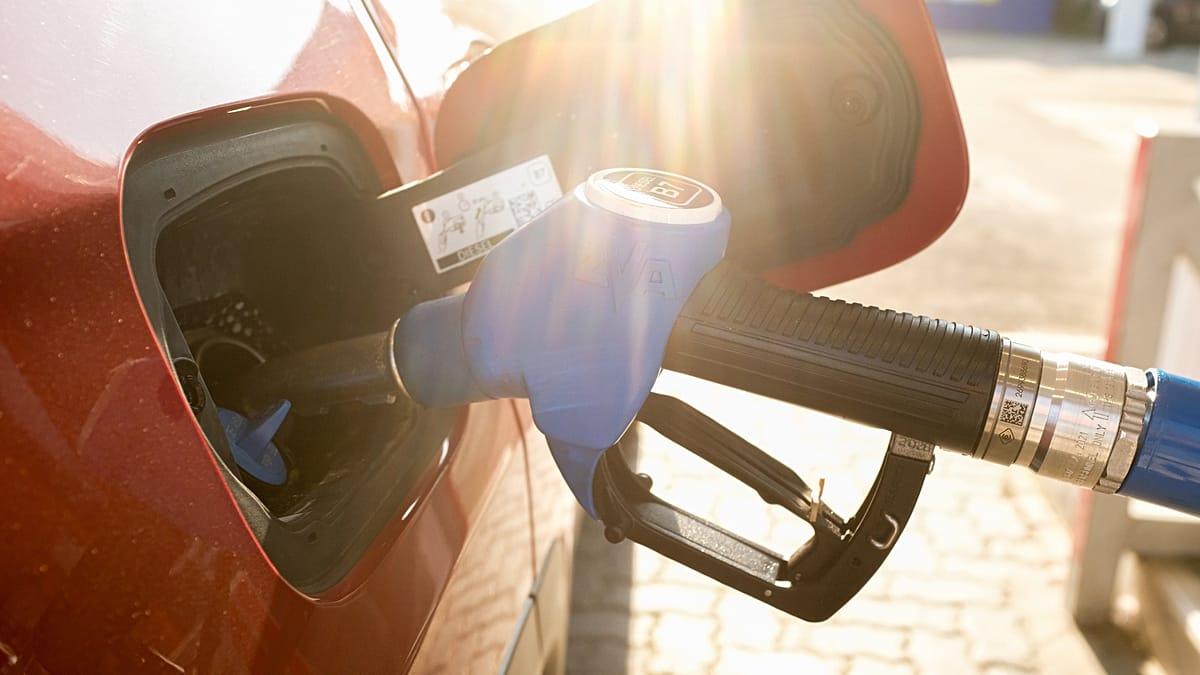
European motorists are paying record prices at the pump, while investors in the companies that produce and refine those fuels are having a remarkable year.
Europe’s renewed fuel crisis has driven a powerful rally in the region’s oil and gas companies, with share prices up between 40% and nearly 90% since January.
The biggest gains are not simply about crude oil. The more important story is happening inside refineries.
Shortages of diesel, petrol and jet fuel have pushed the gap between the price of crude and the price of the fuels made from it, known as the crack spread, to record levels.
That has turned a supply crisis for consumers into a profit windfall for parts of Europe’s energy industry.
Why refining has suddenly become so profitable
European diesel prices have risen far faster than crude oil because the global supply of refined fuel has been disrupted from two directions.
The conflict around Iran and the Strait of Hormuz has cut exports of diesel and jet fuel from Gulf refineries.
Russia, meanwhile, banned diesel exports this summer after Ukrainian drone attacks on its refineries, tightening a global market that Europe depends on.
The European diesel crack spread has almost doubled since November 2025, when it stood at about $46 (€40) per barrel, according to pricing agency OPIS.
The European Central Bank has noticed.
Speaking after the ECB raised interest rates on 10 September, President Christine Lagarde said that six months ago few people knew what refining margins were, but now “we all know what it’s about”.
Pointing to diesel, she called it “yet another bottleneck”.
The ECB said energy inflation rose to 14.3% in August from 10.3% in July, partly because of higher refining margins on liquid fuels.
ECB experts estimate the diesel margin now accounts for about 41 cents of every litre sold, almost a fifth of the pump price.
That backdrop explains why European energy stocks have become some of the strongest performers in the market this year.
Europe’s top 10 performing oil equities in 2026
Euronews screened European oil and gas companies with market capitalisations of at least €10 billion.
Here are the ten biggest gainers in 2026, based on market data through 23 September.
10. TotalEnergies: +40.58%
TotalEnergies has gained 40.6% this year, making it the tenth best performer in the group.
The French energy giant earned $6 billion (€5.3bn) in adjusted net income in the second quarter, up from $3.6bn a year earlier. Cash flow from operations reached $9.8bn (€8.6bn), and the company raised its interim dividend by 5.9% to €0.90 per share.
Its European refining margin rose to $13.5 per barrel from $4.7.
TotalEnergies reports third quarter results on 29 October. Analysts expect revenue of $54.2bn (€47.5bn), up 24% on the year, and adjusted earnings per share of $3.14, up 77%.
9. Eni S.p.A: +44.9%
Eni has risen 44.9% since January, putting it ninth in the ranking.
The Italian energy group more than doubled its adjusted net profit to €2.33bn and raised its share buyback to €3.4bn. Its refining volumes outside Italy fell 35% after the closure of Hormuz.
Results are due on 23 October, when analysts expect revenue of €27.6bn, up 37% on the year, and earnings per share of €0.79, up 92%.
8. OMV: +48.67%
OMV shares are up 48.7% this year, placing the Austrian group eighth.
The company reported a clean operating result, which strips out inventory gains and one off items, of €1.71bn in the second quarter, driven by a much stronger contribution from oil and gas production.
Its European refineries ran at 90% of capacity, up from 83% a year earlier, although temporary regulatory measures, especially in Romania and Austria, limited the gains.
OMV reports on 29 October. Analysts expect revenue of €7.7bn, up 23%, and earnings per share of €2.77, up 49%.
7. Galp: +49.28%
Galp has climbed 49.3% in 2026, enough for seventh place.
The Portuguese group lifted adjusted net income by 45% to €540m, as its refining margin nearly tripled to $16.8 per barrel. Output rose 12%, helped by its Bacalhau field in Brazil.
Results are due on 26 October, with analysts expecting revenue of €6.7bn, up 31%, and earnings per share of €0.69, up 92%.
6. Romgaz: +53.55%
Romgaz has gained 53.6% this year, making it the sixth best performer, despite a much less straightforward earnings picture. The Romanian state company sells natural gas at regulated prices and does not refine fuel.
First half revenue fell 8.6% to RON 3.88bn (€735m), while net profit rose 3.4% to RON 1.74bn (€330m). The shares have fallen almost 23% over the past month.
Romgaz reports on 13 November.
5. Orlen: +55.59%
Orlen has advanced 55.6% this year, ranking fifth in the group.
Poland’s state controlled refiner generated PLN 76.5bn (€17.5bn) in second quarter revenue and a net profit of PLN 7.68bn (€1.75bn), more than five times last year’s figure. Record profits from its petrol stations abroad helped.
It has brought its results forward to 5 November, when analysts expect revenue of PLN 63.4bn (€14.5bn), up 4%, and earnings per share of PLN 5.52 (€1.26), almost three times last year’s level.
4. Vår Energi: +56.18%
Vår Energi has gained 56.2% in 2026, the fourth best performance in the group.
Unlike the refinery heavy names, the Norwegian company’s rally is linked directly to oil and gas production.
Second quarter output rose 31% from a year earlier to 376,000 barrels of oil equivalent per day. It generated $2.1bn (€1.84bn) of operating cash flow after tax and cut net debt to $3.4bn (€2.98bn).
In July, Vår Energi agreed to combine with BlueNord, creating what the companies describe as Europe’s largest independent oil and gas producer.
Results are due on 21 October. Analysts expect revenue of about NOK 30.6bn (€2.83bn), up 43%, and earnings per share of NOK 1.48 (€0.14), almost three times the level of a year earlier.
3. Equinor: +67.89%
Equinor has risen 67.9% this year, placing the Norwegian giant third.
The state backed group reported adjusted operating income of $11.48bn (€10.07bn) in the second quarter. Adjusted earnings were $1.33 (€1.17) per share, and production rose 3%.
Equinor benefits from Europe’s renewed focus on energy security, as Norway remains the continent’s main supplier of pipeline gas and a major source of crude.
It reports on 28 October, when analysts expect revenue of $33.2bn (€29.1bn), up 27%, and adjusted earnings per share of $1.36, almost four times last year’s $0.37.
Analysts expect revenue to grow almost 20% this year, before falling about 9% in 2027.
2. Neste: +76.35%
Neste has surged 76.4% this year, second only to Repsol.
The Finnish group shows exactly why refining margins matter.
Comparable EBITDA, a measure of operating profit before depreciation and one off items, hit a record €1.20bn in the second quarter, compared with €341m a year earlier.
Its oil products business more than doubled its contribution to €334m, which the company attributed mainly to exceptionally wide margins on diesel and jet fuel.
Earnings per share jumped to €1.00 from a five cent loss a year earlier.
Neste also makes renewable diesel and sustainable aviation fuel, which has made it one of the clearest winners from both scarce conventional fuel and demand for alternatives.
Results are due on 29 October. Analysts expect revenue of €5.1bn, up 12%, and earnings per share of €0.81, almost six times the level of a year earlier.
1. Repsol: +87.19%
Repsol has gained 87.2% this year, the best performance among Europe’s large energy stocks.
Its adjusted net income reached €2.71bn in the first half. Its industrial division, which includes refining, alone generated €1.68bn of that, compared with just €235m a year earlier.
Repsol reports on 29 October. Analysts expect earnings per share of €2.06, roughly three times last year’s €0.68.
Revenue is expected to rise by more than 31% in 2026. But analysts forecast a fall of almost 17% next year, the sharpest decline expected among the ten companies.