
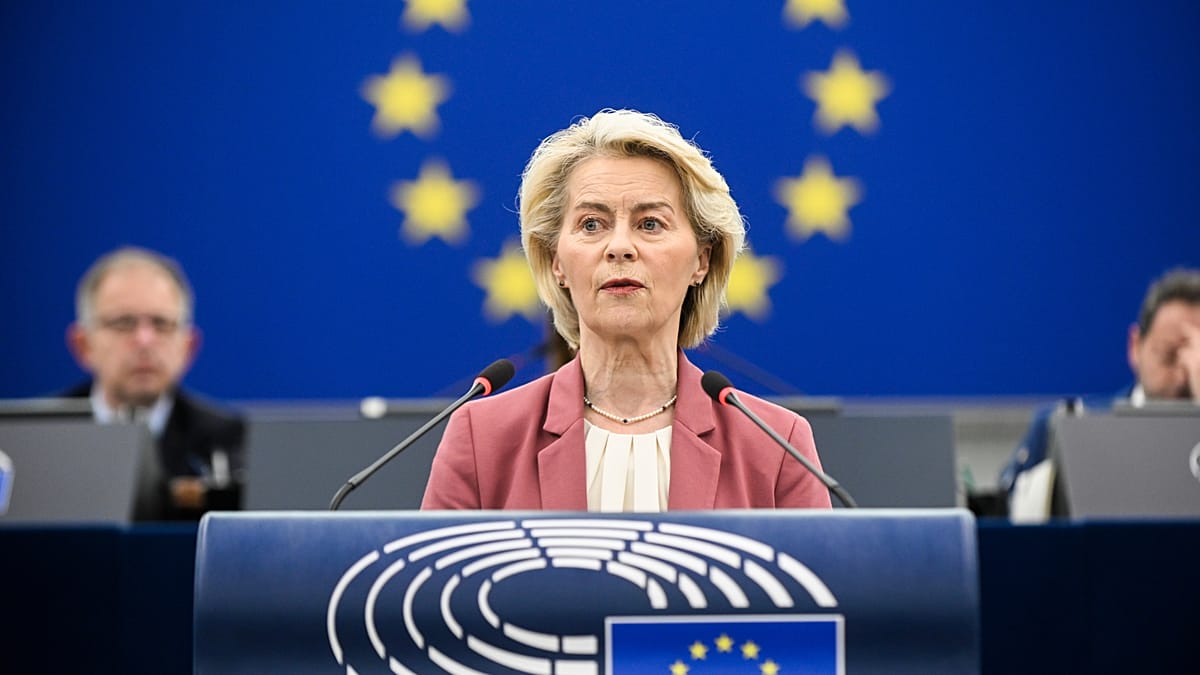
The European Commission is weakening environmental rules to accelerate controversial industrial and energy projects across Europe, framing the changes as necessary in response to global energy disruptions, according to a new report published on Tuesday by the influential watchdog Corporate Europe Observatory (CEO).
CEO claims Brussels is using the ongoing energy crisis to justify sweeping deregulation measures that benefit fossil fuel companies, mining firms, hydrogen developers, and major technology corporations.
The findings are likely to intensify debate in Brussels over how to balance rapid industrial expansion and climate goals with environmental safeguards and democratic oversight, just a day after the EU executive announced a nearly €4 billion increase in free polluting allowances for the energy-intensive industry under the bloc’s carbon market.
According to the report, proposed EU legislation would fast-track approvals for projects considered “strategic” or in the “overriding public interest”, potentially allowing them to bypass environmental assessments and public scrutiny.
“The current energy crisis is finally pushing Europe away from its reliance on fossil fuels,” said Pascoe Sabido, CEO researcher and campaigner. “But successful industry lobbying means measures intended to fast track renewables are now being used to build polluting infrastructure.”
Impact on land, health and livelihoods
Overall, the reforms proposed by the EU executive risk undermining environmental protections, campaigners warn, limiting the ability of local communities to challenge projects that could affect their health, land and livelihoods.
Hydrogen transport and large-scale data centres are flagged by their potential to undermine environmental and social standards.
In Sweden, mining developments for critical raw materials deemed crucial for the bloc’s energy transition are said to threaten Indigenous Sámi communities and local water systems.
In Ireland, growing electricity demand from data centres is reportedly increasing pressure on the national grid and contributing to new fossil fuel power generation. Rapid expansion of Irish data centres is also increasing blackout risks, the CEO argues.
The report specifically highlights concern about infrastructure linked to fossil gas, including carbon dioxide transport pipelines, arguing that these projects are being fast-tracked by permitting loopholes that could prolong fossil fuel dependence.
“But as accidents in Yazoo County, United States, have shown, they pose a major health risk. Leaks can lead to asphyxiation, mass-hospitalisations and long-lasting health impacts. Given the much higher population density in Europe, a ruptured pipeline could even prove fatal,” reads the CEO report.
Industry’s ultra-influence in policymaking
The analysis further alleges that industry demands have been incorporated into several upcoming EU legislative proposals, including the Environmental Omnibus, which brings changes to EU water rules, the Grids Package, and the Industrial Accelerator Act, which features a European preference in public procurement.
These measures, the CEO argues, could reduce environmental impact assessments, expand automatic permit approvals and restrict access to legal appeals.
MEP Niels Fugslang (S&D/Denmark), in charge of the European Parliament’s legislative proposal to accelerate permit-granting procedures, backed the “broader use of overriding public interest” for renewable energy projects and “the use of tacit approval” to ensure projects do not drag on due to delayed administrative procedures.
Fugslang also backed the need for an exemption from EU water rules for grid projects, arguing the current requirements are “highly time-consuming with minimal environmental impact”.
“I believe we have an obligation to ensure accelerated permit-granting procedures and a faster roll-out of renewables and grids to gain European independence, increased competitiveness, and to fast-forward the green transition,” the Danish MEP recently wrote on LinkedIn, noting the lengthy process to get permits to boost clean power.
The Commission has defended its broader simplification agenda — also seen as a deregulation process by many in Brussels — as necessary to speed up Europe’s energy transition, strengthen industrial competitiveness and cut dependence on imported fossil fuels.
However, environmental groups argue that accelerating permits for polluting infrastructure risks locking Europe into long-term fossil fuel dependence rather than channeling investments into clean power, which would deliver energy more quickly.