Published on
Europe is building a federated cloud and artificial intelligence (AI) infrastructure that its architects say could fundamentally change the continent’s relationship with big US and Chinese technology providers.
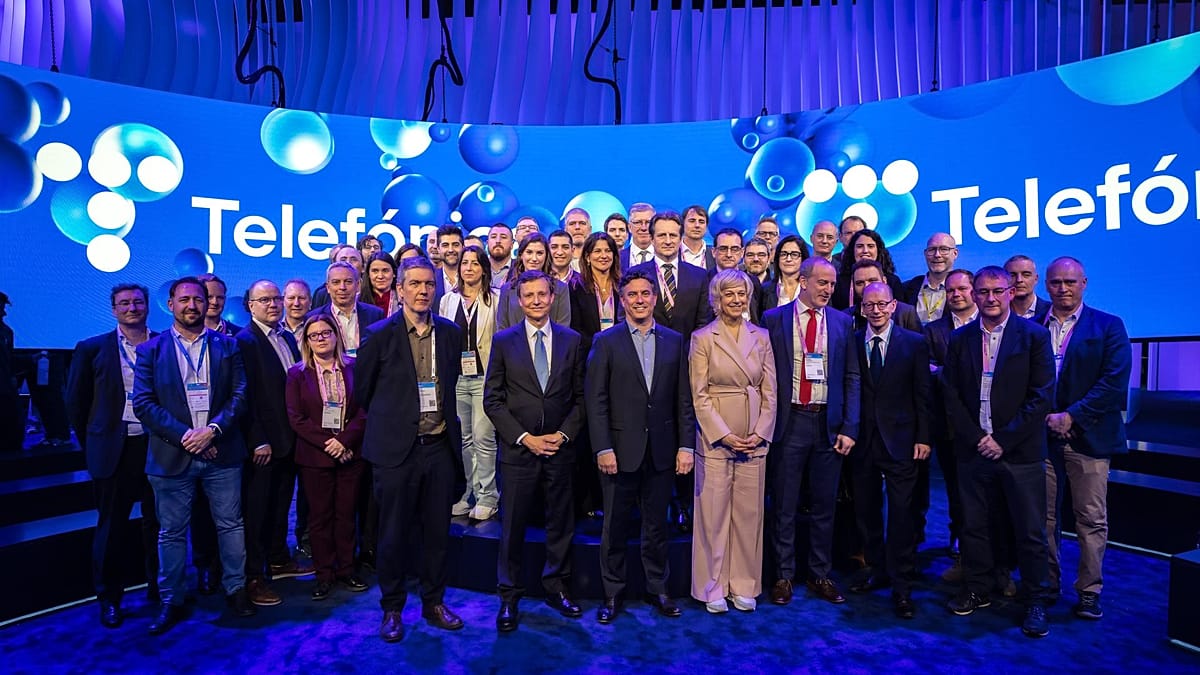
Telecom giant Telefónica announced the project, called EURO-3C, which is backed by the European Commission, at the Mobile World Congress in Barcelona.
It brings together more than 70 organisations — spanning telecommunications operators, technology companies, startups and small and medium-sized enterprises.
“We will provide the first federated secure and sovereign model where cloud, AI and edge are going to be able [to work together] so we can accelerate a lot of digital services on top of that,” Sebas Muriel Herrero, chief digital officer at Telefónica, told Euronews Next.
Rather than building a single European cloud platform from scratch, the project is connecting existing national infrastructure into a federated network of nodes that will operate across borders.
“It’s very difficult that Europe can create a hyperscaler from zero, from scratch,” said Muriel Herrero.
“Europe right now needs to invest in creating technology and not only using technology that provides us a lot of dependency on other providers from the United States or China,” he added. “This is really important. Because in this new era, scale is important.”
The move comes as Europe questions its overreliance on US information technology (IT) infrastructure following US cloud outages last year, which is a dependency many argue poses strategic, economic and security risks.
The project joins the efforts of a very large number of European players around a common goal, “to build a secure and sovereign convergent communications landscape, for the benefit of industrial sectors supplying and using technology, and for society at large,” Renate Nikolay, deputy director general at the European Commission, said at the Mobile World Congress.
Telefónica officials at the tech conference said several industries would be a priority for the new infrastructure, including automotive, e-health, public services and sovereign government cloud. There was also a strong emphasis on agentic AI, AI systems that can take autonomous actions.
“This is the pillar, this is part of the future on top of which we will be able to really develop our own technology,” said Muriel Herrero.