


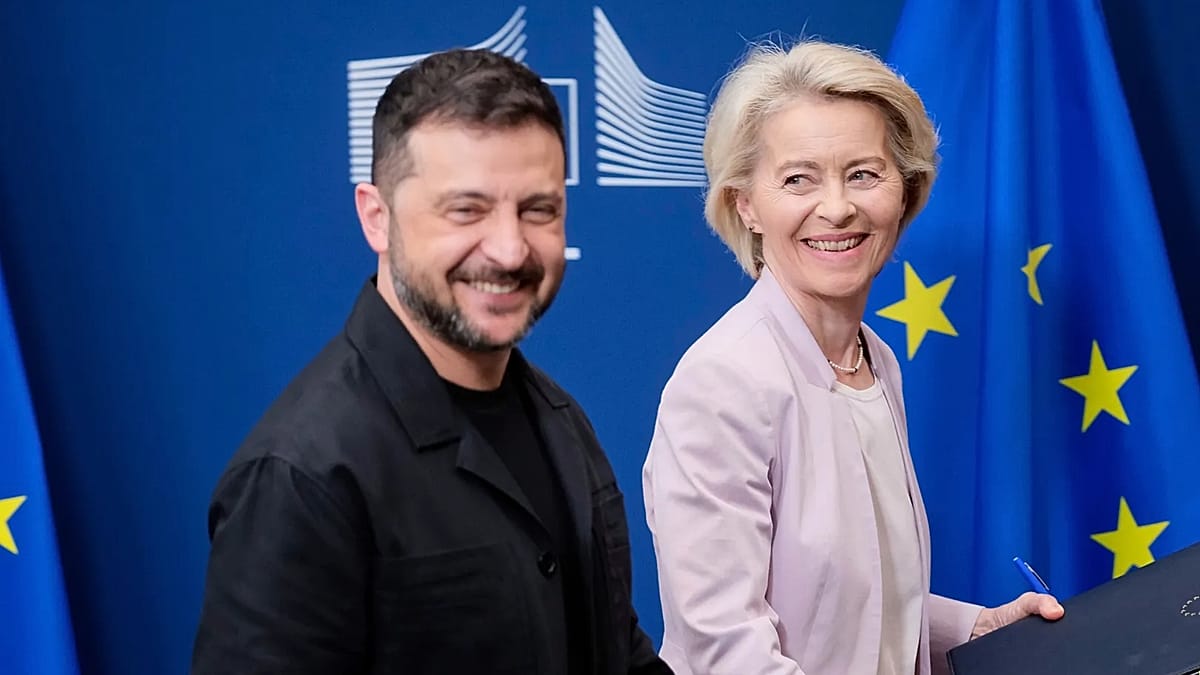



In a joint statement on Sunday, Merz and his counterparts in France and the U.K. — together with Ukrainian President Volodymyr Zelenskyy — called for “direct dialogue between Ukraine and Russia with active U.S. and European participation” and set out five conditions to achieve peace, including an immediate and complete ceasefire.
The current contact line between Russian and Ukrainian forces must be the starting point for negotiations, the statement read, and Ukraine must have “robust and legally binding” security guarantees in place. Russian assets must remain frozen until the Kremlin “ceases its war of aggression and compensates Ukraine for the damage caused by the war.”
European leaders will further discuss their approach to potential peace talks at a G7 meeting in Evian and during a European Council summit in Brussels next week, Kornelius said.
“We need the broadest possible support from all European partners in order to actually push toward peace,” he said.
It remains unclear, however, whether Russian President Vladimir Putin is willing to sit down with European leaders, who were excluded from direct negotiations despite having long sought a greater role in shaping a possible resolution to the conflict.
Europeans countries, and particularly Germany, have become Kyiv’s biggest military supporters and would likely take a tougher line in negotiations with Moscow than their U.S. counterparts. Zelenskyy sent an open letter to Putin last Thursday urging him to meet to end the fighting, but Putin brushed off the plea the following day.


