
The European Commission disputed Russia’s claim on Tuesday that the EU spent $320.7 billion (€286 billion) on energy from Moscow since 2022, citing a significantly lower figure, according to a Commission spokesperson.
Contrary to Moscow’s claims, Russia supplied the EU with €197 billion ($209 billion) worth of energy between March 2022 and July 2026, the Commission spokesperson said, citing COMEXT data, the official reference database managed by Eurostat.
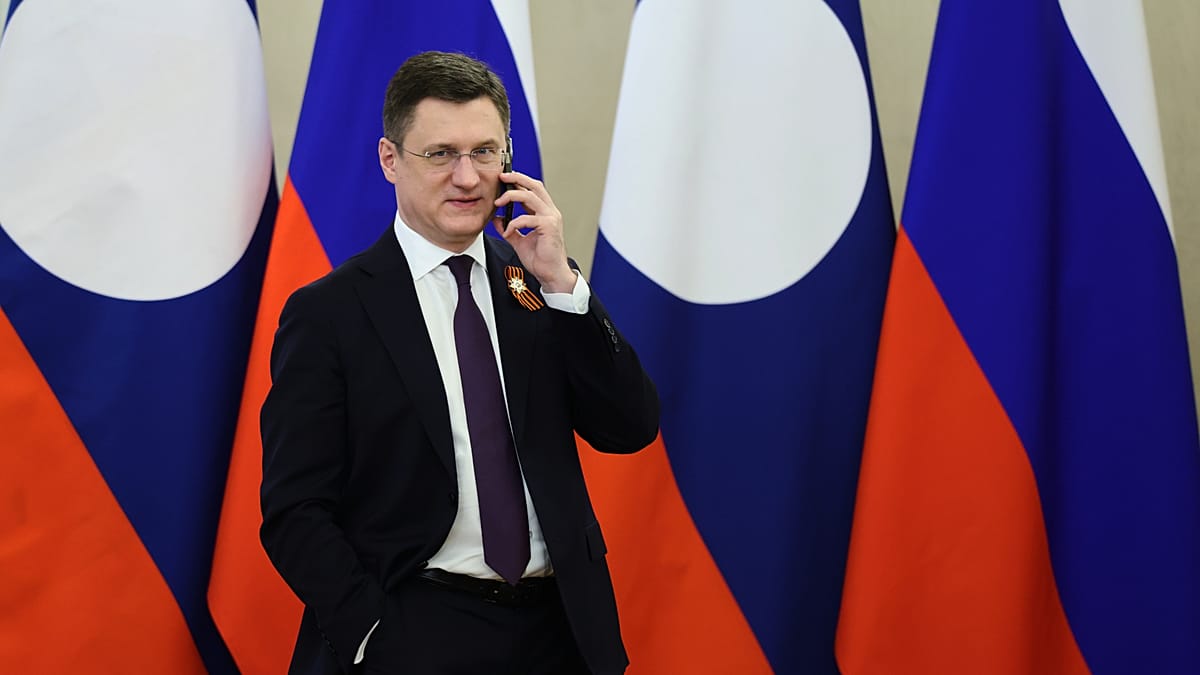
Russian Deputy Prime Minister Alexander Novak said late Monday that the EU had purchased €302 billion ($320.7 billion) worth of Russian energy resources since 2022, highlighting the bloc’s continued reliance on Moscow despite Brussels’ efforts to sever energy ties, even as the EU faces gas shortages this winter.
But Brussels rejects those claims, stressing that the bloc’s efforts to ditch Russian energy have already borne fruit.
“The EU would have spent €475bn — an additional €278bn on Russian fossil fuels if REPowerEU hadn’t been launched,” the Commission spokesperson added, justifying the efficacy of the bloc’s plan to ditch reliance on Russian fuels.
REPowerEU was designed to reduce dependence on Russian energy through diversification, lower consumption and a faster transition to alternative energy sources shortly after Moscow invaded Ukraine.
By 2023, only 6% of the EU’s total fossil fuel expenditure went to Russia, according to the Commission spokesperson.
The Commission’s figures cover payments for energy imports through July 2026, while Novak refers to supplies since 2022 without specifying the commodities included, the valuation methods used or the exact period covered.
“I’m not in the position to confirm other people’s numbers. What I can confirm is that we have a clear declining trend of our dependency on Russia from 42%-45% in 2022 to 12% now,” Commission spokesperson Anna-Kaisa Itkonen told reporters on Tuesday.
Russia, US, float different figures
The figures also complicate US President Donald Trump’s claim on 12 October that the EU paid Russia $250 billion (€223 billion) for energy, which he has used to defend his “America First” approach, Trump wrote on Truth Social.
Moscow’s estimate is about $112 billion (€100 billion) higher than the Commission’s figure, while Trump’s claim is around $41 billion (€36 billion) higher.
The discrepancy reflects competing accounts of the EU’s energy trade with Russia at a time when Brussels is seeking to demonstrate that sanctions and its strategy to ditch reliance on fuel imports from Moscow have sharply reduced the bloc’s exposure to Russia.
Moscow’s message: Europe still needs Russian energy
Speaking to Russian state broadcaster Vesti, Novak said Russia had supplied €302 billion ($320.7 billion) in energy resources to EU countries from 2022 to the present.
“The figure for the period from 2022 to the present stands at $320.7 billion — that is the total volume of energy resource supplies to European Union countries,” the Russian minister said.
He added that deliveries worth $21.3 billion had already reached Europe in the first nine months of 2026, despite sanctions.
His remarks portrayed Western sanctions as insufficient to sever the energy relationship and presented Russia as a continuing supplier capable of responding to global market disruptions.
Novak said Russia was meeting its contractual obligations and supplying energy through routes where exemptions remained in place — such as the Arctic route, which has given Moscow €9.7 billion in the first nine months of the year for its liquefied natural gas (LNG).
He also argued that additional Russian diesel exports, including to the United States, could help ease market pressures caused by disruption in the Strait of Hormuz and reduced global refining capacity.
Trump turns Europe’s energy bill into a political argument
Meanwhile, Trump’s $250 billion (€223 billion) figure is being used to reinforce his argument that European countries have continued financing Russia while relying on the United States for security.
His social media post framed the figure as evidence that his America First policy was the right choice for US interests.
However, the Commission’s data suggests that the EU’s energy relationship with Russia is more complex than either Washington’s political narrative or Moscow’s headline figure suggests.
The EU has continued to import some Russian energy despite sanctions, particularly through remaining supply routes and specific exemptions.
The ongoing exemptions were a concession to landlocked countries like Hungary and Slovakia, as well as to long-term contract holders, to avoid legal penalties.
“For the time being, it is still allowed to import some energy from Russia, given that the last deadline for these imports will take place next year,” Itkonen added.
Under the bloc’s REpowerEU, Brussels plans to “completely phase out gas and LNG from Russia” by 1 January 2027.