


There are two films out in cinemas right now which celebrate the Final Girl – the beloved horror trope coined by Carol J. Clover, whose exploration of the now-seminal figure of the sole female survivor has evolved from virginal damsel in distress to badass heroine who challenges conservative societal norms.
Ready Or Not 2: Here I Come sees Samara Weaving reprise her role as Grace MacCaullay, who was the last woman / bride standing following the Le Domas family attempt to complete a sacrificial ritual in 2019’s excellent Ready Or Not.
Weaving is sensational (as always), and new cast member Sarah Michelle Gellar is a joy to watch on the big screen. However, considering the sequel comes six years after the original, it’s hard not to bemoan that this year’s offering feels like an unnecessary (and at times overly convoluted) rehash of the original. Ready Or Not 2: Here I Come does feature some decent kills and quips, and remains an entertaining watch in the moment. Hardly a killing, though.
The freshly released They Will Kill You, Kirill Sokolov’s English-language debut, fares better. It shares more than just some passing similarities with Ready Or Not 2 ’s “Kill or be killed by a demon cult” / “Eat the rich” / “Slash to protect your sister” premise, but is more delirious. Zazie Beetz stars as an ex-con hacking her way through a luxurious Manhattan apartment building to rescue her sibling – who also happens to be pursued by Satanists.
It’s a high-octane romp with a sly political sting and plenty of gory set pieces – leading to a more flattering comparison with Gareth Evans’ The Raid. And like Samara Weaving, Zazie Beetz proves to be a wonderful Final Girl.
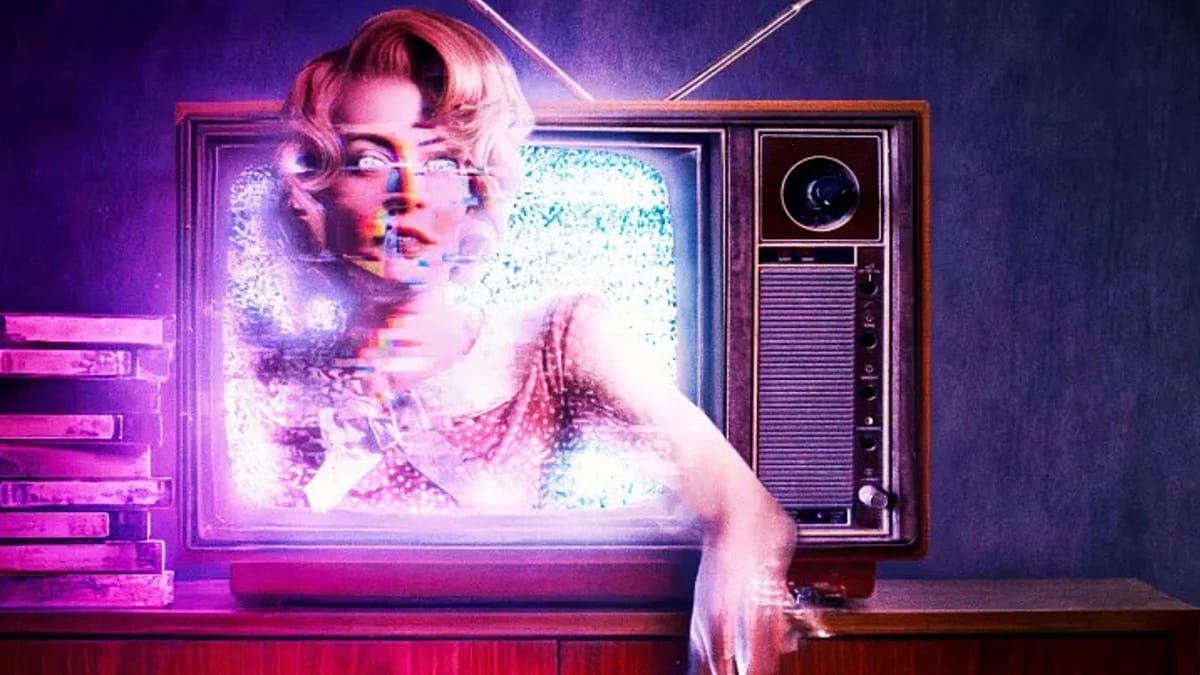
While both movies are a fun time at the talkies (especially They Will Kill You), our recommendation this week goes to a documentary which unites both these recent releases in the way it explores female figures in horror. Specifically, how women pioneers – from directors to performers – have shaped and revolutionized horror cinema.
Directed by Donna Davies, 1000 Women In Horror is the adaptation of Australian academic and programmer Alexandra Heller-Nicholas’ 2020 compendium book of the same name.
Featuring interviews with Roxanne Benjamin (There’s Something Wrong With The Children), Mary Harron (American Psycho), Kier-La Janisse (Woodlands Dark and Days Bewitched: A History of Folk Horror), Akela Cooper (M3GAN), Gigi Saul Guerrero (Satanic Hispanics) and more, the documentary is anchored by none other than Heller-Nicholas herself. She wastes no time is dispelling the delusion that “women aren’t fans of horror” and the falsehood that approaching the genre through the exploration of gender is a contemporary phenomenon.
“Sit down, little boys, the grown-ups are talking,” counsels Heller-Nicholas, starting as the documentary means to go on.
1000 Women In Horror is a passionate appreciation of how women, whether behind or in front of the camera, have always been a part of the horror genre and are an instrumental force in its evolution.
** Incidentally, if you haven’t read Kier-La Janisse’s “House of Psychotic Women: An Autobiographical Topography of Female Neurosis in Horror and Exploitation Films”, you’re missing out. Do something about it. **
Brass tacks: This is a blast and truly worth seeking out.
While the juxtaposition of talking-head interviews and film clips is nothing new on a structural level, several elements set this doc apart. There’s its infectious enthusiasm, as well as its honest treatment of thorny subgenres like the contradictions at the heart of cathars-inducing rape-revenge films. Crucially, and to its great credit, 1000 Women In Horror is not interested in being a stale history lesson. Rather, Davies and Heller-Nicholas deftly section it into chapters mirroring the stages of a woman’s life: “Girlhood”, “School Years”, “Pregnancy and Motherhood” and “Aging”. This chronology doesn’t concern itself with the linear history of horror but allows for a personal and ultimately holistic mapping of life experiences.
We hear fascinating perspectives about first brushes with horror; fears that stem from real-life experiences; intimate takes on navigating societal roles and a male-dominated industry (“I didn’t need a fucking dick to hold a camera,” exclaims filmmaker Mattie Do); what horror means to the interviewees; and perhaps most memorably, Kate Siegel (Hush, Midnight Mass) candidly recalling of her emergency C-section, an anecdote humorously and ingeniously juxtaposed with footage from Norman J. Warren’s Inseminoid and Ridley Scott’s Prometheus.
From early entries (The Seashell and the Clergyman, The Wasp Woman), expected horror classics (The Exorcist, Suspiria, Rosemary’s Baby) to modern gems (Revenge, Relic, Raw) and lesser-known deep cuts (Poison for the Fairies, Suicide Club), 1000 Women In Horror covers a hell of a lot of ground.
While no documentary can claim to turn every stone and fully encompass the dizzying breadth of such a topic, especially within a lithe 96 minutes, this film gives it a good go. In fact, its verve feeds into the doc’s only downside: 1000 Women In Horror would have worked better as a multi-part series – one which would have bought it more time to further delve into the multifacetted genre, as well as additionally probe how horror films have consistently subverted the “taboos” and roles society has imposed upon women.
Card carrying horrorphiles may crave more by the end of the runtime; but they’ll get over it as they’ll be too busy updating their watchlists. And when your chief niggle is that the film you’ve just watched isn’t long enough, bellyaching feels a bit greedy.
As it is, this works as a visually engaging starting point for those curious about the history of the genre, as well as an insightful celebration that will delight die-hard dreadheads. Even better, it’s an impassioned “fuck you” to anyone who still fools themselves into believing that horror is a boy’s club.
1000 Women In Horror is currently streaming on Shudder.