
Germany, Austria, Denmark, Finland, the Netherlands and Sweden want to cut the EU’s proposed long-term budget for 2027–2034, but have yet to agree on how much.
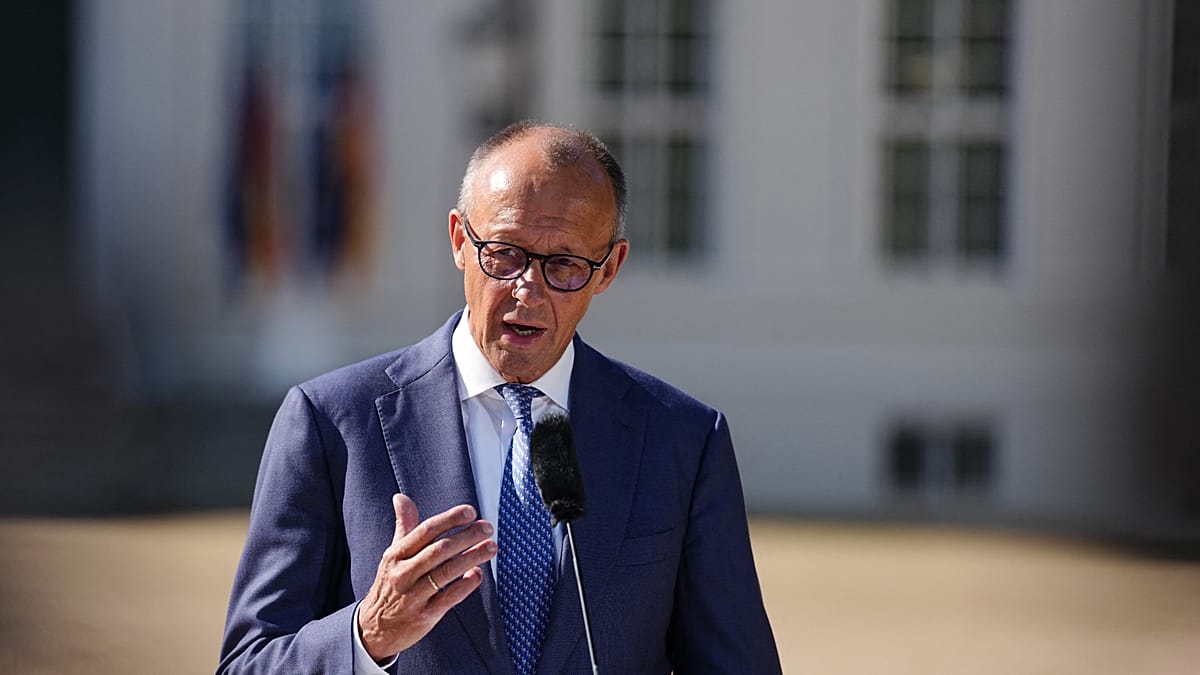
German Chancellor Friedrich Merz hosted the leaders of Finland, Austria and Denmark for a lunch meeting in Berlin on Thursday to discuss cuts to the EU’s next seven-year budget. The prime ministers of the Netherlands and Sweden joined by video conference.
The meeting of the so-called “frugals” — vocal net contributors to the EU budget — was intended to reaffirm their shared demand to reduce the budget’s overall size. But they again failed to agree on a figure.
“We will continue to handle this in the same way as a group. We agreed on this today because we share a common interest in advocating for realism and reforms in these negotiations,” Merz said at a subsequent press conference.
“We finance around 40% of the European budget. This means that we are, so to speak, the group of major contributors to the European budget,” he added.
Opposing camps
In July 2025, the European Commission proposed a €2 trillion EU budget, which is now being negotiated by the 27 member states. Two camps have emerged.
The “Friends of Cohesion” want to protect agriculture, fisheries and regional funding, which the Commission’s proposal would cut compared with the current budget. The group includes 17 member states, among them Spain, Italy, Poland, Hungary and Portugal.
The “frugal” camp wants to significantly reduce the overall budget and redirect spending towards priorities such as competitiveness and defence. They have increasingly styled themselves as the “modernisers”.
In June, Cyprus, which was then chairing the member states’ discussions, proposed a compromise involving a €32.8 billion cut, focused on programmes favoured by the modernisers.
“The European budget must prioritise competitiveness and security. We also need, as the Chancellor just said, to build a stronger economy,” Danish Prime Minister Mette Frederiksen said.
She called for an EU budget that is “responsible and understandable for our citizens”.
Fresh proposal needed
Cyprus traditionally belongs to the Friends of Cohesion camp but did not sign the group’s May letter, in line with the neutrality expected of the rotating presidency. For the frugals, however, the Cypriot compromise fell well short of a genuine middle ground.
They argue that the Commission’s proposal would increase the budget by up to 60% at a time when national finances are already under pressure from rising defence spending and aid for Ukraine.
Ireland, now chairing the talks, must produce a fresh compromise before the European Council summit in mid-October — the key target of Thursday’s show of unity.
European Council President António Costa is also touring European capitals to discuss the budget, with the aim of securing a deal by the end of the year.
With 2027 set to be a major election year in several member states, including France, Italy, Poland, Finland, Greece, Spain, Slovakia and Estonia, EU leaders face pressure to reach an agreement before campaigning gets underway.
Finnish Prime Minister Petteri Orpo reiterated his commitment to reaching a deal by year-end, but “not at any cost”.
“We are not stingy, but allocations such as those proposed by the Commission are simply out of step with the times. We want a European budget that is commensurate with our aspirations for a sovereign and strong Europe,” Merz said.
No figure agreed
While the frugal countries broadly agree on the need for cuts, they have yet to converge on a target for the overall budget or how deeply to cut the Commission’s proposal.
German government spokesman Stefan Kornelius told Die Zeit that Berlin wants the total EU budget reduced to €1.6 trillion — around €400 billion below the Commission’s proposal.
Other governments have focused on national contributions rather than the overall budget. The Dutch government told parliament it wants to ensure that Dutch contributions from 2028 onwards increase by €1.6 billion less than currently proposed.
Sweden, expected to take a tougher line after its upcoming election, wants national contributions capped at 1% of gross national income, compared with the Commission’s proposed 1.26%.
The group’s joint statement remains vague, saying only that the Commission’s “nearly €2 trillion” proposal must be reduced by “several hundred billion euros” in a balanced manner.
Those differences could ultimately weaken the frugals’ leverage: the group of wealthy net contributors has traditionally wielded significant influence in budget negotiations precisely because it has acted as a united bloc.