


After months of tensions, relations between Brussels and Beijing are entering a crucial phase, with the European Commission having set October as a deadline to secure “tangible” results with Beijing to rebalance their trade relationship.
The stakes are high for the EU, whose trade deficit with China has now reached a record €1 billion a day.
Key talks will take place in Beijing at the end of this week between EU Trade Commissioner Maroš Šefčovič and his Chinese counterpart, Wang Wentao. They will be followed next week by a meeting of EU leaders, with China set to top the agenda.
For European policymakers, the diagnosis is increasingly clear: the situation is unsustainable, with a new wave of Chinese competition putting pressure on the EU’s industrial base two decades after China’s rapid economic expansion began — and putting thousands of jobs at risk.
“A massive industrial shock is affecting sectors at the heart of the European industrial model and of systemic relevance [pharmaceuticals, aerospace, automotive, machine tools, chemicals, etc.],” reads a Franco-German document which was sent on Monday to capitals and Commission President Ursula von der Leyen.
Ahead of these crucial ten days, Euronews takes a deep dive into the EU-China relationship. Here are five things to know.
1. Brussels seeks a breakthrough in Beijing
After several weeks of discussions held at a technical level between EU and Chinese officials, Šefčovič will travel to Beijing on Thursday and Friday for high-level political discussions with Wentao.
Negotiations were launched last June, with the Europeans hoping to secure commitments from Beijing to rebalance the trade relationship. At the heart of the discussions is Chinese access to the EU market of 450 million consumers, with the Europeans seeking to protect EU industry from a wave of low-cost Chinese imports.
“Today we’re losing thousands of jobs every week,” EU Industry Commissioner Stéphane Séjourné told Euronews in an exclusive interview three weeks ago, adding that the EU had already lost 250,000 industrial jobs last year.
The Europeans also want to secure exports of rare earths from China, which are essential for EU industry, after Beijing blocked them amid a trade war with the US in 2025. Exports eventually resumed, but the truce runs only until 10 January 2027.
For the Commission, this week’s talks are essential, as EU leaders expect concrete results from the EU executive for their meeting next week.
2. The German shift
EU member states’ approach to China has evolved since Germany came to recognise that its economy — the bloc’s largest — was increasingly exposed to Chinese competition. In 2024, Berlin opposed EU tariffs on low-cost Chinese electric vehicles (EVs). But in recent weeks, Germany has moved closer to France, which has taken a tougher stance and advocated stronger measures towards China.
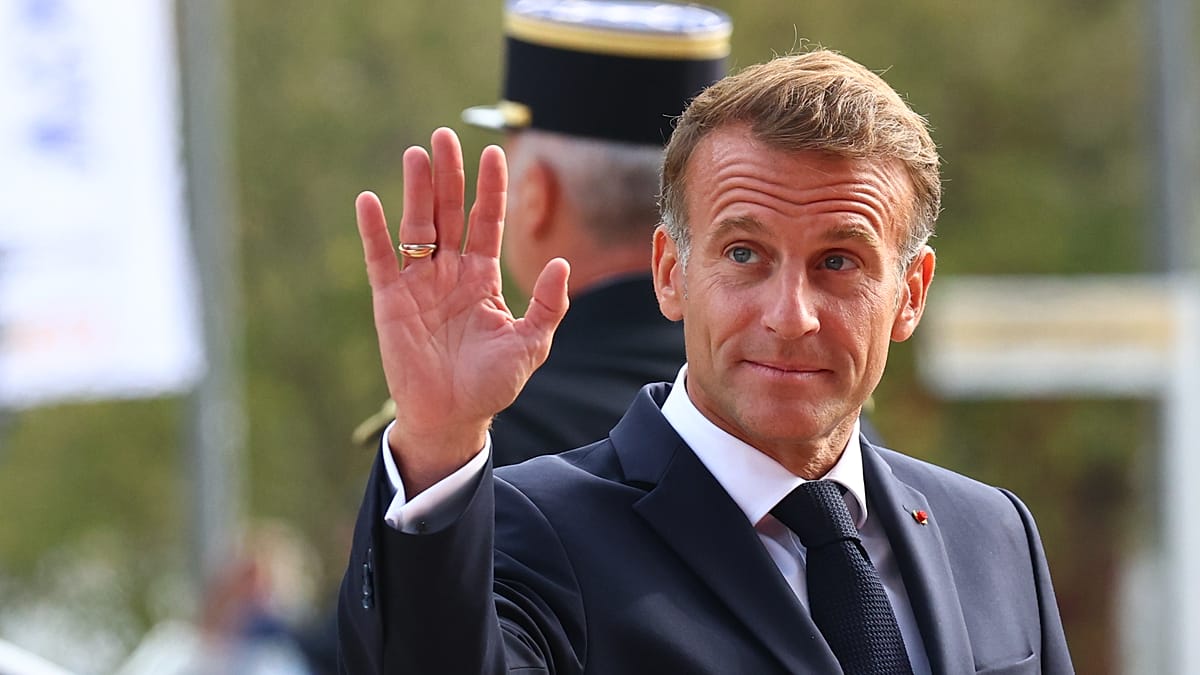
German Chancellor Friedrich Merz and French President Emmanuel Macron called on Monday, in a letter to Commission President von der Leyen, for “the full use” of the EU’s existing trade defence instruments and for a “comprehensive framework” with new legal instruments.
In a document accompanying the letter, they listed proposals, including a new tool that would be in the hands of the Commission to allow a “decisive and systemic reaction,” including measures that could lead to “an immediate cut-off from the internal market if needed.”
The Commission would activate the tool unless a qualified majority voted against it. By introducing a reversed qualified majority voting system, the two leaders hope to make EU action easier and faster.
However, among member states, Madrid remains one of the most cautious towards China, despite having sought Chinese investment for several years.
Spain’s domestic political situation, with Prime Minister Pedro Sánchez calling for new elections, could nevertheless limit Madrid’s opposition to the EU’s strategy towards China.
3. Industry is bracing for tougher measures
Across Europe, European businesses are calling for tough action despite the risk of retaliation.
They want the EU not only to protect European industry through trade policy, but also to reduce its dependence on China, given the bloc’s critical vulnerabilities. Beijing demonstrated the risks of these dependencies in 2025, when it restricted exports of rare earths and chips essential to the automotive industry amid a dispute involving Dutch-based Nexperia.
The Federation of German Industries, the BDI, published a report on 25 September, saying that “systemic competition with China’s economy is increasingly calling into question the resilience of the open social market economy.”
It added: “Even if de-risking entails costs — including in the form of countermeasures — inaction would be significantly more costly economically in the long term and irresponsible from a security policy perspective.”
On 29 September, the Commission launched a consultation with EU businesses to help shape new measures, including a diversification tool aimed at addressing situations where reliance on a single supplier country poses a risk to the EU’s security of supply.
4. Will China play ball in the negotiations?
Since they began last June, negotiations between the Commission and Beijing have made little progress.
Beijing wants to maintain access to the EU market, while the Commission is seeking to negotiate import quotas by product. However, China holds important leverage in the talks, as it has a global monopoly on the production and processing of rare earths, which are key to the EU’s green tech, defence and car industries.
China already pushed back against a Commission proposal for “voluntary export restrictions” on EVs. On 20 September, a Chinese spokesperson said that such measures were contrary to the “principle of fair competition.”
“China’s position is consistent. Any solution between China and the EU must ensure a balance of interests, comply with WTO rules and their respective domestic laws, and fully accommodate the interests of industries on both sides,” the spokesperson said.
5. Is a trade war on the horizon?
Tensions are mounting between the two sides, with both refraining from more aggressive moves.
Before negotiations started in June, the EU had already proposed the so-called Industrial Accelerator Act and the Cybersecurity Act, restricting access to the EU market for Chinese companies, with Beijing threatening of retaliation.
Since June, the Commission has continued to open probes into Chinese products over unfair trade practices, irritating Beijing, which over the summer forbade its companies from cooperating with Brussels on antitrust probes.
According to several people familiar with the matter, EU countries are also holding back the launch of an investigation into the chemicals sector that could lead to safeguards — tariffs and quotas.
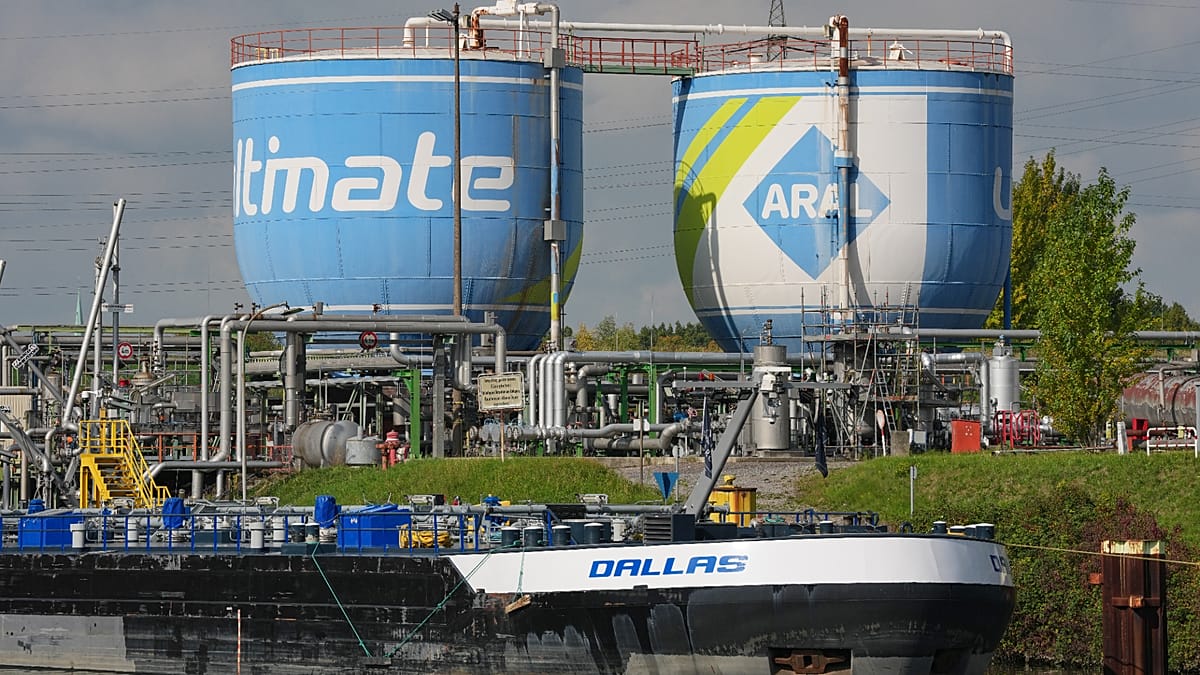
Finally, last Saturday, China put pressure on the Europeans ahead of this week’s critical talks by launching an investigation into EU chemicals, suspecting dumping of EU p-nitrotoluene. The move follows an investigation by the EU, opened in September, into polyvinyl chloride imports from countries including China.