
The European People’s Party (EPP) has urged Climate Action Commissioner Wopke Hoekstra to significantly recalibrate the bloc’s carbon market, the Emissions Trading System (ETS), by allowing more free pollution allowances to heavy industry beyond 2030.
Issued in an internal document detailing the EPP’s position and seen by Euronews, the plea comes ahead of the European Commission’s proposal to revise the ETS rules, due on 15 July.
The EPP contends that protecting Europe’s manufacturing base has become as important as driving emissions reductions.
“The system has achieved these emission reductions in a market-based and economically efficient manner,” reads the document. “Nevertheless, further adjustments are needed to safeguard industrial competitiveness and to ensure a more effective and economically sustainable decarbonisation pathway.”
The ETS is the bloc’s mechanism for making companies pay for their pollution, with the dual aim of reducing emissions and encouraging industry to invest in more sustainable alternatives.
Since its launch in 2005, the mechanism has cut covered greenhouse gas emissions by approximately 50 percent, gaining the status of the bloc’s most effective climate policy tool.
However, some industries receive free allowances, or “pollution permits”, instead of having to buy them, mainly because they consume a lot of energy, compete with companies in countries that don’t have carbon pricing or can’t easily reduce their emissions overnight.
EPP wants more free allowances
Regardless of existing flexibilities, the EPP wants the upcoming Commission revision to ease pressure on heavy industry by slowing the decline in the allowances it receives to cover the carbon costs of its production.
The document reveals that the EPP – Commission President Ursula von der Leyen’s own political party – seeks to extend free allocations beyond 2030 for sectors where emissions cannot yet be eliminated and where international competitors face weaker climate obligations.
“Lowering the Linear Reduction Factor (rule that steadily reduces the total number of ETS allowances available each year) already from 2030 in line with the European Climate Law (85 percent domestic ambition), assuring allocation beyond 2039 to account for residual emissions from industrial processes, maritime transport and aviation,” reads the EPP document.
The party is effectively backing the Commission’s May proposal to extend polluting credits between 2026 and 2030, urging the EU executive to go even further, beyond 2030.
Under the 2026-2030 timeline, the industry will continue to receive free allowances covering about 75% of its emissions, the Commission said, estimating a financial loss of around €4 billion.
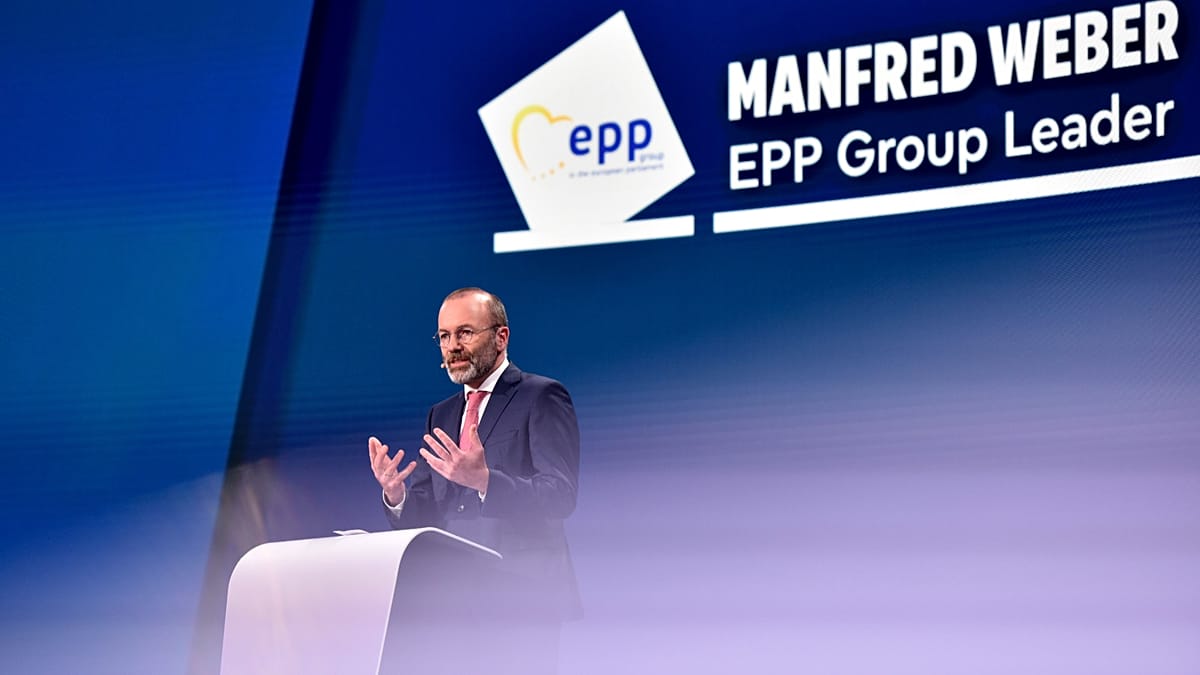
EPP President Manfred Weber told Euronews on Wednesday that the EU can’t “kill its industry due to climate change”.
The EPP’s position has already drawn support from some EU countries and industry sectors, prompting EU leaders to reconsider the decision to cut polluting permits to heavy industry, as announced on the sidelines of the EU summit of Heads of State and government in June.
“The European Council takes note of the Commission’s intention to come forward with a concrete proposal by mid-July 2026 on the review of the ETS system, including on free allowances (…) while preserving the essential role of the ETS in the climate and energy transition,” reads the Council conclusions.
However, the ETS battle is more nuanced than it appears.
Industries divided
Several ETS supporters have emerged across heavy industry sectors – the same sectors the EPP and some EU countries have repeatedly insisted need to be shielded from carbon costs.
These ETS advocates say weakening would penalise first-movers, hamper investment certainty and delay both the industry’s transition and decarbonisation at exactly the point when they are most needed.
Six European-based steelmakers – Outokumpu Corporation, SSAB, Salzgitter AG, Saarstahl, Dillinger and SHS – Stahl-Holding-Saar – are publicly lobbying the Commission to “defend the integrity” of the bloc’s carbon market and “avoid measures that artificially depress the carbon price”.
“Weakening the ETS would not strengthen Europe’s competitiveness. On the contrary: It would erode investment certainty, penalise early movers and delay the industrial transformation Europe needs,” the industry leaders argued in a joint statement on 30 June.
“The primary pressure on competitiveness comes from high electricity costs due to fossil fuel dependencies, infrastructure gaps and global steel overcapacity, not from carbon pricing.”
Making polluters pay
According to a new poll commissioned by the civil society network Beyond Fossil Fuels and conducted by YouGov across six European countries – France, Germany, Italy, the Netherlands, Poland and Spain – there is broad support across national and political divides for the “polluter pays” principle that the ETS is built.
With a sample size of 6,156 adults, the poll shows that 72 percent of European adults – including those voting for parties often portrayed as sceptical of EU climate policy – believe that companies that emit the most or fail to reduce their emissions should pay more.
Boris Jankowiak, steel transformation policy coordinator at the NGO Climate Action Network Europe, dismissed the ETS as the cause of industrial decline in Europe.
“Europe is already losing industrial capacity and jobs in many sectors despite decades of free allowances and billions of euros in public support,” he said, adding that continuing to grant free allowances without strings attached will not produce different outcomes and gives no guarantee that production or jobs will remain in Europe.
“Instead, it will reduce the size of the envelope available to support industrial transition and punish first movers.”