
Italian energy giant Eni is ramping up its investment in Egypt, with plans to drill 30 exploration wells and 200 development wells as it deepens its role in the country’s oil and gas sector.
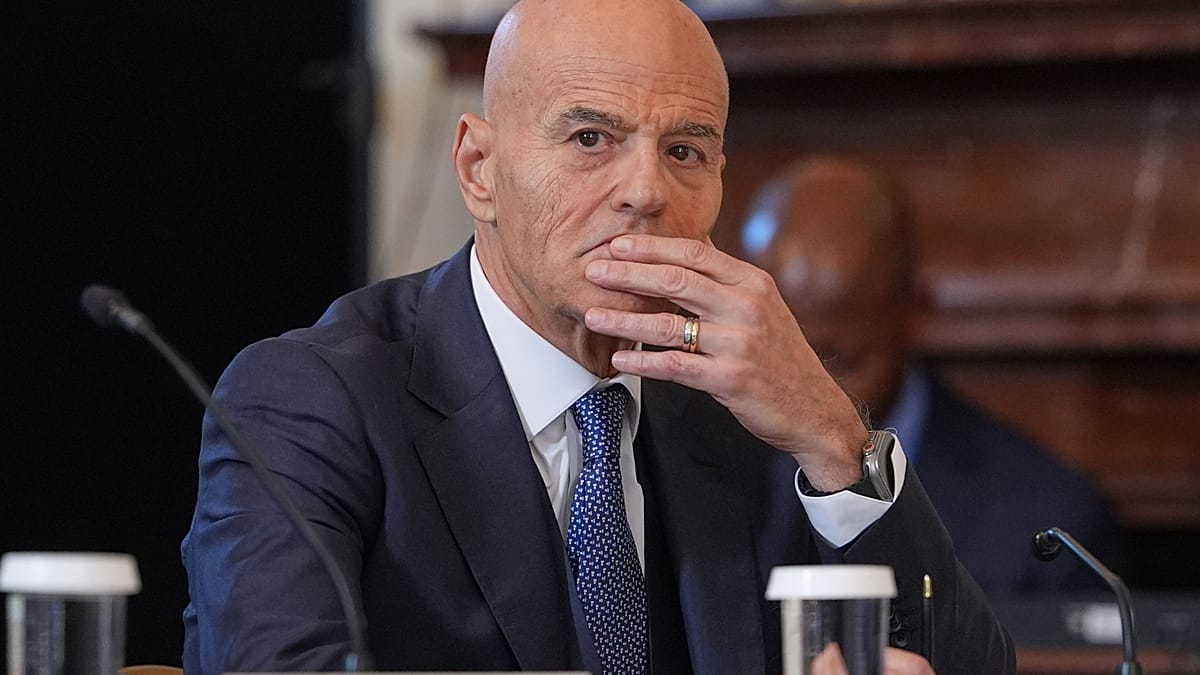
Eni chief executive Claudio Descalzi met Egyptian President Abdel Fattah al-Sisi in El Alamein on Tuesday, along with Prime Minister Mostafa Madbouly and Minister of Petroleum and Mineral Resources Karim Badawi, to discuss the company’s expanding footprint in Egyptian fields and its role in building out Egypt’s position as a regional gas hub.
Eni has invested a total of $8.5 billion (approximately €7.3bn) in Egypt to date. Through its subsidiary Ieoc, the company produced around 242,000 barrels of oil equivalent per day in 2025, based on its equity share.
The plan presented by Descalzi foresees a new, intensive phase of activity. Eni is aiming to drill 30 exploration wells and 200 development wells.
The goal is to increase production by tapping both new discoveries and existing infrastructure. The strategy focuses in particular on so-called “fast-track” interventions: projects that can be brought into production quickly by using existing plants and connections, as well as extending the operating life of fields already in production.
The activities cover several areas of the country, from the Mediterranean to the Nile Delta, from Sinai to the Western Desert.
Since 2025, according to data presented by Eni, these initiatives have enabled a 50% increase in production at offshore fields in Sinai, while further discoveries have been made offshore in the Nile Delta and the Western Desert.
The Denise West discovery
One of the most significant projects is Denise West, discovered in April 2026 during the offshore drilling campaign launched in October 2025 in the Temsah concession.
The field holds around 56.6 billion cubic metres of gas and 130 million barrels of condensates in place.
The discovery is considered strategic because it can be rapidly developed by making use of existing infrastructure. Eni is working with partners BP and the Egyptian General Petroleum Corporation (Egpc) to reach a final investment decision in the coming months. The stated goal is to start gas production within two years.
Within the framework of investments in Egypt, Zohr also remains central — it is the largest gas field ever discovered in the eastern Mediterranean. Eni continues to operate in the area as part of a broader programme of exploration, development and management of Egyptian assets.
The role of Zohr goes beyond production from a single field: the infrastructure developed around Egypt’s gas production and processing system is one of the elements enabling Cairo to consolidate its position as a regional energy hub.
This is precisely one of Italy’s strategic interests: Egypt acts as an energy platform in the Mediterranean, capable of linking domestic production, gas from other countries in the region and infrastructure for processing and export.
Expanding to Cyprus
During the meeting, Descalzi and al-Sisi also discussed the Cronos project, developed by Eni offshore Cyprus.
The project has recently reached the Final Investment Decision (FID) and envisages the use of Egyptian infrastructure to bring Cypriot gas to market.
The mechanism is strategic: gas produced offshore Cyprus can be transported to Egypt, processed through the available infrastructure and then sent on to markets, including Europe.
Cronos thus becomes a project that directly links Cyprus, Egypt, Eni and the European market, strengthening Cairo’s position as a gas hub in the eastern Mediterranean.
A deepening relationship with Egypt
The energy dimension fits into a broader relationship between Rome and Cairo, in which Eni is one of the main instruments of Italian economic cooperation.
Al-Sisi reiterated his intention to support the company’s investments, assuring that the Egyptian government stands ready to provide the necessary infrastructure and to remove any obstacles to its activities.
For Egypt, attracting new investment helps sustain production and supplies and reinforce its position as a regional hub. For Italy, Eni’s presence means having an operator directly embedded in the main energy area of the eastern Mediterranean, with potential implications for the security and diversification of supplies.
The partnership is not limited to hydrocarbons alone. During the meeting, an update was also given on Eni’s social and health investments.
Following the memorandum of understanding signed in March 2026, the company plans to focus on projects in the health sector, with the aim of supporting Egypt in developing skills, managing complex infrastructure and providing services to the population.