



Conflicts and disruptions to global energy markets could push millions of people into hunger by driving up fuel, fertiliser and food costs, the head of the Rome-based International Fund for Agricultural Development warned, as a new United Nations report showed global progress against hunger remains fragile.
The UN food security report, released Tuesday, found that global hunger has eased modestly in recent years, but projected more than 500 million people could still face chronic hunger by 2030.
Africa is expected to bear the largest share of that burden.
In an interview with The Associated Press this month, IFAD President Alvaro Lario said geopolitical tensions and potential disruptions to shipping and energy supplies, including uncertainty surrounding the Strait of Hormuz during the Iran war, could leave an additional 9 to 18 million people facing hunger if the shocks persist.
“We are in a current era where we have the highest number of conflicts and are still increasing,” Lario said, adding that “Whenever there is a conflict, also hunger, displacement and refugees increase.”
Conflict is driving energy and fertiliser price surges
Ongoing conflict like the Iran war and Russia’s invasion of Ukraine are the biggest drivers of higher energy and fertiliser prices, according to Lario.
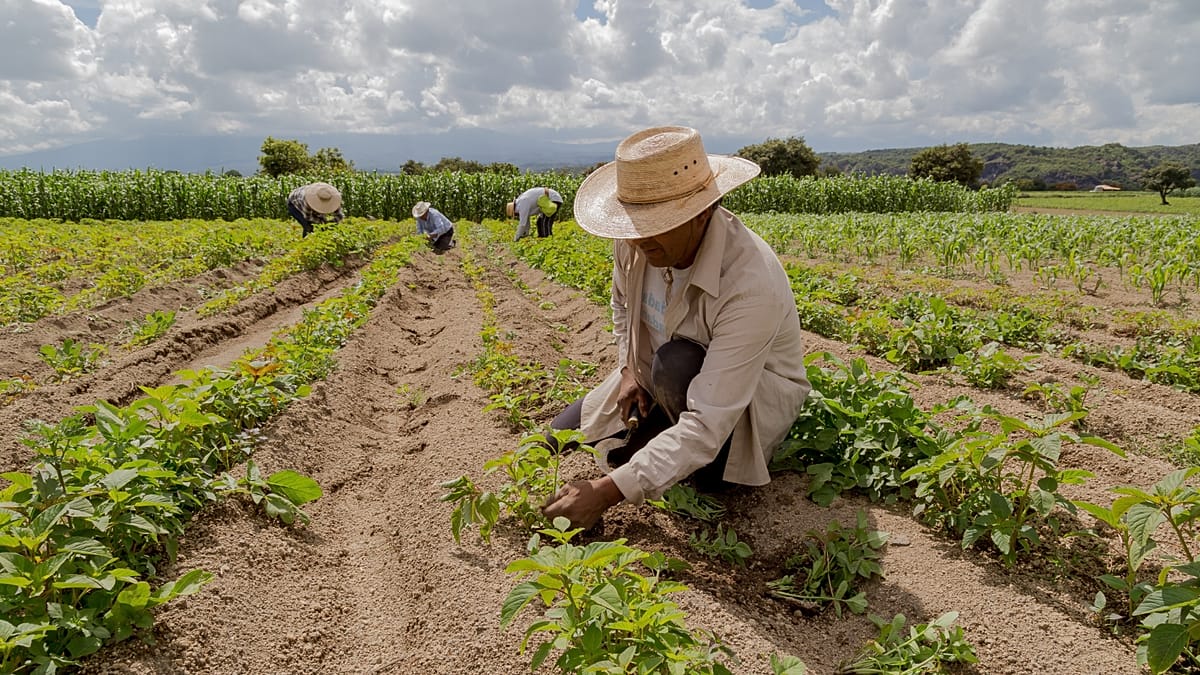
By disrupting shipping and supplies of agricultural inputs and energy, food systems across the world are already facing another inflationary shock. The impact is especially significant for small-scale farmers, many of whom rely on diesel fuel to pump water, harvest crops and transport goods to market.
This is especially crucial as the cost of a healthy diet across the world is already rising.
According to the UN report, the average global cost of a healthy diet jumped to 4.28 purchasing power parity (PPP) dollars per person per day, up from 3.44 PPP in 2021.
Latin America and the Caribbean faced the highest costs, at 4.91 PPP.
Healthy diet costs differed significantly across regions depending on variations in agrifood systems, with animal source foods, vegetables and fruits adding the most costs, compared to starchy staples.
Post-farmgate activities such as processing, logistics and wholesale also accounted for 40% of total costs.
As these activities are particularly vulnerable to supply chain disruptions caused by conflict, it is now even more important to build more efficient and resilient systems in these areas, especially in order to reduce perishable food costs.
Similarly, more investments in infrastructure, development, research, irrigation and cold chains are needed to reduce the costs of a healthy diet. Subsidy and regulatory framework reforms, along with trade facilitation can help advance this objective too.
Lario also stressed that hunger and conflict often reinforce one another, creating a cycle that is difficult to break without greater stability.
“Ending hunger and making healthy diets affordable requires political commitment, sustained investment and enabling policies,” QU Dongyu, FAO Director-General, said.
“Recent crises – from natural disasters like the COVID-19 pandemic to man-made disaster like hotspots of conflicts, the war in Ukraine, the Gaza crisis, and the recent Strait of Hormuz disruption – have demonstrated both the resilience of agrifood systems and the need to strengthen them further to better serve the world’s most vulnerable people, farmers and consumers,” Dongyu added.
Climate shocks add pressure
The new report identifies affordability as one of the world’s biggest food security challenges. While food production continues to grow, roughly a third of the global population still can’t afford a healthy diet. In low-income countries, that figure rises to about 77%, according to Lario.
“The biggest challenge is no longer simply producing enough food, but making healthy diets affordable,” he said.
Climate change is adding further pressure to food systems and rural livelihoods.
Lario noted that floods, prolonged droughts and extreme heat are increasingly disrupting agriculture around the world and have become a common reality for many communities.
Governments should focus on resilience and adaptation before disasters strike, rather than relying solely on emergency responses afterward, he said.
“This is just becoming the new normal,” Lario said. “We are seeing floods in many countries. We’re still seeing droughts that have been expanding for four or five years.”
The fund is increasing investments in climate-adaptation programs aimed at helping rural communities withstand floods, droughts and extreme heat, he said, arguing that support is urgently needed for the millions of small farmers who produce much of the world’s food supply.
Africa emerges as the epicenter
The report highlights Africa as the world’s most pressing food-security challenge.
For the first time, the continent has overtaken Asia as the region with the largest number of hungry people, and nearly 60% of the world’s chronically undernourished people could live there by 2030.
Lario attributed the shift partly to rapid population growth and slower economic gains than in parts of Asia, and he called for greater investment in agriculture, infrastructure and food systems.
African countries currently import nearly $100 billion (€87.7bn)worth of food each year, he said, underscoring the need for stronger local production, storage, distribution and regional trade networks.
Conflicts, energy-market disruptions and climate extremes threaten to derail progress unless governments invest in more resilient food systems, Lario said.