
Published on
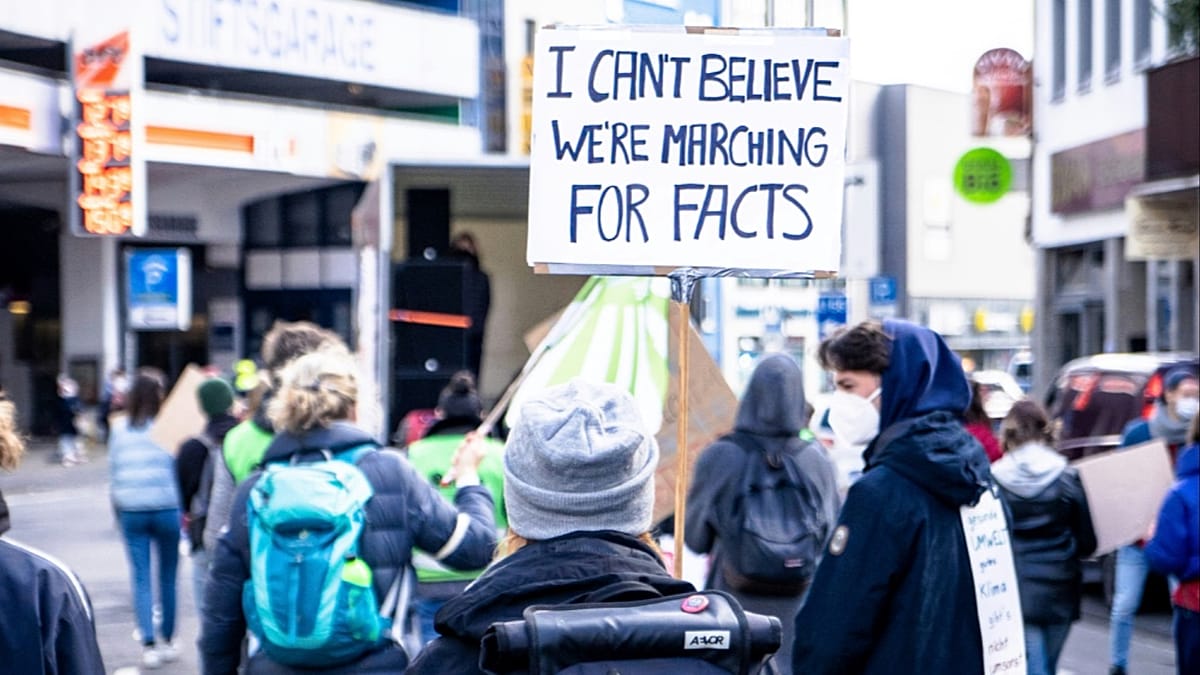
The European Union has backed a landmark declaration to crack down on climate disinformation amid the epidemic of fake news and AI-generated slop.
Launched during the COP30 summit in Belém last year, the Declaration on Information Integrity on Climate Change demonstrates a “firm commitment” to factual debate, climate science and evidence-based policymaking.
Prior to the EU’s endorsement on 20 January 2026, the declaration was individually backed by 15 member states including Belgium, Germany and Spain.
It comes as environmental information online is becoming increasingly more difficult to navigate. According to the 2025 Eurobarometer on climate change, 52 per cent of Europeans say that traditional media fails to provide clear information on climate change – while 49 per cent report challenges in identifying reliable content on social media.
What is climate disinformation?
Climate disinformation is defined as the intentional spread of false or misleading information about climate change and climate action – including complete denial and conspiracy theories.
It differs from climate misinformation, which is false or out-of-context information that someone is presenting as fact.
“We’re living in a world where the threat of climate change is becoming ever more urgent and, at the same time, where alternative truths, confrontation and disinformation abound,” says Wopke Hoekstra, Commissioner for climate, net zero and clean growth.
“This is cause for concern. Informed public debates where we listen and look at the science are so essential if humanity is going to effectively tackle the climate crisis.”
How to spot climate disinformation in 2026
As part of the efforts to address the issue, the European Commission’s Directorate-General for climate action has launched a new campaign called #ClimateFactsMatter. It aims to “empower people” to see through climate disinformation and reveals the main techniques used to mislead the public.
Get the full story
Climate disinformation can often cherry-pick data to try and muddy the waters. Always check several trusted sources to see the full picture. EuroClimateCheck frequently publishes the latest climate disinformation articles curated by some of Europe’s leading fact-checking organisations.
Fake experts
Anybody can claim to be an ‘expert’ on the internet, whether that be in the climate field or in other sectors. An investigation by the Press Gazette recently uncovered 1,000 articles in the British press that were attributed to fake, non-existent and AI-enhanced experts. Always check an ‘expert’s’ claims against trusted sources.
‘Emotional traps’
Climate disinformation often relies on loaded language. If you see a post that instantly makes you angry or scared, take a second to verify the claims.
A ‘quick fix’ for climate change
The fight against climate change is a tiresome one, that requires global systemic change and a transition away from fossil fuels. If you come across a story or social media post that presents an ‘easy’ solution to climate change – be wary. If it sounds too good to be true, it probably is.
AI fakes
The boom in artificial intelligence (AI) has made fake imagery ubiquitous on the internet. If something looks off, zoom into the details or do a reverse image search. Again, go back to trusted sources or fact-checkers.
Euronews has a dedicated team of journalists debunking some of the biggest stories and rumours targeting Europe. You can visit our Euroverify page here.