




The topic of extraterrestrial life is not alien to Steven Spielberg.
The celebrated filmmaker has famously explored it throughout his career, whether it be in Close Encounters Of The Third Kind, E.T., War Of The Worlds or Indiana Jones and the Kingdom of the Crystal Skull. Through these films, Spielberg has shaped the imagination of generations of cinemagoers by presenting thrilling scenarios of what first contact might look like.
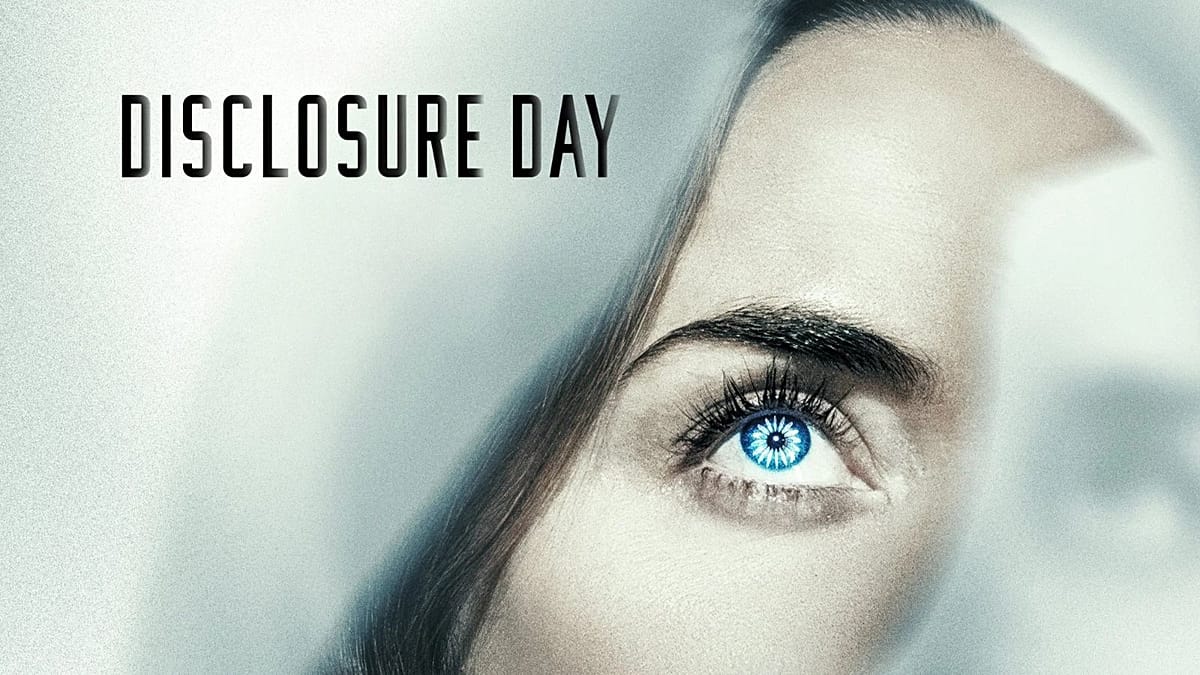
His latest film, Disclosure Day, also focuses on aliens – specifically on a whistleblower who races against the clock to unveil a conspiracy by the government to keep knowledge of extra-terrestrials under wraps.
Fox Mulder would be proud.
Ahead of its release in cinemas this week, Spielberg was asked by CBS News whether he believes aliens have been to Earth.
“Based on the circumstantial evidence of everything that I’ve gathered throughout my whole life, everybody I’ve listened to and every documentary I’ve ever watched, and all the testimonies in Congress that I’ve heard, I absolutely think that they have been here, and they are here,” he responded.
“And who knows, maybe they’ve always been here.”
Intriguing. But this begs the question: If they are around, what would they look like?
Most people would immediately think of creatures which are not too dissimilar to our own appearance: arms, legs, a head… Probably a disproportionately huge pear-shaped head with big googly eyes, but a head nonetheless.
But why would beings from another planet or universe look anything like us?
Probably because it’s reassuring to project relatable human features onto that which we don’t comprehend. Our anthropomorphised depiction of aliens boils down to a defence mechanism that comforts us. It is also one that has been fed to us over time through countless films and TV series.
In effect, a lot of our visual cues can be traced back to the influence of cinematic imagination, as filmmakers have shaped our perception of the unknown. From George Méliès’ first moon dwellers in 1902’s A Trip To The Moon to the big brained invaders in Mars Attacks! and the little green men in The X Files, we recognise these alien beings through shared visual shorthand.
Sometimes, however, audiences get to be confronted with versions that destabilize our notions of alien lifeforms. Certain directors have contributed to pushing forward the on-screen representations of aliens, and aimed to go beyond variations of stereotypical greys (E.T., Paul), human-shaped visitors from outer space (The Day The Earth Stood Still, The Man Who Fell To Earth) and anthropomorphic beasties designed to make audiences invest in adult diapers (Independence Day, the Alien franchise’s xenomorphs).
This year, we’ve already had Project Hail Mary offer up a mildly expectation-upending depiction of aliens with Rocky, the anthropomorphised splicing of The Fantastic Four’s Thing and a crab. Will Spielberg go further and offer up a vision that subverts the way we imagine space dwellers?
Not long to find out… In the meantime, here is a chronological lookback at some of the films which have challenged our perception of what an alien race could look and behave like.
‘The Blob’ (1958): Aliens as amorphous goop
The intergalactic antagonist in Irvin Yeaworth’s original 50s classic The Blob is exactly what the title promised: a gelatinous lump that remains terrifying to this day because of its amorphous nature.
The silent carnivorous alien crash-lands on Earth in a meteor and latches itself onto living hosts, which it absorbs before oozing on to its next victim. The more it eats, the bigger it grows. Plans to electrocute it fail, and even if our protagonists manage to freeze the creature and cargo-lift it to the Artic, the cold only stops the Blob. It doesn’t kill it. This realisation – interpreted by many as a metaphor for the Cold War, with the Blob being the embodiment of communism – is met with the words ‘The End’, which then morph into a question mark before the end credits roll.
The gooey shape of the alien is a strong case for “simple is best”. Without much budget to play with and facing technical limitations, the special effects team at Valley Forge Films had to make do. They made the Blob from silicone and added red vegetable dye when it absorbed its victims. They also used miniature sets, superimposed slime over photographs, and made the most of time-lapse photography to speed up movements.
It’s an effective and terrifying image of an unknown species, one which keeps you guessing as to the limits of its physical form and capacities.
Several other depictions of aliens were inspired by the slimy creature, including the black oil substance in The X Files, which revealed itself to be the extraterrestrial life-force in the cult TV show. Later on, the Alien prequels would follow suit with the goo in Prometheus and Covenant. As for the character of Venom, the symbiote is a direct descendent of The Blob’s parasitic goop.
‘2001: A Space Odyssey’ (1968): Aliens as a mysterious monolith
One of the most striking and unsettling on-screen depictions of an alien is the enigmatic black block at the heart of Stanley Kubrick’s sci-fi classic 2001: A Space Odyssey.
Whether or not the mysterious monolith that suddenly appears is the actual form of the aliens is debatable. It might be a calling-card signalling that they are present. What we do know, however, is that the towering column serves several purposes: a warning, a teacher facilitating evolutionary leaps, and a mysterious gateway that poses more questions than it answers.
Originally described in Arthur C. Clark’s short story “The Sentinel” as a pyramid, the geometric shape is a stroke of genius in terms of imagining first contact with an advanced lifeform. Kubrick revealed in an interview that the lack of a typical alien presence was important to the filmmaker: “From the very outset of work on the film we all discussed means of photographically depicting an extraterrestrial creature in a manner that would be as mind-boggling as the being itself.”
This taps a Lovecraftian vein. Indeed, the fantasy author believed that the strongest kind of fear was the fear of the unknown, and that the power of imagination trumps anything that can be physically represented. In essence, our tiny human minds cannot fully comprehend or do justice to any embodiment of advanced life. Much less encompass the dread it would instill.
Regarding his alien as a black slab, Kubrick echoed this sentiment: “It soon became apparent that you cannot imagine the unimaginable.” The monolith represents this unimaginable: a bone-chilling unknown whose simple geometry innovates through paradoxically brushing aside wilder, more garish depictions of visitors from other worlds.
‘The Thing’ (1982): Aliens as gory mimics
Released the same year as E.T. phoned home, John Carpenter’s horror classic The Thing took a page out of Invasion of the Body Snatcher ’s book, in the sense that an alien can hide in plain sight.
The 1978 remake of Invasion of the Body Snatchers saw an alien race literally becoming its victim and disposing of the old carcass. In The Thing, the alien lifeform is an undefinable organism that can mimic others: your pet dog, your friend, your colleague… And then, just for shits-and-giggles, it contorts its body, stretches its head clean off, and grows spider-legs.
This nightmare fuel was a disturbing accomplishment. The lack of a definitive shape heightens the paranoia in every scene, leaving audiences trembling at the realisation that there isn’t much this monster can’t do – or assume the shape of.
Plaudits go to the special effects team led by Rob Bottin, who used practical effects to create the shapeshifter’s gory declinations. This remains an alien depiction that thrives on unpredictability, an unnerving trait that is far scarier than any scaly monster or long-limbed beastie.
‘Attack The Block’ (2011): Aliens as wolf-gorilla hybrids
Out with existential head-trips and gory impersonators, and back to basics with Attack The Block.
The main source of inspiration for the alien critters in Joe Cornish’s sci-fi comedy is animal. And why not? Aliens could conceivably have more in common with fauna than anthropoids.
Attack The Block sees horrifying creatures descend on a South London council estate, seeking to get their teeth into anything that moves. In aspect, they look like gorillas with spiky fur, sharp claws, and a mouthful of bioluminescent dentures. That last detail makes their fangs contrast quite strikingly with their fur.
The animalistic nature of the aliens is simple but effective: it leans into a raw viciousness that can’t be reasoned with.
‘Arrival’ (2016): Aliens as complex heptopods
Not unlike the giant tripods in War of the Worlds or the towering squid monsters in Gareth Edwards’ criminally underseen 2011 sci-fi gem Monsters, the way the aliens in Arrival are portrayed sticks to a certain Lovecraftian tradition.
Our vision is obscured and we only see what linguist Dr Louise Banks (Amy Adams) witnesses: the very bottom quarter of the aliens, which leaves the rest up to our imagination. In effect, we imagine they look like the unholy offspring of a whale and an elephant brought up by the Grim Reaper.
Unlike their giant pebble-shaped spaceship, which we see in full, our lack of a full view of the heptopods is incredibly destabilising, as we could be seeing only a minuscule percentage of the creatures. The possibility that we might be ant-sized compared to other beings tends to instill some fear…
Then there’s contact. While many on-screen aliens communicate with humans via their own language or telepathy, the creatures in Dennis Villeneuve’s time-bending masterpiece use an ink-like substance emanating from their tentacles to draw their language. A visual clue which shows how they experience life and time as a flat circle.
Villeneuve and his screenwriter Eric Heisserer (basing the script on Ted Chiang’s fantastic novella “Story of Your Life”) explore the limits of the Sapir-Whorf Hypothesis, which posits that language either determines or influences one’s thought and perceptions. The way the aliens are filmed mirrors our own incomprehension and confusion when it comes to communication.
Arrival is thought-provoking cinema at its best, and remains one of the best depictions of alien lifeforms. It challenges how we perceive our intergalactic counterparts on both a physical and psychological level. Moreover, the design of the aliens represented an impressive evolution of on-screen extraterrestrials, revealing them as being light-years away from the harbingers of doom so many flicks lazily depict.
‘Annihilation’ (2018): Aliens as a terraforming biological entity just doing its thing
Based on the books by Jeff VanderMeer, Alex Garland’s genre-splicing Annihilation sees a team of experts sent to explore Area X, a quarantined zone enclosed by a mysterious bubble called ‘The Shimmer’. The area began expanding following a meteor that crash-landed to Earth. No team has ever entered The Shimmer and come back. All we know is that the wildlife’s DNA has been shuffled by the extraterrestrial event.
Annihilation is a uniquely fascinating take on first contact, as it makes sense that a meteor would contain its own biological makeup. There are no little green men emerging from the rock, and both the book and the film explore the not-so-straightforward manner in which the alien forces at work cannot be reduced to parasite / symbiote or host / invader binaries. The foreign entity simply terraforms, making whatever or whoever is inside the bubble into something different. Call it biological mimicry or refraction; the key is the unknowable.
Furthermore, the “alien” does not have a nefarious plan. It landed somewhere foreign and it does its thing. While audiences have been hardwired to ask the question “Why are they here and what do they want?”, Annihilation cleverly says: Nothing. There’s no motivation. They just happen to be here.
Materialised in the last act as a swirling cloud which births a mimic (one which shares DNA with the final-form extraterrestrial in Jonathan Glazer’s Under The Skin), the strength of Annihilation is tapping (once again) into Lovecraftian cosmic horror. The unknown will always be more intriguing and terrifying, and it would be foolish not to think that first contact wouldn’t change us. Not just psychologically and philosophically, but in all ways – including on a biological level.
‘Nope’ (2022): Aliens as the flying lovechild of an octopus and a kaleidoscopic kite with a digestive tract
Following his Oscar-winning Get Out and doppelganger chiller Us, Jordan Peele delivered Nope, which merged sci-fi tropes, Western codes and horror elements into one ambitious whole.
Reactions to the film were mixed. Some felt it sparked the same sense of wonder as Close Encounters Of The Third Kind; others saw it as a let-down compared to Peele’s previous efforts. However, what can’t be denied is that the director gave audiences a unique vision of how an alien might look.
Peele used his “Jean Jacket” / “bad miracle” to tackle themes of Hollywood exploitation, animal rights, and racism, and made sure that the creature’s design was as knotty as the themes he tackled. While audiences have grown to expect beings emerging from their spaceship, the UFO itself was the alien creature. One which could morph to adapt and fight.
The effect is deeply unsettling, as understanding the creature’s morphology and behaviour is challenging – as it should be when you’re dealing with another species.
Whatever you may think about Nope, it is one of those rare films that addresses the way we imagine the spectacle of our would-be abductors. Moreover, Peele presented an aesthetic that was not just surprising but audacious.
Let’s see if Spielberg can challenge us once more…
Disclosure Day is out in cinemas worldwide on Friday 12 June.