
By Bill Wirtz, EU Tech Loop with Euronews
Published on
When I visited an agricultural expo in Izmir, Turkey, three years ago, the use of artificial intelligence in agriculture was constrained to running the numbers on inventory, and were sold as specialised products by companies that had booths far behind those of major tractor manufacturers.
However, that is changing.
Here are 5 ways in which AI is reforming the way we grow food and feed:
Monitoring the situation
Crop monitoring remains a venture of intuition. Farmers need to know how their crops are affected by pests and diseases in accordance with the time of the year, wind, and climate.
But that is changing.
Drones and satellite imagery feed computer-vision models that detect fungal infestations or pests way before the human eye could detect them, and advise for the use of crop protection, or pesticides more effectively. If farmers use soil censors, that data set only improves.
Yield forecasting
Much like crop monitoring, yield forecasting through sensors allows farmers to get more than just an inventory of what they have harvested, but also of what they are about to harvest. Syngenta has created a GenAI that allows for 95% accuracy in yield forecasting, and which also provides seed placement recommendations.
The reason the forecasting matters is that farmers need to frontload the logistics of their crops. The more you are able to provide accurate information to retailers and transportation companies, the less money you lose.
A study commissioned by the National Corn Growers Association and conducted by agricultural economists at Virginia Tech (“What Do We Know About the Accuracy and Impact of USDA Forecasts”) estimated the value of USDA’s WASDE (World Agricultural Supply and Demand Estimates) reports to the corn market directly.
It put the annual value of that forecast information at roughly $301 million (€258.9m), or about 0.55% of overall corn market value, broken down by component: area estimates contributed about $145m (€124.8m), yield about $188m (€161.8m), production about $299m (€257.3m), and export estimates about $320m (€275.4m).
Farming by robots
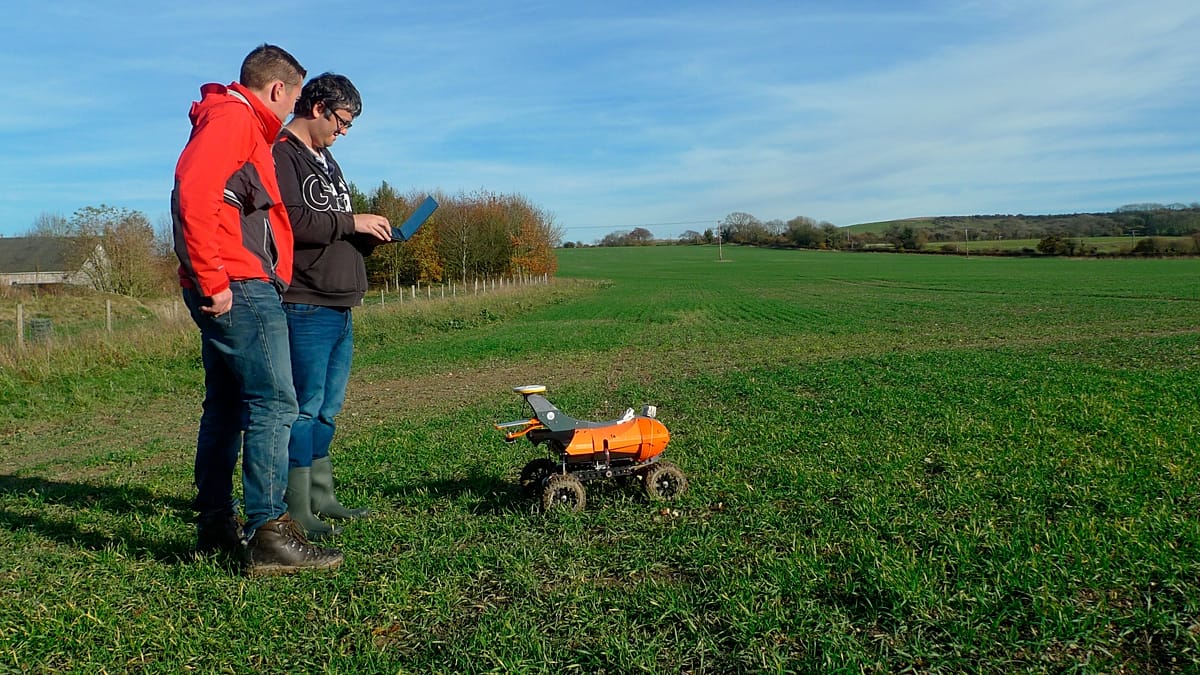
Robotics are booming in a world of AI, because it’s not just about autonomous vehicles driving us around within cities: the application also extends to tractors and other field equipment, which is automatable through AI.
John Deere has been pushing toward fully autonomous tractors, and Carbon Robotics’ LaserWeeder is a good concrete example: it uses 24 lasers, 36 cameras, and 24 NVIDIA GPUs to identify and zap up to 10,000 weeds a minute across more than 100 crop types, trained on 150 million labeled plant images from machines already running in 15 countries.
Precision irrigation
Irrigation is a science, and one that up until now relied solely on the expertise of the farmer in question. Precision irrigation isn’t new, automated irrigation systems already exist, yet they have continued to rely on the manual data input of farmers.
Sensor-fusion systems that combine soil moisture, canopy temperature, and weather forecasts are being used to cut water use by around 30% while actually increasing yield in some deployments (a documented case in Indian sugarcane fields paired a 30% water reduction with a 40% yield gain).
Variable-rate spraying systems similarly apply pesticide only where needed, cutting chemical volumes and creating audit trails that help with regulatory compliance.
Livestock AI
The larger the farm operation the harder it becomes to care for the wellbeing and economic utility of the animals. Livestock AI operations use computer vision and wearable sensors (accelerometers, biometric monitors) to catch signs of illness days before visible symptoms appear, which reduces antibiotic use and improves welfare outcomes, which are increasingly relevant given rising regulatory and retailer pressure on antibiotic use in meat and dairy.
This story was originally published on EU Tech Loop and has been shared on Euronews as part of a syndication agreement.