
Published on •Updated
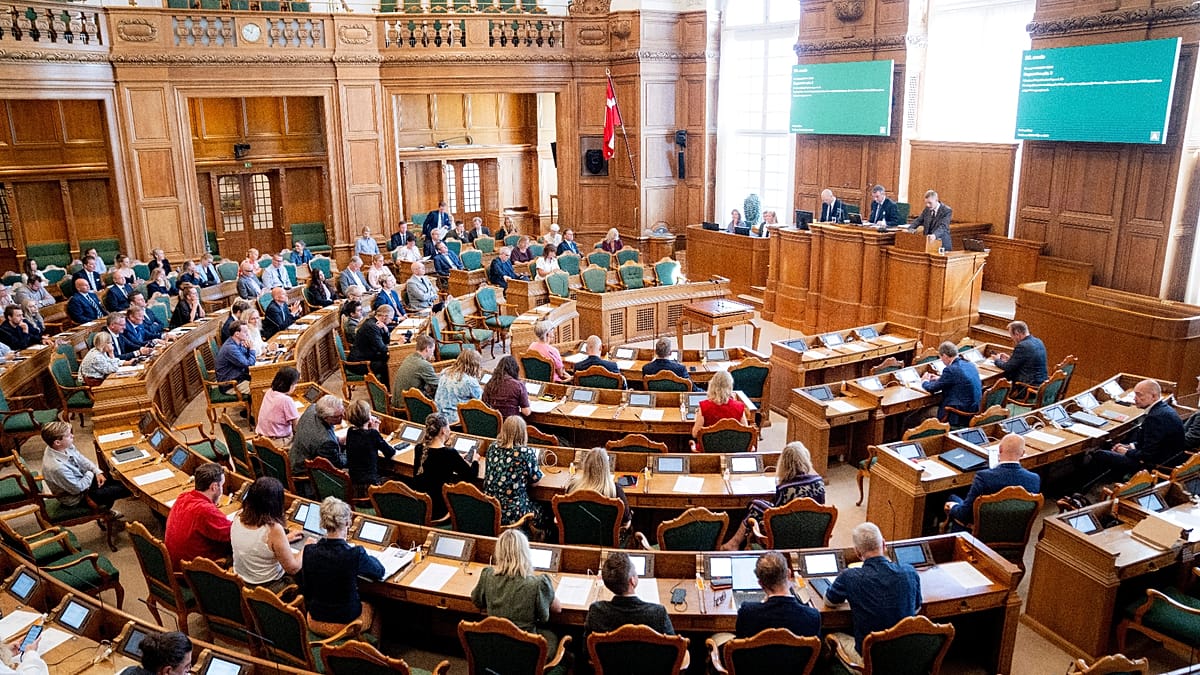
Denmark is due to introduce a bill on Thursday that would ban the sharing of realistic deepfakes of people’s faces and voices without their consent.
The proposed amendment to Denmark’s copyright law would protect ordinary people as well as artists, including against digital imitations of their performances.
Deepfakes are images, videos or audio generated or manipulated using artificial intelligence (AI) to make someone appear to say or do something they did not. They can be used to spread false information or humiliate those depicted.
“With artificial intelligence, you can create manipulated videos and images with just a few clicks and share them on social media,” wrote Zenia Stampe, Denmark’s culture minister, in a statement.
“One of the main goals of the bill is to get the tech giants to take down manipulated content quickly, so that it causes the least possible harm.”
The bill follows a broad political agreement reached in June 2025 by then-culture minister Jakob Engel-Schmidt under the previous government to protect people against unauthorised digital imitations.
It includes exceptions for satire, parody, caricature and criticism of power and society, although these would not cover misinformation posing specified serious dangers to others’ rights, essential interests, life or property.
The minister hopes the law will take effect at the start of 2027.
Denmark’s move comes as countries around the world grapple with the rapid rise of AI.
EU countries bound by the bloc’s directive on violence against women must implement it by 14 June 2027. It requires them to criminalise creating sexually explicit manipulated material and subsequently making it publicly accessible without the depicted person’s consent, where this is likely to cause serious harm.
Denmark is not bound by the directive because of its opt-out from EU justice and home affairs rules.
France already prohibits sharing AI-generated images or audio depicting someone without their consent when the artificial nature of the content is not obvious or expressly disclosed.
Separate rules prohibit sharing sexual deepfakes without consent, regardless of labelling.
In the United Kingdom, creating or requesting non-consensual intimate deepfakes became a criminal offence in England and Wales in February. Sharing such images can carry a prison sentence of up to two years.