


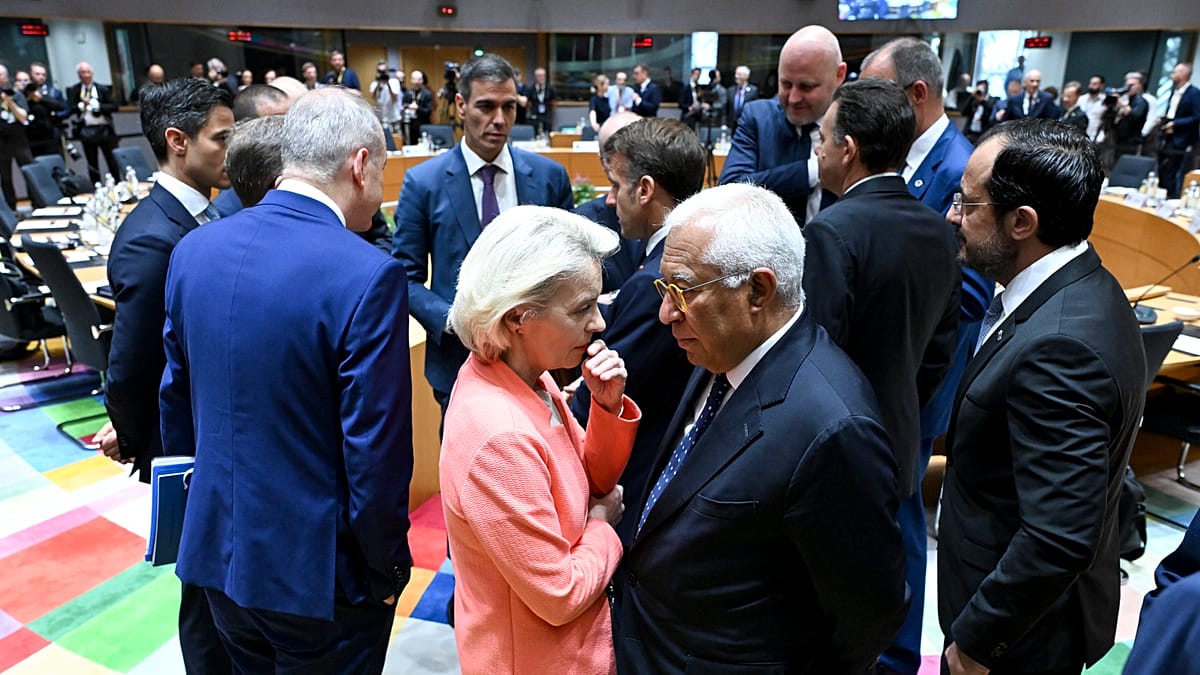



The showdown over the Emissions Trading System — both the current one, and the second iteration which is already legislated and will put a carbon price on heating and transport from 2028 — became so bogged down it forced Costa to cancel the summit’s planned press conference and delay further talks until after dinner, because they had become a “mess,” three EU diplomats told POLITICO.
With German Chancellor Friedrich Merz incensed by what Berlin saw as Italian Prime Minister Giorgia Meloni’s intransigence, fiery negotiations pitted a coalition made up of Germany, Spain, France, Portugal, the Nordics and the Netherlands against a stubborn bloc of Italy with Hungary, Czechia, Slovakia and Poland (known as the Visegrád Four). Rome and the V4 group wanted the EU to postpone ETS2 because of the burden it would place on energy bills, according to five diplomats.
Leaders were fuming at Costa for allowing talks to go off the rails, two EU diplomats from different member countries said. While the pre-summit conclusions didn’t point to any rethink of ETS2, the countries tried to unpick the legislation in the summit room, leaving Costa flustered, one of them said.
Costa “wants to have conclusions ready from [pre-summit meetings of ambassadors] and not to open them during EUCO,” the diplomat said. “He is not a fan of drafting on the spot.”
Another said there was “huge frustration,” calling the tug-of-war over the wording of the energy policy “insane chaos.”
“They just went on with Italian drafts and disregarded texts that were handed in before by others, seemingly not understanding the political nuances of the whole ETS discussion,” they added.
Another accused Costa of “losing control of the room,” saying he had failed to keep track of proposed amendments and present them to EU leaders in time for the discussions. As a result, leaders were left debating without them, contributing to negotiations going on past midnight.
One diplomat and one EU official separately compared Costa with his immediate predecessors, Charles Michel ― who governments frequently criticized for a lack of dealmaking know-how ― and Donald Tusk, who enjoyed broad support throughout his term in office.


