

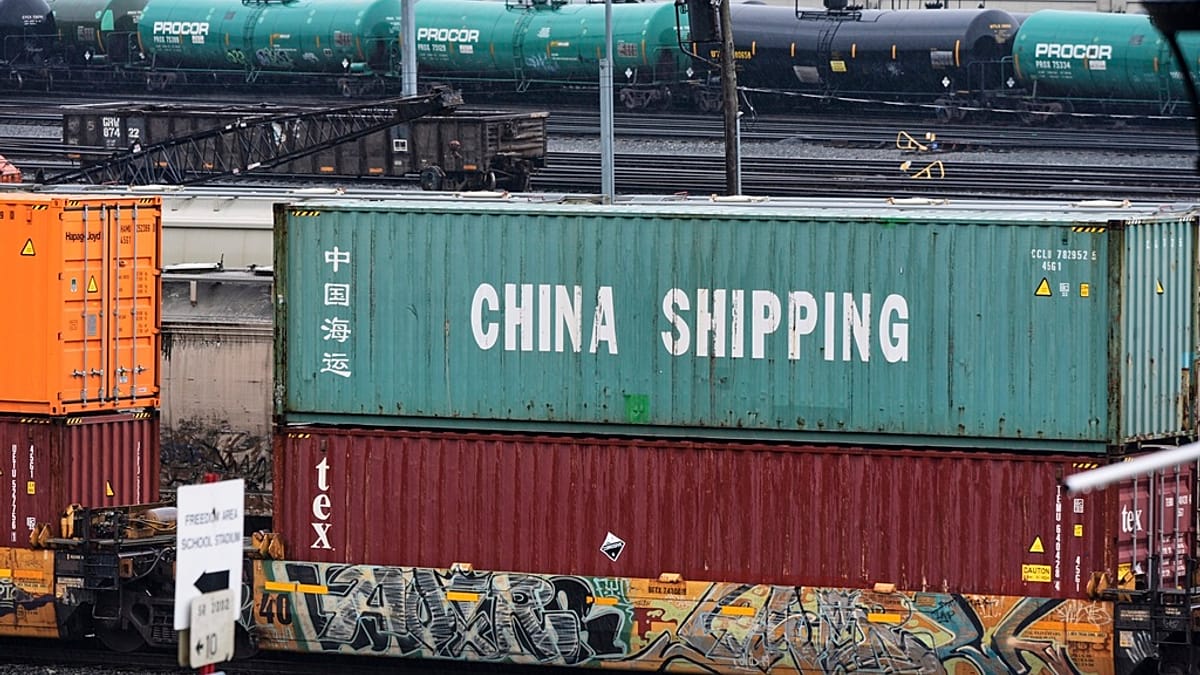
China has been flooding Latin American markets with low-priced exports, especially cars and e-commerce goods, as its exporters adjust to US President Donald Trump’s tariffs and geopolitical moves.
The world’s second-largest economy has become a major trading partner for many Latin American nations, seeking access to their abundant natural resources and growing markets while expanding its influence in a region Trump views as America’s backyard.
Chinese businesses are facing sluggish demand at home and need new markets for their products as the country ramps up production in many industries. Exports to Latin America, a market of more than 600 million people, and other regions have climbed, while exports to the US fell by 20% last year.
“Latin America has a solid middle class, relatively high purchasing power and real demand,” said Margaret Myers, director of the Asia and Latin America programme at the Inter-American Dialogue think tank in Washington.
“Those conditions make it one of the easiest places for China to offload its excess industrial production.”
The influx of made-in-China cars, clothing, electronics and home furnishings has rankled countries trying to build their own globally competitive industries.
Some, such as Mexico, Chile and Brazil, have raised tariffs or taken other measures to protect local producers.
Cheap e-commerce goods gain market share
Cheap goods from China are welcome news for many Latin American consumers, but they are proving a headache for local businesses.
Chinese e-commerce platforms, led by Temu and Shein, have accelerated that trend.
“I use Temu all the time, whether to buy clothes or household items. The same things I would find in brand-name stores or shopping malls, I find on Temu at a much lower price,” said Chilean restaurant manager Lady Mogollon.
Temu averaged 114 million monthly active users in Latin America in the first half of 2025, a 165% increase year-on-year from 2024, market intelligence company Sensor Tower estimates. Shein’s monthly active users in the region grew 18%.
The trend is not limited to just online shopping. T-shirts, jackets, trousers, toys, watches, furniture and other products made in China fill the stalls of street vendors in downtown Mexico City.
Ángel Ramírez, manager of a lamp shop in the area, is struggling to compete.
“The Chinese have invaded us in terms of merchandise,” Ramírez said, sitting behind the counter of his deserted store.
Over the past few years, the number of shops selling Chinese-made goods in downtown Mexico City has more than tripled, Ramírez said, in some cases forcing long-established Mexican stores out of business.
Jobs are being lost to imports
Argentina is bearing much of the brunt of rising Chinese imports, as local factories shut down and lay off workers in a manufacturing sector that employs almost a fifth of its workforce.
The volume of e-commerce imports, mostly from China, soared 237% in October from the same month a year earlier, Argentine government statistics show.
“We’re operating at historically low capacity as imports break record highs,” said Luciano Galfione, president of the non-profit Pro Tejer Foundation, which represents textile manufacturers. “We’re under indiscriminate attack.”
“The number of Chinese products arriving in Argentina, this ultra-fast fashion, is deeply worrying,” said Claudio Drescher, head of the chamber of industry and owner of Buenos Aires-born clothing brand Jazmín Chebar.
“It’s an international phenomenon but it’s now really beginning to have dramatic importance here.”
A Temu spokesperson said the company has been giving Latin American businesses “access to a low-cost, scalable online channel that was previously out of reach for many of them,” including opening its marketplace to domestic sellers in Mexico and Brazil in 2025.
Shein said in a statement that it “respects the importance of local industries and fair competition,” but declined to comment on broader trade policy debates.
Chinese cars make inroads in Brazil and Mexico
Mexico and Brazi, Latin America’s regional car manufacturing centres, are also under pressure from rising imports of low-priced Chinese vehicles.
Chinese carmakers such as BYD and GWM see major growth opportunities in Latin America.
More than 80% of the 61,615 electric vehicles sold in 2024 in Brazil, the world’s sixth-largest car market, were Chinese brands, according to the Brazilian Association of Electric Vehicles.
Mexico has become the largest destination for Chinese car exports, importing 625,187 vehicles last year, according to the China Passenger Car Association, surpassing Russia.
Both Brazil and Mexico already have their own sizeable car industries.
Mexico, a base for major global manufacturers, is estimated to be the world’s seventh-largest car producer, though about 3.4 million of the nearly 4 million vehicles it made last year were exported. Brazil produced about 2.6 million vehicles, including many electric and hybrid models.
That compares with China’s output of 34.5 million vehicles, including more than 7 million exported overseas.
In an industry where scale is vital, “China does have a comparative advantage on EVs,” with affordable prices and heavy government support, said Jorge Guajardo, a partner at consultancy DGA Group and a former Mexican ambassador to China.
Affordable Chinese cars appeal to many drivers and will continue to make inroads in Latin America, said Paul Gong, head of China autos research at Swiss bank UBS.
Chinese carmakers are also investing in local production. BYD and GWM are building factories in Brazil to expand capacity in the region, potentially creating hundreds or even thousands of jobs. Last year, however, Brazilian prosecutors sued BYD over allegations of poor labour conditions for workers, which the company denied.
Commodity-rich Latin America has limited leverage
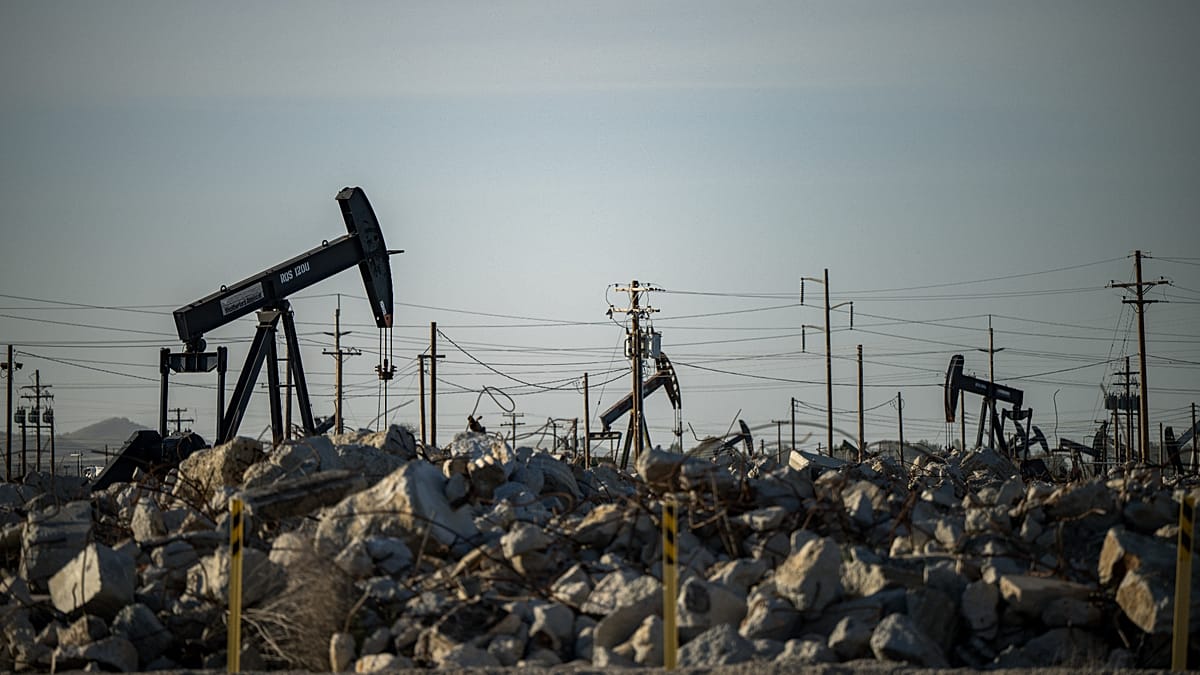
China needs Latin America’s vast natural resources for its industries, from lithium in Brazil to copper in Chile and fishmeal in Peru. But trade deficits with China are growing across much of the region.
For some nations, “China just sells, they don’t buy,” Guajardo said.
Mexico’s deficit with China, its second-largest trading partner after the US, reached $120 billion (€101.2bn) in 2024, with exports — including raw materials such as copper and its concentrates, electrical and electronic equipment and agricultural goods — totalling only about $9 billion (€7.6bn).
Argentina’s trade deficit with China rose to nearly $8.2 billion (€6.9bn) in 2025, driven by imports of electrical machinery, equipment and manufactured goods, outpacing exports such as soya beans and meat.
Brazil recorded a trade surplus of about $29 billion (€24.4bn) with China last year, according to official data, partly due to surging soya exports after Beijing paused purchases of US-grown beans.
Chile also runs a surplus thanks to exports of copper, lithium, fruit and wine.
In most cases, China exports manufactured goods and imports raw materials. But the relationship extends far beyond trade.
China provided loans and grants to Latin America and the Caribbean worth roughly $153 billion (€128.9bn) between 2014 and 2023 — the largest source of official sector financing for the region — compared with about $50.7 billion (€42.7bn) provided by the US, according to AidData, a research lab at William & Mary, a public university in Virginia.
That means for every dollar donated or lent by Washington, Beijing provides three.
Latin America is a pillar of China’s “Global South” strategy to counter Western influence, said Andy Mok, a senior research fellow at the Centre for China and Globalisation.
China financed a $1.3 billion (€1.09bn) megaport in Peru’s Chancay, which opened in 2024 and could eventually be linked by a planned railway to Brazil’s Atlantic coast.
State-backed Chinese companies have also made large investments in dams, mines and other infrastructure across the region.
“There may be deep concern about competitiveness, but politically, many countries don’t feel they have the space to resist China’s export surge,” said Myers. “The relationship has become too important economically.”
Pushback begins, but limits remain
Mexico has long sought to protect local industries, imposing tariffs of up to 50% on imports from China, including cars, appliances and clothing.
Brazil is among the countries phasing out “de minimis” tax exemptions for overseas parcels valued under $50 (€42.15), partly to curb cheap imports from China.
It is also increasing tariffs on EV imports. Other countries may follow, with analysts expecting more protectionist measures, including tariffs and tighter regulation, across the region.
Chile has raised tariffs and imposed a 19% value-added tax on low-value parcels.
Given China’s growing leverage, however, countries face a “balancing act” when it comes to protectionist policies, said Leland Lazarus, founder of Lazarus Consulting.
“They can’t go too far, or China may retaliate in kind,” he said. “So their leverage has a limit.”