





Published on
A farmer from Raddusch in the Oberspreewald-Lausitz district reported to the police on Friday morning that his herd of 48 cattle had been stolen from the pasture. The loss is estimated at around 75,000 euros.
Just 14 days earlier, unknown perpetrators had stolen 74 cattle near Herzberg in the Elbe-Elster district of Brandenburg. Lorry tracks were found at the scene.
In April, there was a case in Falkenberg, also in the Elbe-Elster district, in which 69 calves disappeared from a breeding farm. The perpetrators apparently used a remote access road to drive a large lorry onto the premises, which investigators believe was probably a 40-tonne articulated lorry, and drove directly up to the barn door. Inside, they specifically selected female calves aged between three and six months, and finally herded 69 animals onto the lorry.
Police suspect organised groups of offenders
The theft of livestock in Germany – sheep, cattle, geese and even bee colonies – is increasingly becoming a serious problem.
According to current findings, there has been a growing number of cases, particularly in eastern Germany, in which larger herds are apparently targeted and stolen by organised groups of offenders. Brandenburg is currently considered a particular hotspot.
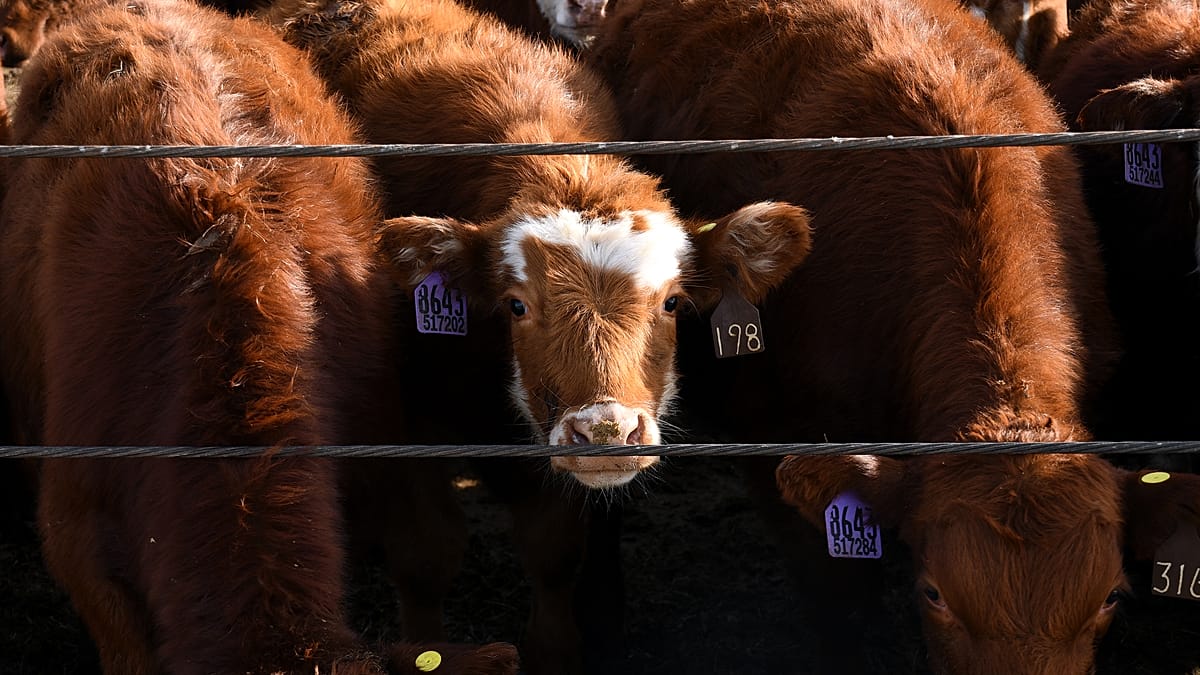
Investigators believe that these are often professionally organised gangs. The perpetrators strike at night. To conceal the animals’ origin, ear tags are removed or replaced with forged identifiers.
In some cases there are indications that sedatives are used so that the animals remain calm while they are being loaded.
“Farm crime” is becoming an increasing burden for farmers
The rise in rural crime is now often summed up under the term “farm crime”. In addition to livestock theft, expensive agricultural machinery and GPS systems from tractors are increasingly coming into criminals’ sights.
While some federal states such as Lower Saxony and Mecklenburg-Western Pomerania are recording rising numbers of cases, other regions such as Schleswig-Holstein have recently reported a slight decline – albeit from a high level. In November last year, NDR broadcast a report entitled “Tatort Bauernhof: Diebstahl auf dem Land” (“Crime scene farm: theft in the countryside”). It stated that well over half of farmers in northern Germany had been affected by theft, with not only animals but also harvests and agricultural machinery being stolen.
Farmers unsettled
Many farms are now responding with additional security measures. These include video surveillance, better lighting of barns and digital warning networks among farmers, for example via regional WhatsApp groups. The aim is to share suspicious observations more quickly and to prevent thefts as early as possible.
Because livestock in Germany is centrally registered, the police suspect that many of the stolen animals are taken to Eastern European countries or to states outside the EU. In principle, animal transports must be checked when crossing borders. It is possible that the animals are smuggled across the border in closed lorries that are not licensed for livestock transport.
In fact, according to the federal government there is no official statistical record of all cases and crime scenes relating to the theft of farm animals. The reason is that, because animals are legally regarded as “property” in Germany, such offences are recorded in crime statistics under theft of “objects”.