
Close Menu
Daily Guardian EuropeDaily Guardian Europe
  • Home
  • Europe
  • World
  • Politics
  • Business
  • Lifestyle
  • Sports
  • Travel
  • Environment
  • Culture
  • Press Release
  • Trending
What's On

France braces for tense day of protests as security concerns take centre stage

October 17, 2026

The world’s biggest fine jewellery factory: How Pandora aims to make more and pollute less in Vietnam

October 17, 2026

Data centres are the new front line and Europe’s AI factories should slow down, says UN adviser

October 17, 2026

‘Switzerland plus’ deal option for UK as it seeks closer ties with EU, senior MEP says

October 17, 2026

Video. Latest news bulletin | October 17th, 2026 – Morning

October 17, 2026
Facebook X (Twitter) Instagram
Web Stories
Facebook X (Twitter) Instagram
Daily Guardian Europe
Newsletter
  • Home
  • Europe
  • World
  • Politics
  • Business
  • Lifestyle
  • Sports
  • Travel
  • Environment
  • Culture
  • Press Release
  • Trending
Daily Guardian EuropeDaily Guardian Europe
Home»Culture
Culture

Carrara marble: Can a sculpture created by an AI robot be considered as art ?

By staffSeptember 24, 20263 Mins Read
Carrara marble: Can a sculpture created by an AI robot be considered as art ?
Share
Facebook Twitter LinkedIn Pinterest Email

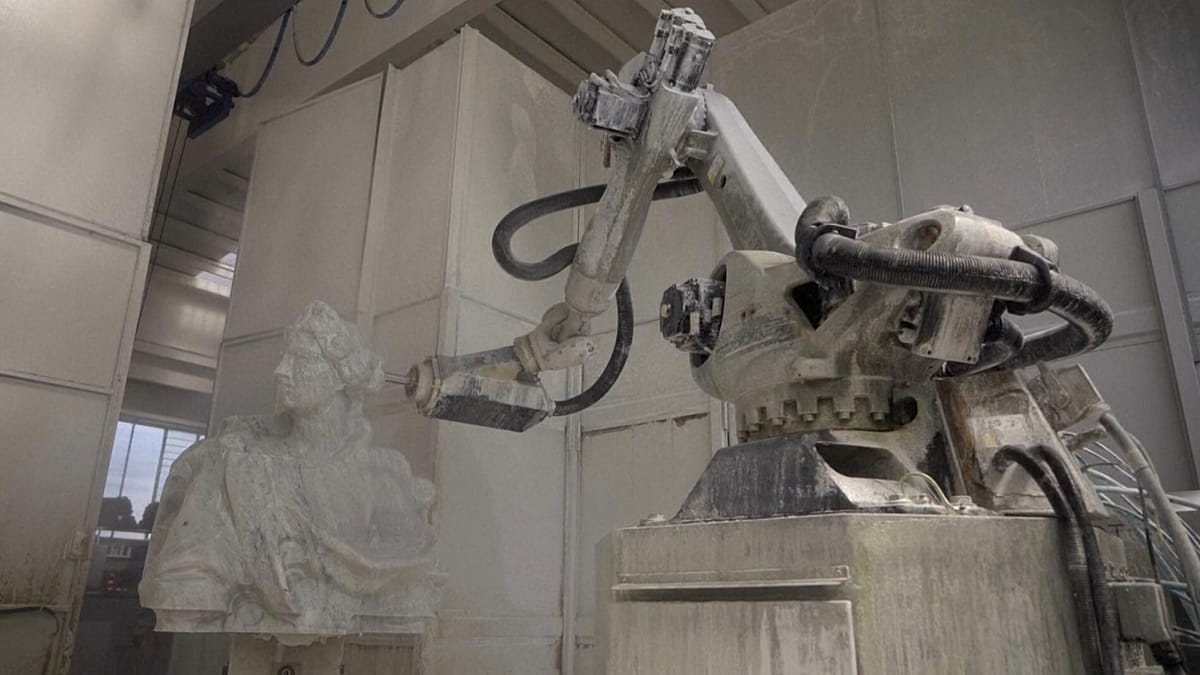
Robotic arms are being used to carve complex sculptures from blocks of marble, guided by software that turns digital designs into precise instructions for the machines.

The technology is being developed by Italian companies LITIX and ROBOTOR, which say it could make marble sculpture more accessible.

“The goal is to be able to create something out of your idea, even if you don’t have the skill to do that,” says Giacomo Massari, founder and CEO of LITIX and ROBOTOR.

A digital image can be converted into a 3D file before software generates the toolpaths used by the robot. The machine can then carry out most of the carving, leaving skilled workers to refine the sculpture.

A changing role for sculptors

The arrival of robots has prompted mixed reactions among traditional sculptors in Carrara. Some have been uneasy about machines taking over work that has traditionally required years of training.

“You’re not killing a job, you’re just evolving that job,” says Massari. He adds robots can take on as much as 99% of the carving, allowing artisans to concentrate on the final details.

The company also argues that this could make working with marble safer and less physically demanding.

But the debate goes beyond jobs. As machines become capable of translating digital ideas directly into physical objects, artists are also having to consider what constitutes the creative act.

‘Algorithmic sculpting’

Italian Artist Davide Quayola uses algorithms and robotic machines as part of his own practice.

Rather than seeing the robot as an independent creator, he describes it as an extension of his artistic gesture.

“I am actually feeling that I’m completely in control,” he says. Quayola calls his approach “algorithmic sculpting”.

He says he and his studio programme the machine’s movements, making the robot part of the process through which the artwork is created. For him, the distinction is important. The machine may perform the physical work, but the artist decides how it operates and what the finished work is intended to become.

The future of marble

Carrara has long been associated with traditional craftsmanship and the white marble used by some of history’s most celebrated sculptors.

Now, the same material is being shaped using technology that would have been unimaginable to earlier generations of artists.

The change does not necessarily mean an end to traditional craftsmanship.

Instead, the role of the sculptor may increasingly shift from physically removing stone to designing, programming and refining the final work.

As robots take on more of the physical process, one question remains: where does the work of the machine end and the work of the artist begin?

Video editor • Yolaine De Kerchove Dexaerde

Share. Facebook Twitter Pinterest LinkedIn Tumblr Email

Keep Reading

Portuguese journalist and writer Joaquim Letria dies

Dinosaur fossil hidden in London’s Natural History Museum for 100 years identified as new species

Social media favourites, Pompeii’s cats star in new photo book

‘Appalling’: Actor Omar Sy joins public figures criticising French authorities’ response to student protests

2027 budget: French cinema fears a catastrophic scenario

New J.K. Rowling documentary set to explore ‘polarising’ Harry Potter author

Sally Rooney forced to withdraw sale of books in UK due to support for Palestine Action

Tsui Hark at Lumière Festival: ‘We don’t know where the future will bring us’

Hidden for 7,000 years: The twisted skeleton baffling German archaeologists

Editors Picks

The world’s biggest fine jewellery factory: How Pandora aims to make more and pollute less in Vietnam

October 17, 2026

Data centres are the new front line and Europe’s AI factories should slow down, says UN adviser

October 17, 2026

‘Switzerland plus’ deal option for UK as it seeks closer ties with EU, senior MEP says

October 17, 2026

Video. Latest news bulletin | October 17th, 2026 – Morning

October 17, 2026

Subscribe to News

Get the latest Europe and world news and updates directly to your inbox.

Latest News

Video. From fruit to bricks: Hong Kong engineers explore how to build houses on Mars

October 17, 2026

ETS splits EU leaders and tests bloc’s climate goals

October 17, 2026

Video. Trump defends Putin diesel deal: ‘I’m a dealmaker’

October 17, 2026
Facebook X (Twitter) Pinterest TikTok Instagram
© 2026 Daily Guardian Europe. All Rights Reserved.
  • Privacy Policy
  • Terms
  • Advertise
  • Contact

Type above and press Enter to search. Press Esc to cancel.