
The artificial intelligence (AI) boom is spreading across industries. Companies are rapidly adopting AI, and an increasing number of people are utilising it every day. AI giants release new versions with expanding capabilities.
But what about infrastructure? Is the world ready for the AI surge? A recent study by telecommunications firm Nokia suggests that Europe is not yet prepared. An overwhelming majority of technology and business leaders in Europe believe current networks will require significant upgrades and investment to meet the demands of the AI supercycle.
Two-thirds of businesses already have AI
The survey shows that European enterprises see AI as crucial for boosting productivity and innovation. Two-thirds of businesses (67%) already use AI at least in part, while another quarter (15%) are running pilot projects. Executives are now aiming for AI-driven transformation across multiple areas.
Looking at short-term AI applications in European firms, cybersecurity leads at 63 percent. It is also above half in business process automation (57%) and customer service, including AI agents and chatbots (55%).
Other areas include product development and innovation (48%), predictive analytics and decision-making (48%), robotics and intelligent systems (44%), and supply chain and logistics optimisation (44%).
The biggest challenge is AI infrastructure
The Nokia report titled ‘AI is too big for the European internet’ says that while investment, talent and power constraints remain critical, the deeper challenge lies in AI infrastructure itself.
“Today, the continent’s digital backbone is simply not set up for AI: high-performance connectivity is fragmented, and security is exposed,” the report states.
Energy emerges as the key AI infrastructure constraint
Energy is the biggest constraint on Europe’s AI infrastructure, according to the report, which is based on a survey of more than 1,000 European executives responsible for AI investment.
Respondents included technology and business decision-makers, telecom and data centre infrastructure providers, as well as companies and organisations planning to adopt and integrate AI into their operations.
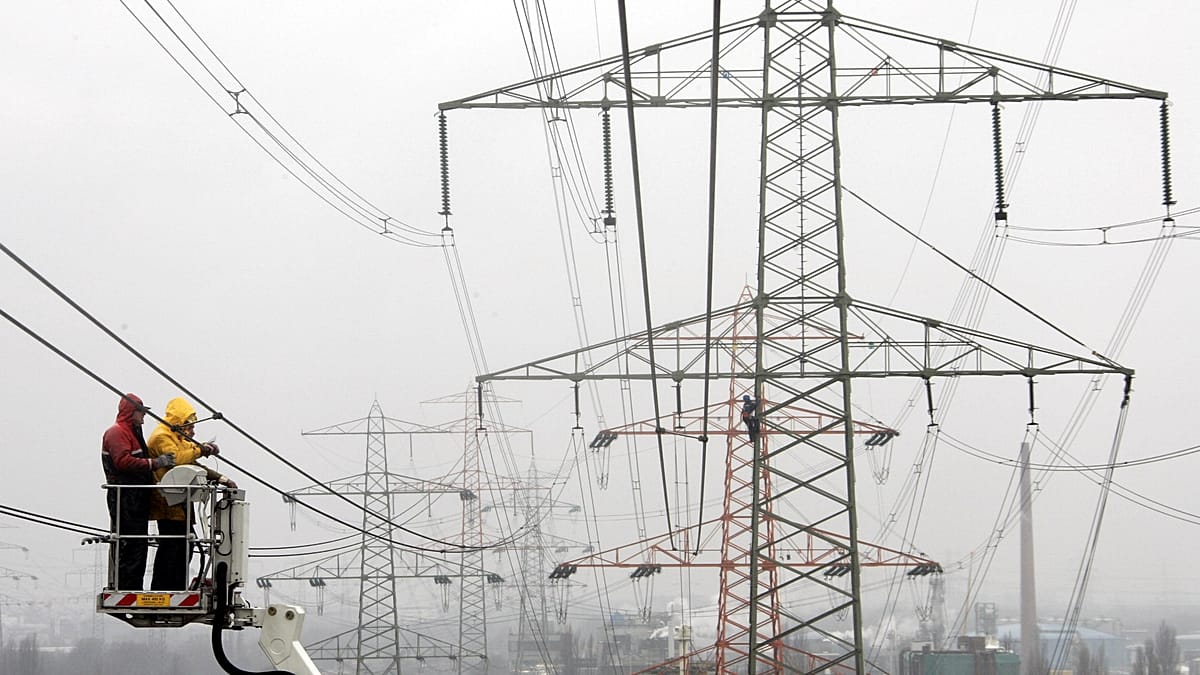
“Europe’s ability to implement the technology at scale is colliding with the limits of energy production and the grid,” the report found.
Around nine in ten executives (87%) are concerned that Europe’s energy infrastructure cannot keep pace with AI demand. More than half (57%) say it is either at serious risk or already showing signs of stress.
These pressures are already being felt. One in five (21%) of firms say energy constraints are directly delaying AI projects, while another 28 percent have had to change project timelines or site selection.
High energy costs, often linked to ageing infrastructure, are another concern. A majority of firms (52%) say Europe’s energy prices are already uncompetitive compared with global rivals. Some 40 percent of executives point to permitting delays, and 35 percent mentioned insufficient grid capacity or limited access to renewables.
Three in five consider relocating for cheaper power
More importantly, three in five leaders (61%) at European firms are considering relocating some data-intensive operations to regions with cheaper power, or have already done so.
Some 21 percent said relocation is on their radar but no action has been taken yet, while only 16 percent plan to stay regardless of energy access.
“With American AI and data centre companies striking direct deals with nuclear power plants to secure energy for their projects, Europe has serious catching up to do,” the report said.
Internet reliability is another major concern
AI deployments place heavy demands on connectivity, and strains are already visible. More than half of firms (54%) report poor network performance, including latency, downtime or throughput issues linked to rising AI and data traffic.
Some 16 percent say these disruptions are materially affecting operations. A large majority (77%) of businesses are already experiencing connectivity problems even before making major efforts to scale up AI.
When asked about internet reliability as AI workloads scale up, 86 percent of European company leaders said they are concerned. This suggests that a large majority believe current networks are not yet equipped to handle widespread AI adoption.
Global data traffic set to surge
Projections indicate that global data traffic will surge by five to nine times by 2033, and this will put unprecedented strain on Europe’s stretched networks.
“Without a decisive build-out of resilient and secure networks, Europe risks staying an AI ‘taker,’ reliant on others’ infrastructure and standards, rather than emerging as an ‘AI maker’” the report suggests.
Sovereignty is part of infrastructure
The report also says that sovereignty has become the foundation of digital trust, with security seen as the key to making that sovereignty possible.
Sovereignty is one of the top priorities of European firms. 86 percent say it is very or extremely important to keep data and control within Europe. Some 73 percent consider sovereignty a crucial factor in infrastructure planning.
What do European firms want?
To address these challenges, executives called for simpler and more consistent regulation across markets, faster access to spectrum, and changes to competition rules that would allow consolidation. They also emphasised the need for industry-wide investment in energy-efficient, AI-ready networks.