
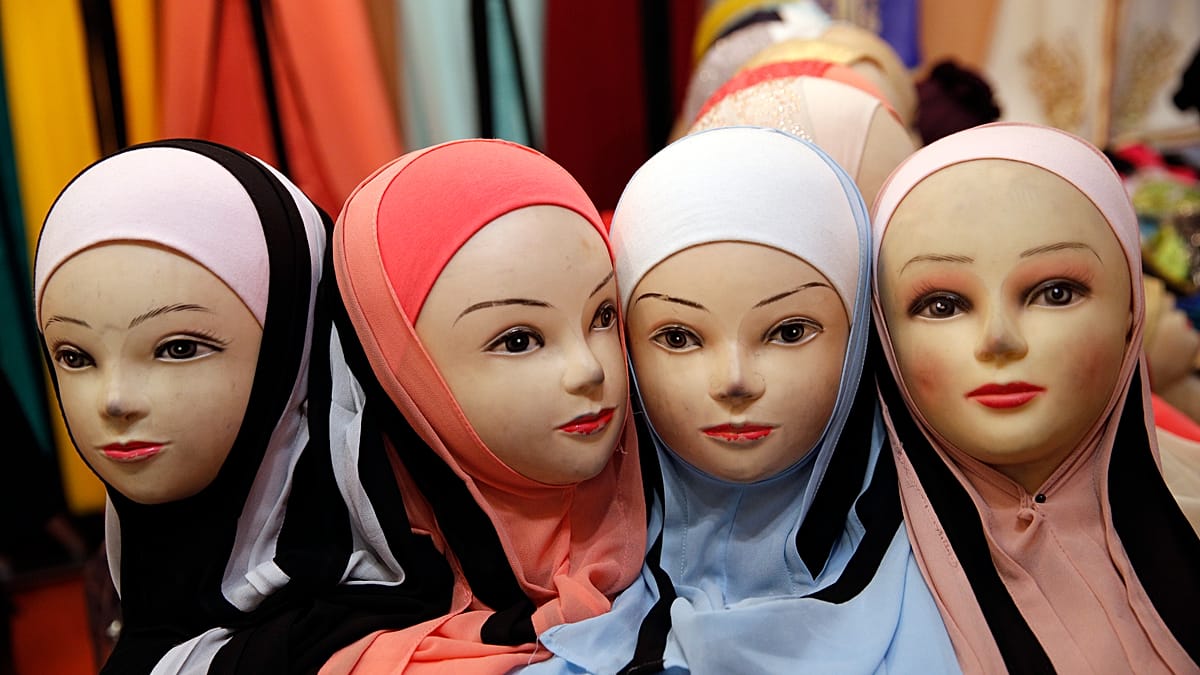
Since the start of the 2026/27 school year on 1 September, female pupils in Austria under the age of 14 have been prohibited from wearing any headscarf at school that “covers the head in line with Islamic traditions.”
Teachers’ representatives say the new rule has generally been implemented calmly and respectfully. At the same time, some schools have reported conflicts and, in some cases, aggressive reactions.
The new law was already controversial before it came into force, with critics questioning whether it was compatible with freedom of religion and the principle of equality.
In 2020, Austria’s Constitutional Court (VfGH) overturned an earlier headscarf ban. That law had prohibited primary school pupils from wearing religious or ideologically motivated clothing that covered the head and applied to children until the end of the school year in which they turned 10.
However, the VfGH found that the rule violated the principle of equality and freedom of religion. In the court’s view, the law in practice was primarily aimed at the “Islamic” headscarf.
The new law differs in its higher age limit.
The government says the main goal is to protect children’s development and their freedom to develop as individuals, arguing that girls should be protected from potential family or social pressure to wear a headscarf.
The VfGH has not yet ruled on whether this revised justification, and the new design of the ban, address the constitutional concerns raised previously.
Teachers required to enforce ban
For the time being, schools and teachers are responsible for putting the ban into practice.
If a teacher notices that a pupil is wearing such a headscarf despite the ban, they are required to ask the pupil to remove it as a first step. If the pupil refuses, further discussions will take place. If necessary, the education authority may be brought in. Only at later stages can administrative penalty proceedings be initiated.
Students who repeatedly violate the ban can expect to face a multi-stage process, and parents or guardians could be fined between €150 and €800 if the headscarf continues to be worn despite being asked to remove it.
Representatives of the teachers’ union have criticised the obligation on teachers to report breaches and warned that it risks putting them in a monitoring role that goes beyond their educational work.
Reports of threats and refusal to attend school
Possible threats and refusal to attend school have also become part of the debate surrounding the new law.
Austria’s government had, even before the law was passed, pointed to cases in which girls or women were put under pressure both to wear and to remove a headscarf.
Integration Minister Claudia Plakolm referred, among other things, to instances of threats within families.
There are currently no statistics that would show how often such situations arise in Austrian schools.
Reports of pupils who do not attend lessons at all or do so only irregularly because of the headscarf ban also still need to be properly assessed. There are indications of isolated cases of refusal and conflict.
Supporters of the new rules argue that girls at this age are particularly dependent on their families and could therefore be exposed to considerable social or religious pressure.
Critics have countered these concerns by questioning whether a state ban really strengthens the self-determination of the pupils concerned. A girl who wishes to wear a headscarf “of her own conviction” can no longer follow through with that decision at school because of the ban.
There are also concerns from education experts. Psychologist Christiane Spiel warned on ORF of potential loyalty conflicts for children if parents insist on wearing a headscarf while the school demands that it be removed.
New constitutional challenge is pending
Before the law came into force, several parents had already tried to challenge it directly before the VfGH.
The court rejected these applications on formal grounds, as those concerned had not yet been directly affected by the law at that point.
A new application for the law to be struck down has now been filed.
The key issue, once again, is likely to be the relationship between freedom of religion and the principle of equality.
Among other things, the court will have to examine whether protecting children from religious or family pressure justifies an “interference with freedom of religion” and whether a general headscarf ban is necessary and proportionate to achieve this.