
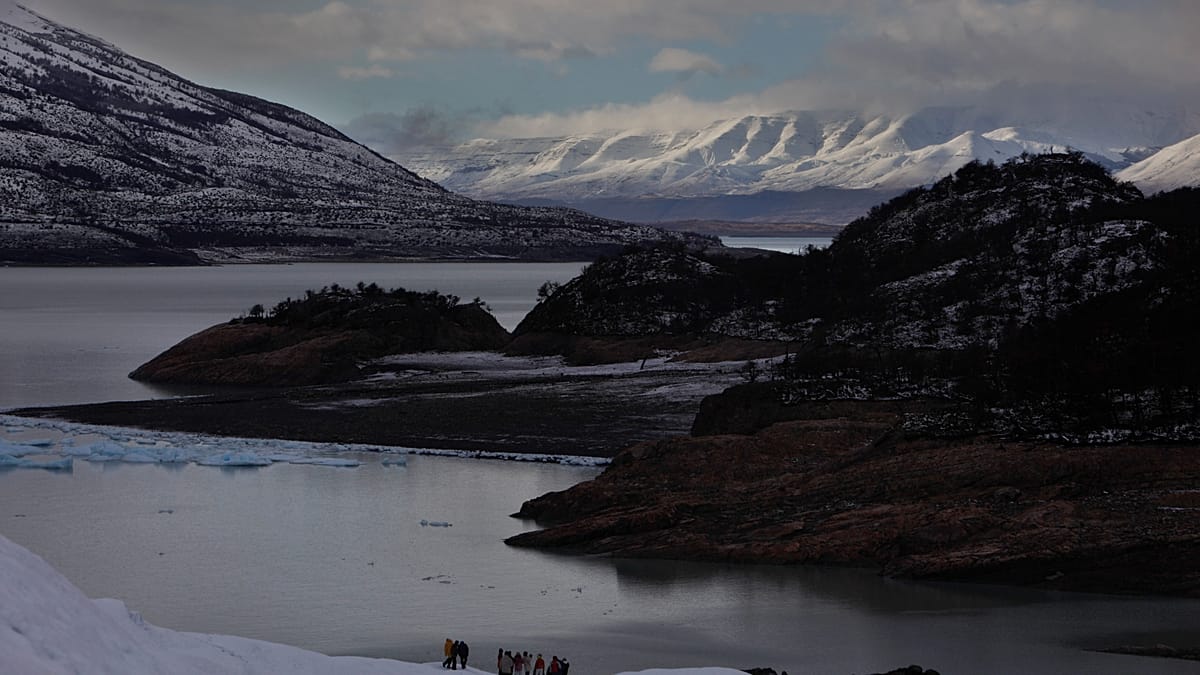

Argentina’s cool southern region of Patagonia is becoming a hotspot for data centres, and the country’s president is on a mission to lure them in.
While some communities in the US and Europe push back against data centres, Argentina’s government is making the opposite pitch. President Javier Milei says his country will not regulate AI, and he is offering a corporate tax cut to large projects in the sector, though the Senate has yet to approve it.
Patagonia’s appeal is practical: plenty of empty land, cool air, strong winds, and gas from the Vaca Muerta shale formation to cool and power the data centres.
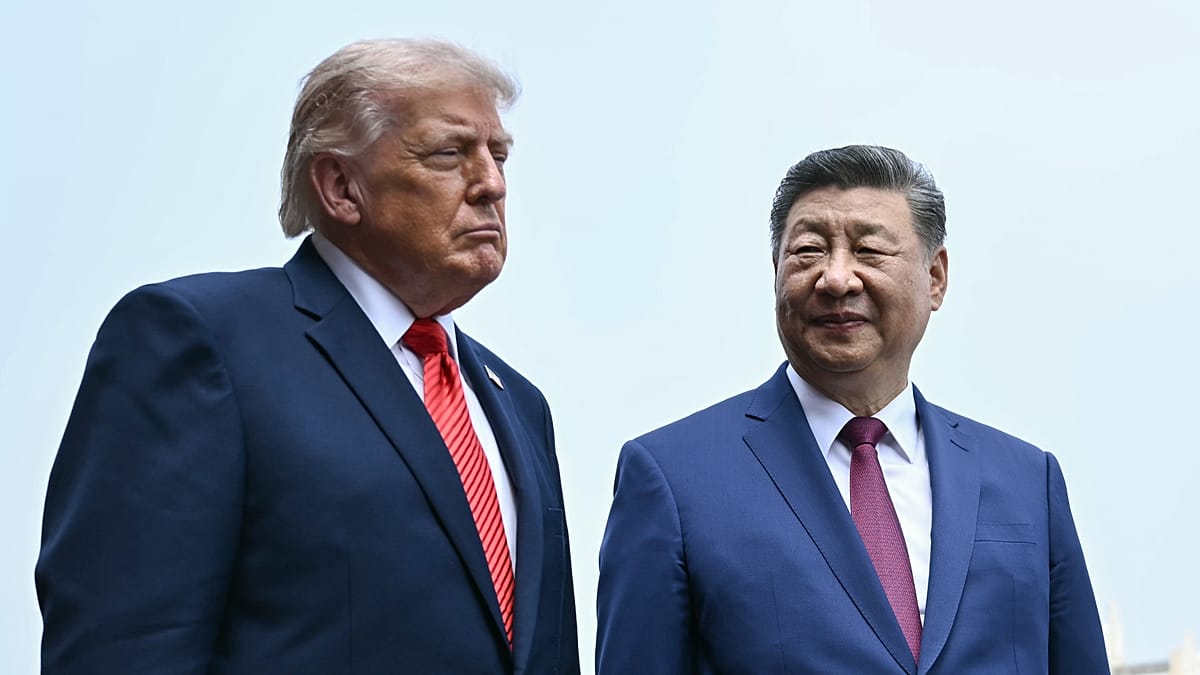
Like his ally, US President Donald Trump, Milei frequently posts AI-generated images on social media. He has also proposed creating “nonhuman corporations” run entirely by AI agents.
“We are not going to regulate artificial intelligence,” Milei told the US Chamber of Commerce in Washington last month. “We are going to leave it free.”
Visitor logs obtained by The Associated Press show a steady stream of tech figures meeting with Milei and his aides in recent months, from venture capitalist Peter Thiel to representatives of OpenAI, Amazon, Google, Oracle and data centre companies.
Foreign Ministry records show that data centre developer Crusoe, which helped build OpenAI’s flagship campus in Texas, sought talks this year with Argentine energy officials about US government-backed investments.
“In densely populated parts of the US and Europe, there’s a lot of fighting over access to the grid and who should get the electricity,” said Marta Zlotkowska, head of international development at Green Capital.
The Polish renewable energy company plans to build a $3 billion (€2.7 billion) data centre in Patagonia that would be leased to big tech firms for AI computing, though it has yet to secure a customer.
“We compared potential locations for the project around the world and Argentina — well, Patagonia — came out on top in every category,” she said.
Patagonia’s AI promise
To win over companies wary of Argentina’s chronic economic instability, Milei is pushing an incentive scheme that would slash the corporate income tax rate to 15% from 25% for projects of at least $1 billion (€892 million) in AI and other emerging industries. The measure is awaiting Senate approval.
The payoff for Argentines remains unclear. Data centres employ relatively few people. Milei’s proposed incentives don’t require companies to reserve computing capacity for local consumption or to disclose their energy and water use.
“We’re not talking about data centres designed to strengthen Argentine technological sovereignty,” said Alan Rocha Varsanyi, a researcher at Observatorio Petrolero Sur, an Argentine environmental group. “The computing capacity will be exported wherever OpenAI or the other companies need it.”
Blueprints, not yet bulldozers
For all Milei’s hype, Argentina lags in the race to become a regional data centre hub, as its neighbours tout cheap land, renewable power and expanding fibre-optic connections to US tech giants.
Milei insists his calls for unfettered AI give Argentina an edge at a time when the European Union and a growing number of US states have adopted new regulations. Critics warn he is pushing to deploy AI in Argentina without safeguards against risks ranging from mass surveillance to cyberattacks.
“Without rules, Argentina will become a laboratory — like when companies go to developing countries to test strange drugs they can’t test in major developed countries,” said Nicolás Wolovick, a computer science professor at the National University of Córdoba.
Milei may hear similar concerns next week when Pope Leo XIV, who has warned of AI’s threats to humanity, visits Argentina on his Latin American tour.
Even some in Milei’s own government acknowledge that his anti-regulation stance complicates efforts to build a clear legal framework, with one senior official not authorised to brief media saying companies are waiting for Argentina to settle rules on training AI with copyrighted works and sending personal data abroad.
Servers and sheep
In remote ranching outposts across the treeless plateau of Chubut province, life revolves around tending flocks on steppes and shearing sheep in sheds. With the wool industry in decline after decades of drought, overgrazing and soaring production costs, some ranchers are betting on a different kind of shed — filled not with fleece but with blinking racks of servers.
“Sheep farmers are looking very hard at what alternatives can be found to bring in more income,” said Francisco Sáenz, an agricultural engineer and fourth-generation sheep farmer.
His family is among 14 landowners who have leased a combined 130,000 hectares (about 321,000 acres) to Green Capital for its planned data centre. The ranchers expect to keep grazing sheep alongside their colossal future neighbour.
Construction isn’t expected to begin until around 2028. If operated continuously at its projected peak demand, the finished campus would use about 2.7 times as much electricity in a year as the entire city of Buenos Aires consumed in 2025, according to an AP calculation.
Green Capital promises to generate all its own electricity from wind turbines, solar farms and gas-fired generators rather than strain Argentina’s congested grid. Provincial officials are counting on the project to deliver billions of dollars in investment, highly skilled jobs and a market for surplus wind power.
But some residents of Trelew, a dust-blown city near the proposed site, say they have no way to judge those assurances. Environmental studies are still underway, permits are pending and the company hasn’t specified how much water the project would need or how much of its power would come from gas.
“There’s just so little information,” said Cristina Gibón, 46, who fears the environmental toll of data centres. “Maybe we’ll have water until we’re old. But afterwards, our children will still be here, and they won’t have those resources.”
Worries like hers are feeding a wider backlash against Milei’s courtship of Big Tech. In Trelew, a small group of residents has rallied online and in the main square under the banner “Trelew Free of Data Centres”.
In Congress, where lawmakers recently accused Milei of selling off the country at a hearing on billionaire Peter Thiel’s interests in Argentina, the opposition has forced the president to gut a bill easing restrictions on foreign land ownership and has stalled his plan to let AI agents control companies.
Back on his family’s farm, Sáenz sees a familiar Argentine reflex.
“Whenever a foreign company wants to make a major investment in Argentina, there’s a lot of criticism. Many people’s first reaction is to say, ‘No, they’re terrible people coming from the outside to take our resources,'” he said.
“I’m not saying big companies are the best thing ever. I’m just saying that when I look at other countries, I see stable economies.”