
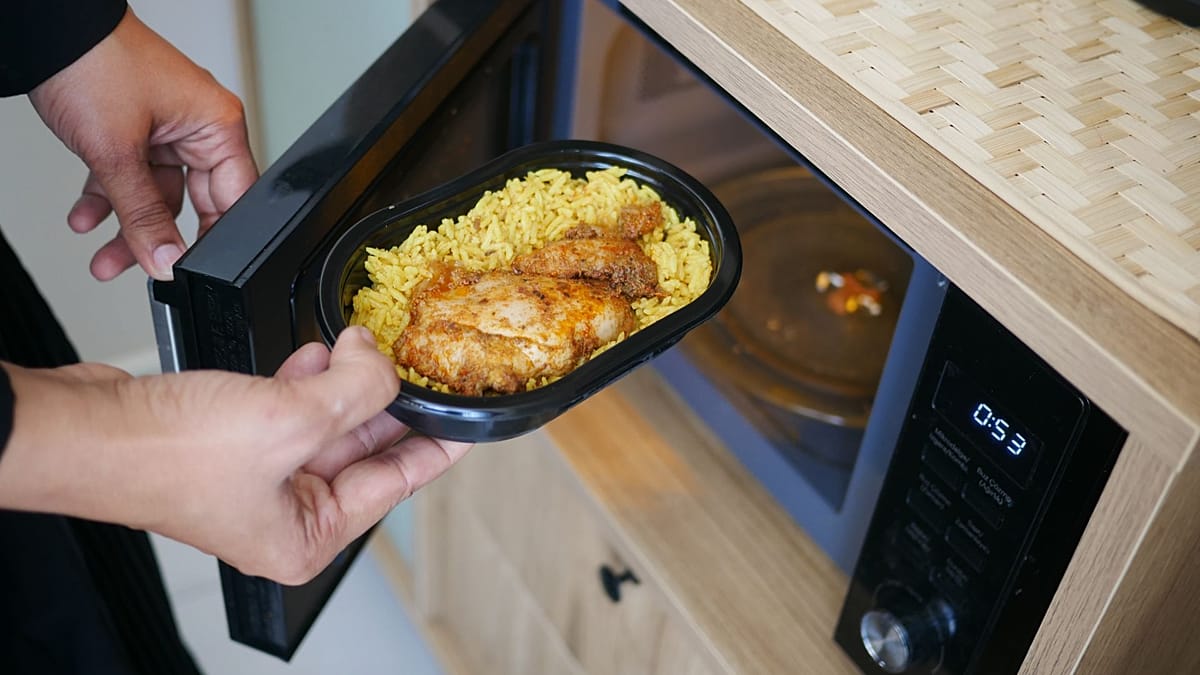
Microwave meals are a convenience that’s hard to resist on a busy day. But they could be quietly wreaking havoc on our health and environment, a new report warns.
The paper by Greenpeace International analyses 24 recent scientific studies on the hidden health risks of plastic-packaged ready meals.
It paints a grim picture: hundreds of thousands of tiny plastic particles leaching into our food along with hazardous chemicals that could have far-reaching health impacts.
“People think they’re making a harmless choice when they buy and heat a meal packaged in plastic,” says Graham Forbes, global plastics campaign lead from Greenpeace USA.
“In reality, we are being exposed to a cocktail of microplastics and hazardous chemicals that should never be in or near our food.”
And the contamination doesn’t stop in our bodies. Plastic food trays and films pollute across their entire lifecycle – from fossil fuel extraction to energy-intensive manufacturing and eventual disposal.
When the time comes to throw these single-use plastics away, their multilayer materials make them tricky to recycle. As they break down into micro- and nanoplastics, these tiny fragments accumulate in soil, rivers and oceans, harming animals and re-entering our food system.
Even when they do make it into the circular economy, plastics degrade in quality and can re-release hazardous additives into new products.
Are plastic ready meals safe to heat and eat?
Convenience food items marked ‘microwave safe’ may be giving false reassurance to consumers, the report warns.
The label, the authors argue, generally refers to the structural stability of the container – not whether it releases microplastics or chemical additives into food.
One study found 326,000 to 534,000 micro- and nanoplastic particles leaching into food simulants after just five minutes of microwave heating. Nanoplastics are small enough to potentially enter organs and the bloodstream.
Plastics are also known to contain more than 4,200 hazardous chemicals. Most of these are not regulated in food packaging and some are linked to cancer, infertility, hormone disruption and metabolic disease, the report notes.
At least 1,396 food contact plastic chemicals have been detected in human bodies, with growing evidence linking exposure to neurodevelopmental disorders, cardiovascular disease, obesity and type 2 diabetes.
Higher temperatures, longer heating times, worn containers and fatty foods – which absorb more chemicals – significantly increase the amount of plastic particles and additives that leach into meals, according to the report.
Regulatory guidance on microplastics released from food packaging is insufficient globally, the report states, adding that industry denial has contributed to regulatory delays.
In the European Union, for example, food contact plastics are regulated based on ‘migration limits’ for known chemical substances, based on advice from the European Food Safety Authority, but there are currently no specific thresholds for microplastic particles.
Plastic pollution is growing, fast
Global plastic production is set to more than double by 2050, and plastic packaging is a huge part of the picture. It currently accounts for 36 per cent of all plastics, analysis by the International Energy Agency shows.
Already worth over €160 billion, plastic-packaged ready meals are set to grow in value to almost €300 billion in 2034 as consumers continue to chase convenience, research by global consulting firm Towards FnB found.
In 2024, 71 million tonnes of ready meals were produced globally, averaging 12.6 kg per person, according to market research published by Statista.
Greenpeace argues that food-contact plastics should fall under stricter global controls in the forthcoming UN Global Plastics Treaty, including phase-outs of hazardous additives rather than relying on downstream recycling.
“The risk is clear, the stakes are high and the time to act is now,” says Forbes.