
Close Menu
Daily Guardian EuropeDaily Guardian Europe
  • Home
  • Europe
  • World
  • Politics
  • Business
  • Lifestyle
  • Sports
  • Travel
  • Environment
  • Culture
  • Press Release
  • Trending
What's On

All winners: European Heritage Awards celebration conservation and reconversion projects

April 21, 2026

Ukraine has repaired Druzhba pipeline, Zelenskyy says – POLITICO

April 21, 2026

Qatar backs ceasefire as uncertainty surrounds US-Iran peace talks in Islamabad

April 21, 2026

This Central Asian destination is growing its national parks and adventure offerings

April 21, 2026

7 takeaways from Olly Robbins’ evidence on the Peter Mandelson vetting saga – POLITICO

April 21, 2026
Facebook X (Twitter) Instagram
Web Stories
Facebook X (Twitter) Instagram
Daily Guardian Europe
Newsletter
  • Home
  • Europe
  • World
  • Politics
  • Business
  • Lifestyle
  • Sports
  • Travel
  • Environment
  • Culture
  • Press Release
  • Trending
Daily Guardian EuropeDaily Guardian Europe
Home»Europe
Europe

Are Europeans satisfied with the European Union’s global role?

By staffMarch 25, 20263 Mins Read
Are Europeans satisfied with the European Union’s global role?
Share
Facebook Twitter LinkedIn Pinterest Email
By&nbspNoa Schumann&nbsp&&nbspvideo by Léa Becquet

Published on
25/03/2026 – 17:26 GMT+1

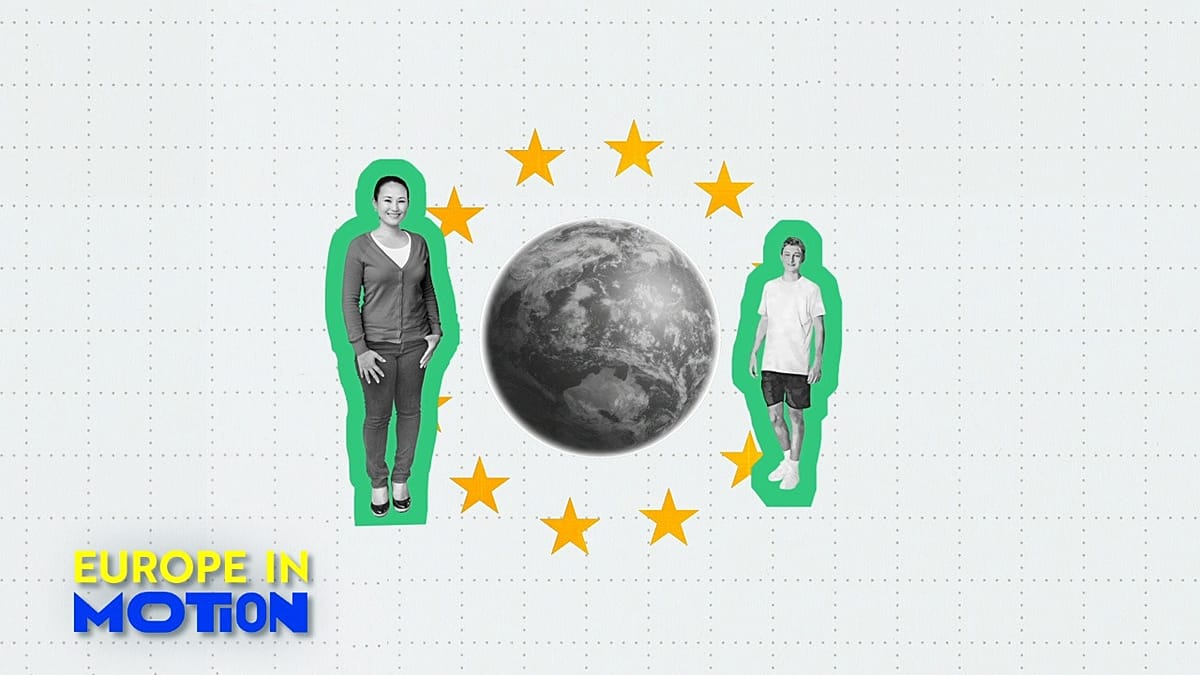
While the EU is still widely regarded as a key global player, new data suggests confidence in its influence is beginning to waver amid growing geopolitical instability.

A survey by Euroconsumers, drawing on responses from nearly 10,000 people across ten countries — Belgium, Denmark, France, Germany, Hungary, Ireland, Italy, Poland, Portugal and Spain — sheds light on how Europeans perceive the bloc’s global standing.

A recognised power — but with clear limits

A majority of Europeans continue to view the EU as a major force on the world stage. Around 63% consider it a leading economic power, and 60% see it as an influential political actor.

However, perceptions shift significantly when it comes to military strength. Only 36% regard the EU as a credible hard power, highlighting a gap between its economic weight and defence capabilities.

Views are also mixed when it comes to specific crises. In Ukraine, 42% of respondents say the EU has demonstrated strong leadership. By contrast, 41% believe it has failed to do so in Gaza.

Internal divisions are seen as a key obstacle: roughly two-thirds of those surveyed say disagreements between member states are undermining the EU’s global influence.

A cooling transatlantic relationship

The survey points to a weakening of trust in the United States as a long-term partner. Just 28% of respondents believe Washington will remain reliable in the years ahead.

Doubts are particularly pronounced in countries such as Denmark, Germany, Portugal, Ireland, Belgium and Spain, where significant shares of respondents question the durability of the transatlantic alliance.

In this context, around half of respondents say the EU should prioritise building new partnerships beyond the United States. Meanwhile, 51% support deepening trade relations with Asian economies such as Japan and South Korea, while 37% favour closer economic ties with China.

Trade tensions appear to be a key factor, with 70% backing EU countermeasures in response to US tariffs.

At the same time, opinions are divided on how Brussels has handled Donald Trump’s policies. Some 38% of respondents disapprove of the EU’s response, compared to 34% who support it.

Consumer behaviour is also shifting. Around 44% say they have reduced or stopped buying American products — a figure that rises to 55% in Denmark.

Calls for greater autonomy

Support for a more self-reliant European Union is strong. Around 80% of respondents back increased investment in European technology to reduce dependence on external powers.

There is similarly broad backing for strengthening defence capabilities and diversifying trade partnerships.

Yet expectations remain measured. While many Europeans favour a more assertive EU on the global stage, concerns about the economic impact persist — particularly as households continue to grapple with rising living costs.

Share. Facebook Twitter Pinterest LinkedIn Tumblr Email

Keep Reading

France’s president to welcome Lebanon’s PM amid fragile ceasefire and tensions with Israel

‘Insult of top of mockery’: Meloni criticises Swiss hospital for billing victims of bar fire

EU optimistic about ending Hungary’s veto on €90 billion loan for Ukraine

Europe Today: EU foreign ministers set to discuss Ukraine loan, ties with Israel

UK PM Starmer admits Mandelson envoy appointment was a mistake amid Epstein row

Slovakia to vote in July referendum on scrapping lifelong payments for politicians

Watch: Magyar visits Tusk – will there be a Warsaw on the Danube?

Spain’s call to suspend EU-Israel agreement set to fail amid broad opposition

Timmy, the whale stranded off Germany’s coast, swims off and gets stuck…again

Editors Picks

Ukraine has repaired Druzhba pipeline, Zelenskyy says – POLITICO

April 21, 2026

Qatar backs ceasefire as uncertainty surrounds US-Iran peace talks in Islamabad

April 21, 2026

This Central Asian destination is growing its national parks and adventure offerings

April 21, 2026

7 takeaways from Olly Robbins’ evidence on the Peter Mandelson vetting saga – POLITICO

April 21, 2026

Subscribe to News

Get the latest Europe and world news and updates directly to your inbox.

Latest News

France’s president to welcome Lebanon’s PM amid fragile ceasefire and tensions with Israel

April 21, 2026

7 people arrested over planned arson attack on UK Jewish community – POLITICO

April 21, 2026

‘Insult of top of mockery’: Meloni criticises Swiss hospital for billing victims of bar fire

April 21, 2026
Facebook X (Twitter) Pinterest TikTok Instagram
© 2026 Daily Guardian Europe. All Rights Reserved.
  • Privacy Policy
  • Terms
  • Advertise
  • Contact

Type above and press Enter to search. Press Esc to cancel.