




Published on
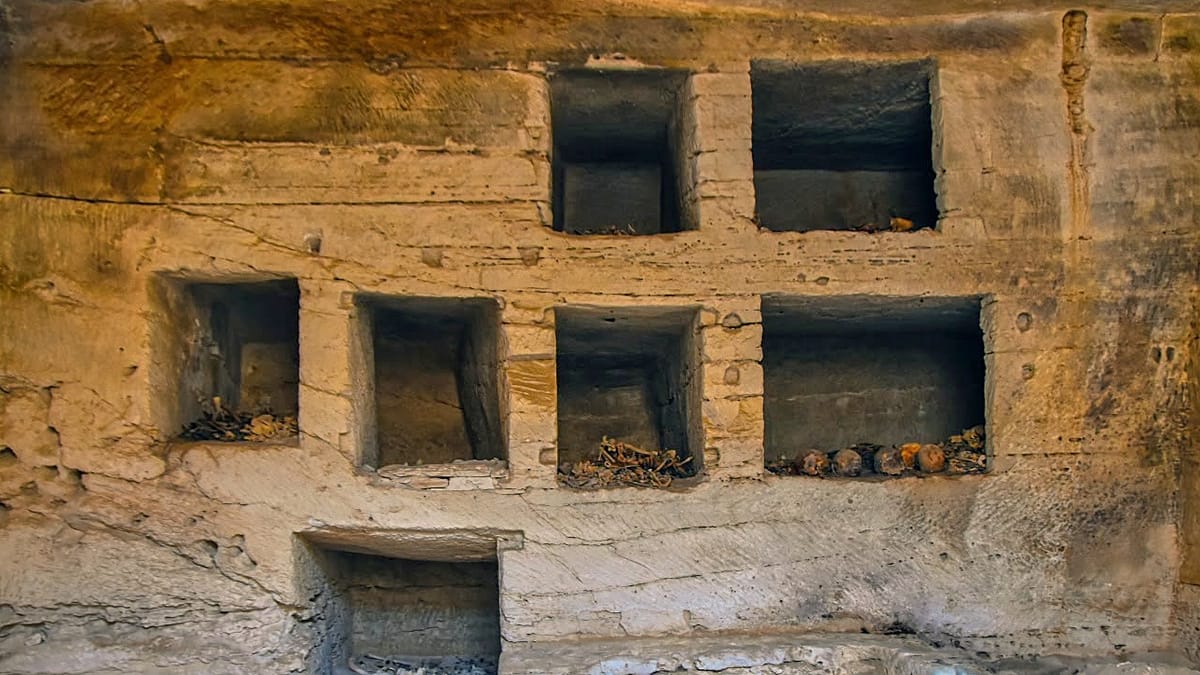
New and important pieces are being added to the story of ancient Egypt. Along the north-western coast, around 300 kilometres from the capital Cairo, an archaeological excavation campaign has brought to light 18 burials dating back to the Roman and Ptolemaic periods.
The finds were made at the site of Marina El Alamein, once home to the thriving city of Leukaspis, and the discovery has been formally announced by Egypt’s Ministry of Tourism and Antiquities.
This latest milestone brings the total number of tombs identified in the area since 1986, the year the site was discovered, to 44.
Specifically, archaeologists have identified 11 hypogeal complexes carved directly into the rock and a further seven above-ground structures built from limestone blocks, some of which were found still intact and protected by their original coverings.
Valuable finds and the ‘golden tongue’ ritual
In addition to the masonry structures, the excavations have yielded a rich collection of artefacts: oil lamps, amphorae, perfectly preserved ceramic vessels, basins and small stone altars. Among the most impressive discoveries is a large granite sarcophagus, two and a half metres long, which still contains human remains.
The most fascinating aspect of the discovery, however, concerns the funerary rituals of the time. Researchers recovered 24 thin gold foils placed in the mouths of the deceased.
This is the ancient custom of the ‘golden tongue’, a widespread magical-religious practice in the Hellenistic and Roman eras intended to enable the dead to speak with the deities of the underworld. The strong persistence of traditional Egyptian beliefs is further evidenced by a gold amulet depicting the Eye of Horus.
Egyptian Tourism and Antiquities Minister Sherif Fathy stressed that this discovery confirms the historical centrality of Leukaspis (also mentioned by the geographer Strabo).
Located around a hundred kilometres from Alexandria, the site was a strategic hub for commercial and cultural exchanges between Egypt and the rest of the Mediterranean and today stands as one of the best-preserved coastal settlements from the classical period in the country.