
Close Menu
Daily Guardian EuropeDaily Guardian Europe
  • Home
  • Europe
  • World
  • Politics
  • Business
  • Lifestyle
  • Sports
  • Travel
  • Environment
  • Culture
  • Press Release
  • Trending
What's On

Video. Buddhist monks complete 3,700-kilometre ‘Walk for Peace’ to Washington

February 11, 2026

‘Affordability is absolutely critical’: Can PepsiCo continue to achieve growth?

February 11, 2026

Cisco president warns AI agents need ‘background checks’ like human employees

February 11, 2026

Starmer distances himself from ex-comms chief who campaigned for sex offender – POLITICO

February 11, 2026

EU leaders grapple with how to build and finance a competitive Europe

February 11, 2026
Facebook X (Twitter) Instagram
Web Stories
Facebook X (Twitter) Instagram
Daily Guardian Europe
Newsletter
  • Home
  • Europe
  • World
  • Politics
  • Business
  • Lifestyle
  • Sports
  • Travel
  • Environment
  • Culture
  • Press Release
  • Trending
Daily Guardian EuropeDaily Guardian Europe
Home»Environment
Environment

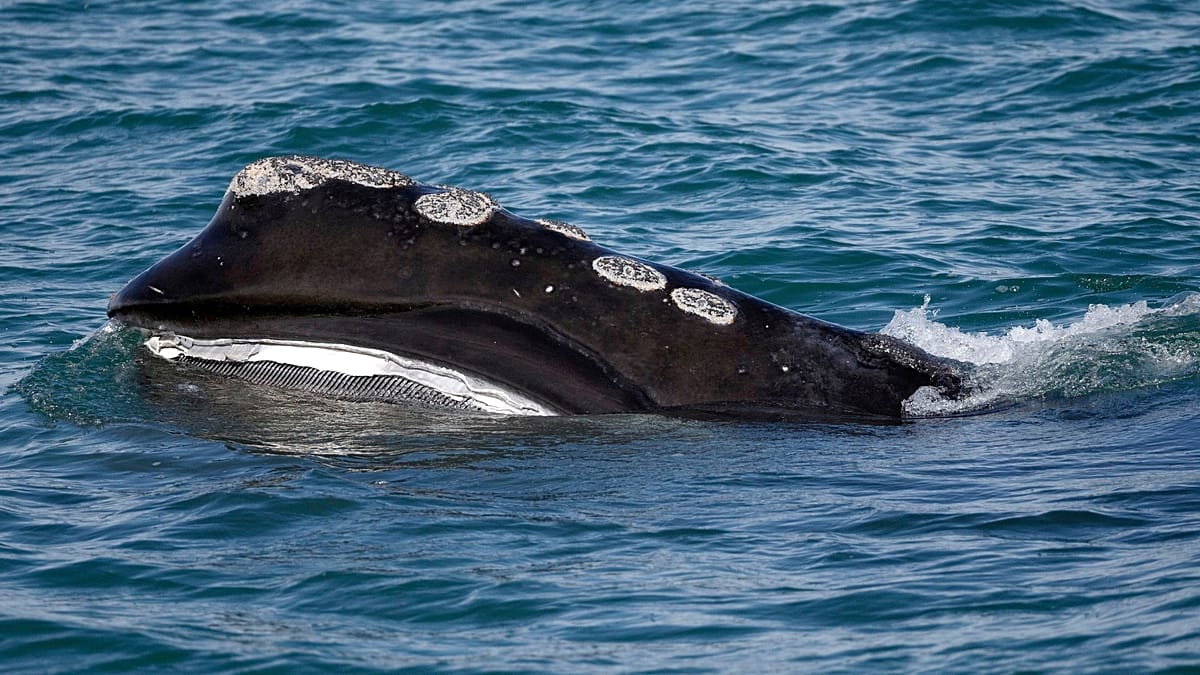
A rare whale is having an encouraging season for births. Scientists warn it might still go extinct

By staffJanuary 6, 20263 Mins Read
A rare whale is having an encouraging season for births. Scientists warn it might still go extinct
Share
Facebook Twitter LinkedIn Pinterest Email

By&nbspPatrick Whittle&nbspwith&nbspAP

Published on
06/01/2026 – 11:04 GMT+1

One of the world’s rarest whale species is having more babies this year than in some recent seasons, but experts say many more young are needed to help stave off the possibility of extinction.

The North Atlantic right whale‘s population numbers an estimated 384 animals and is slowly rising after several years of decline. The whales have gained more than 7 per cent of their 2020 population, according to scientists who study them.

The whales give birth off the southeastern United States every winter before migrating north to feed. Researchers have identified 15 calves this winter, the National Oceanic and Atmospheric Administration said on Monday.

That number is higher than two of the last three winters, but the species needs “approximately 50 or more calves per year for many years” to stop its decline and allow for recovery, NOAA said in a statement. The whales are vulnerable to collisions with large ships and entanglement in commercial fishing gear.

Stronger laws needed to protect right whales

This year’s number is encouraging, but the species remains in peril without stronger laws to protect against those threats, said Gib Brogan, senior campaign director with environmental group Oceana. The federal government is in the midst of a moratorium on federal rules designed to protect right whales until 2028, and commercial fishing groups have pushed for a proposal to extend that pause for even longer.

There is still time left for more baby whales to be born this winter, but 50 is not a reasonable expectation because of a lack of reproductive females in the population, Brogan said.

“We’re not going to be able to calve ourselves to recovery,” Brogan said. “We also need to be doing more to tackle the two primary causes of right whale deaths, being entanglement in fishing gear and being hit by boats.”

The whales have fared better than last winter, when they gave birth to only 11 calves, according to NOAA data. The whales have reached 20 calves only twice since 2010, and they gave birth to no calves in a disastrous 2018 season. The whales are less likely to reproduce when they have suffered injuries or are underfed, scientists have said.

The whales were hunted to the brink of extinction during the era of commercial whaling and have been federally protected for decades. They remain in a crisis at the moment because there have been more deaths than births in the population in the past decade, NOAA said in its statement.

Share. Facebook Twitter Pinterest LinkedIn Tumblr Email

Keep Reading

Trump Tracker: How the US is rolling back back climate progress in 2026

Devastating wildfires in Argentina and Chile made three times more likely by climate change

‘One of the most damaging decisions in modern history’: Trump EPA to repeal key climate finding

Too warm to snow: Western US fears wildfires and water shortages while eastern states shiver

‘I don’t even have gloves on’: Olympic town warms up as climate change puts Winter Games on thin ice

Black carbon needs to be regulated to save the Arctic – but geopolitical tensions overshadow it

‘Nobody gives us any incentive’: A family’s solitary fight to save endangered plants in the Amazon

Amsterdam to enact landmark ban on fossil fuel and meat advertising in public spaces

‘A half-baked roadmap’: What’s missing from the EU and UK’s so-called crackdown on forever chemicals

Editors Picks

‘Affordability is absolutely critical’: Can PepsiCo continue to achieve growth?

February 11, 2026

Cisco president warns AI agents need ‘background checks’ like human employees

February 11, 2026

Starmer distances himself from ex-comms chief who campaigned for sex offender – POLITICO

February 11, 2026

EU leaders grapple with how to build and finance a competitive Europe

February 11, 2026

Subscribe to News

Get the latest Europe and world news and updates directly to your inbox.

Latest News

Tehran ready for nuclear inspections, insists it is not seeking weapons

February 11, 2026

Forensic experts’ new report claims that Kurt Cobain may have been murdered

February 11, 2026

French FM ‘can’t rule out’ more diplomats are in Epstein files – POLITICO

February 11, 2026
Facebook X (Twitter) Pinterest TikTok Instagram
© 2026 Daily Guardian Europe. All Rights Reserved.
  • Privacy Policy
  • Terms
  • Advertise
  • Contact

Type above and press Enter to search. Press Esc to cancel.