
Close Menu
Daily Guardian EuropeDaily Guardian Europe
  • Home
  • Europe
  • World
  • Politics
  • Business
  • Lifestyle
  • Sports
  • Travel
  • Environment
  • Culture
  • Press Release
  • Trending
What's On

We got up close with LEGO’s new Smart Brick. Here’s how you can soon play Star Wars scenarios

January 8, 2026

Comment Trump pourrait s’emparer facilement du Groenland en 4 étapes – POLITICO

January 8, 2026

Berlin mayor under fire for playing tennis while city froze during blackout – POLITICO

January 7, 2026

Von der Leyen trades budget freedom for free trade – POLITICO

January 7, 2026

Polish FM appeals to US Congress over Trump threats against Greenland – POLITICO

January 7, 2026
Facebook X (Twitter) Instagram
Web Stories
Facebook X (Twitter) Instagram
Daily Guardian Europe
Newsletter
  • Home
  • Europe
  • World
  • Politics
  • Business
  • Lifestyle
  • Sports
  • Travel
  • Environment
  • Culture
  • Press Release
  • Trending
Daily Guardian EuropeDaily Guardian Europe
Home»Environment
Environment

A rare whale is having an encouraging season for births. Scientists warn it might still go extinct

By staffJanuary 6, 20263 Mins Read
A rare whale is having an encouraging season for births. Scientists warn it might still go extinct
Share
Facebook Twitter LinkedIn Pinterest Email

By&nbspPatrick Whittle&nbspwith&nbspAP

Published on
06/01/2026 – 11:04 GMT+1

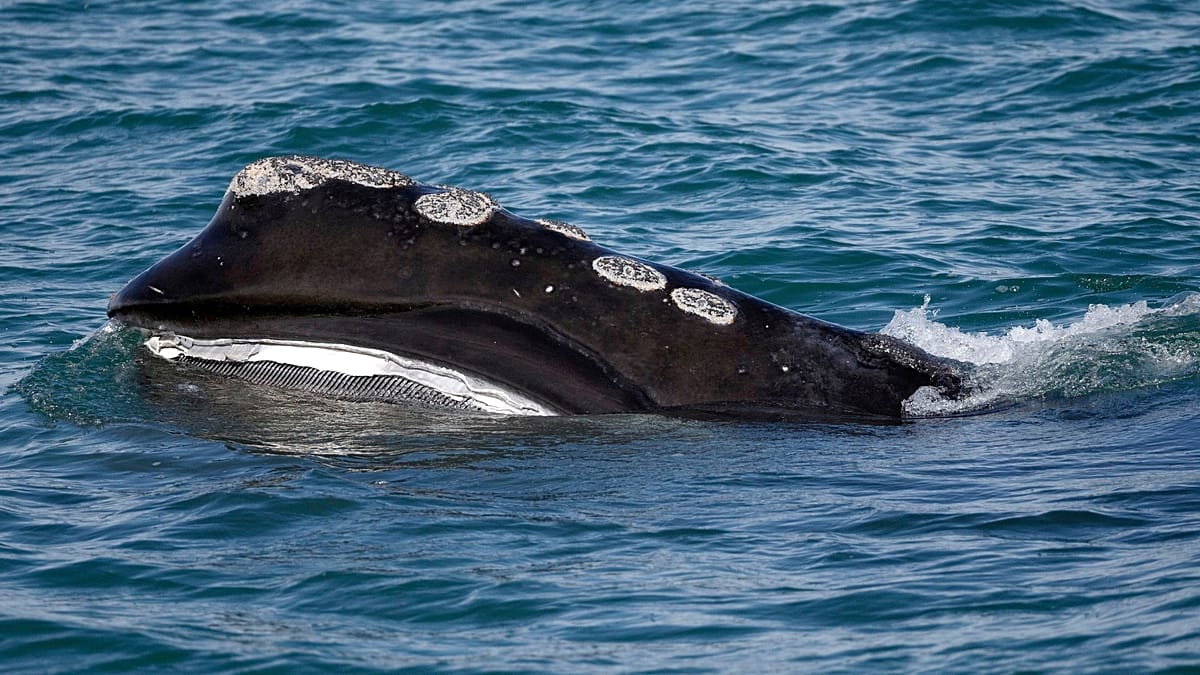
One of the world’s rarest whale species is having more babies this year than in some recent seasons, but experts say many more young are needed to help stave off the possibility of extinction.

The North Atlantic right whale‘s population numbers an estimated 384 animals and is slowly rising after several years of decline. The whales have gained more than 7 per cent of their 2020 population, according to scientists who study them.

The whales give birth off the southeastern United States every winter before migrating north to feed. Researchers have identified 15 calves this winter, the National Oceanic and Atmospheric Administration said on Monday.

That number is higher than two of the last three winters, but the species needs “approximately 50 or more calves per year for many years” to stop its decline and allow for recovery, NOAA said in a statement. The whales are vulnerable to collisions with large ships and entanglement in commercial fishing gear.

Stronger laws needed to protect right whales

This year’s number is encouraging, but the species remains in peril without stronger laws to protect against those threats, said Gib Brogan, senior campaign director with environmental group Oceana. The federal government is in the midst of a moratorium on federal rules designed to protect right whales until 2028, and commercial fishing groups have pushed for a proposal to extend that pause for even longer.

There is still time left for more baby whales to be born this winter, but 50 is not a reasonable expectation because of a lack of reproductive females in the population, Brogan said.

“We’re not going to be able to calve ourselves to recovery,” Brogan said. “We also need to be doing more to tackle the two primary causes of right whale deaths, being entanglement in fishing gear and being hit by boats.”

The whales have fared better than last winter, when they gave birth to only 11 calves, according to NOAA data. The whales have reached 20 calves only twice since 2010, and they gave birth to no calves in a disastrous 2018 season. The whales are less likely to reproduce when they have suffered injuries or are underfed, scientists have said.

The whales were hunted to the brink of extinction during the era of commercial whaling and have been federally protected for decades. They remain in a crisis at the moment because there have been more deaths than births in the population in the past decade, NOAA said in its statement.

Share. Facebook Twitter Pinterest LinkedIn Tumblr Email

Keep Reading

Why scientists are worried that Greenland’s Prudhoe ice dome could melt away – again

A ‘fossil-fuelled war’: Trump’s plans to ‘exploit’ Venezuela’s oil reserves sparks climate backlash

Millions of Christmas trees will end up in landfill this year. Here’s what to do with them instead

Tiny Fiddler crabs are hoovering up and breaking down microplastics, study finds

Spend less, eat healthier, declutter: Simple New Year’s resolutions that are also kind to the planet

Invasive lionfish threaten Mediterranean biodiversity. Could eating them be a solution?

Deadliest climate disasters of 2025 revealed as experts warn women and the poorest ‘hit the hardest’

Lizard matchmaking and decoupling: Positive environmental stories from 2025

Don’t eat meat or drive a car: Are lifestyle-targeted climate policies eroding our green values?

Editors Picks

Comment Trump pourrait s’emparer facilement du Groenland en 4 étapes – POLITICO

January 8, 2026

Berlin mayor under fire for playing tennis while city froze during blackout – POLITICO

January 7, 2026

Von der Leyen trades budget freedom for free trade – POLITICO

January 7, 2026

Polish FM appeals to US Congress over Trump threats against Greenland – POLITICO

January 7, 2026

Subscribe to News

Get the latest Europe and world news and updates directly to your inbox.

Latest News

Rubio says he plans to meet Danish officials next week to talk about US interest in Greenland

January 7, 2026

Starmer vows British MPs would get vote on sending troops to Ukraine – POLITICO

January 7, 2026

Italy mourns Swiss bar fire victims with funerals in Milan, Rome and Bologna

January 7, 2026
Facebook X (Twitter) Pinterest TikTok Instagram
© 2026 Daily Guardian Europe. All Rights Reserved.
  • Privacy Policy
  • Terms
  • Advertise
  • Contact

Type above and press Enter to search. Press Esc to cancel.