
Five EU countries say they expect to be ready to send irregular migrants to deportation centres built outside the European Union by 2027. The announcement came after a meeting in Copenhagen on Friday attended by the interior ministers of Denmark, Austria, Germany, the Netherlands and Greece.
The ministers agreed on a common model for “return hubs” — facilities set to host asylum seekers whose applications have been rejected by the five countries and who cannot be returned to their countries of origin.
The five-state group is currently negotiating the creation of the hubs on the territory of one or more partner countries, which have not yet been disclosed. Uganda and Rwanda are seen as the most likely possibilities, according to several press reports.
“Today’s guiding principle forms the basis for the way forward […] to be ready to transfer the first irregular migrants to a partner country outside of the EU in 2027,” said Danish Migration Minister Morten Bødskov.
He claimed that the hubs are not “a prison” or “a detention camp”, but facilities where “partner countries give irregular migrants a new chance”.
The five countries are expected to fully finance the hubs and may also provide additional funding, commercial partnerships or other incentives to partner countries. “A return centre scheme will be established through equal and mutually beneficial partnerships with countries outside the EU,” reads the guiding principles document.
The new model should also lead to a noticeable reduction in the number of people migrating illegally to the EU. “Our common goal is pushing illegal migration towards zero,” said Austrian Minister Gerhard Karner.
In the meantime, meetings with potential partners are continuing and the discussions are “becoming deeper and more fruitful,” said Greek Minister Thanos Plevris, who hopes to announce an agreement in the near future.
The five ministers are set to meet again in Munich at the end of September.
The agreements with the non-EU countries will define the procedures applicable to migrants in the return hubs, the conditions of their stay and the responsibilities of the EU states involved.
The ministers said the project will be carried out in partnership with international organisations, such as the Office of the United Nations High Commissioner for Refugees and the International Organization for Migration, and in full accordance with EU law and international obligations.
In June, the European Parliament approved the ‘strictest-ever’ migration law, granting member states the right to set up return hubs by reaching agreements with non-EU countries. The adoption of the “return regulation” is likely to take place in the autumn, with final approval by EU countries, an EU official told Euronews.
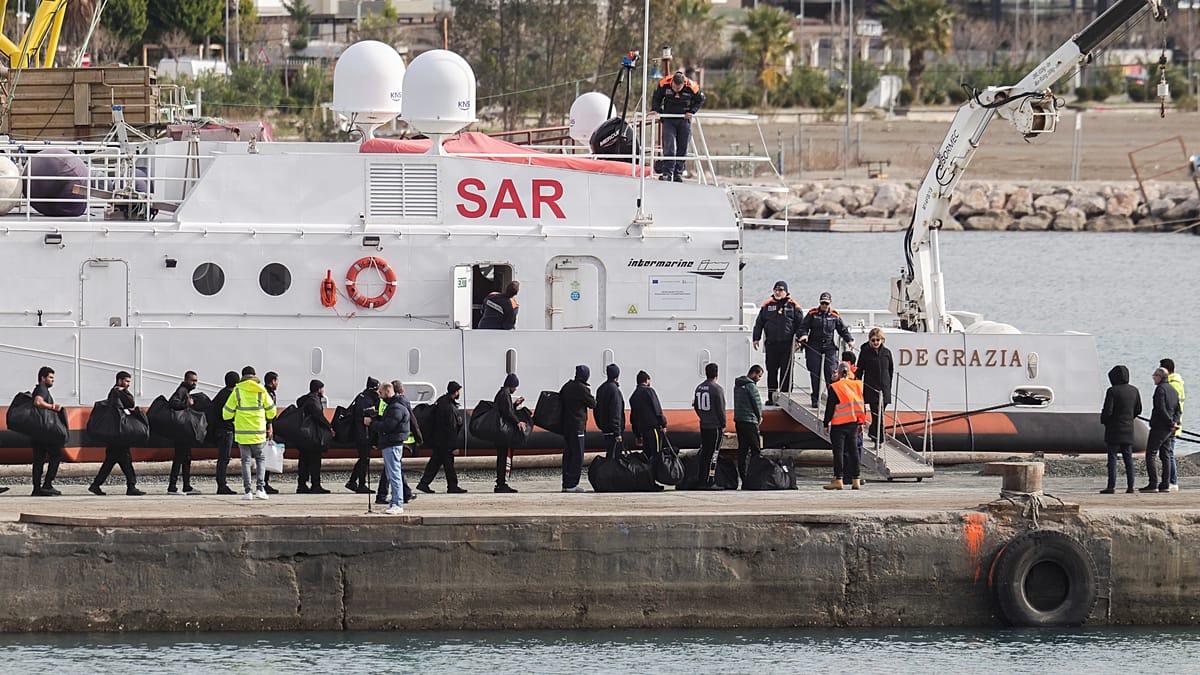
The majority of EU countries seem interested in setting up return hubs, while Italy already has a similar project in place with Albania.
Nineteen EU governments are convinced that this is an “innovative solution” to pursue for migration management, as made clear in a joint letter sent to EU leaders last June, suggesting that the centres could become a reality sooner rather than later.
Return hubs have raised concerns in Europe over their compatibility with EU law and the protection of human rights. The idea has been harshly criticised by European civil society and non-governmental organisations.
“Sending people to deportation centres outside the EU means uprooting children, adults and families from the lives they’ve built in Europe and subjecting them to prolonged detention in places they don’t even know,” said Michele LeVoy, Director of Picum, a Brussels-based NGO promoting the human rights of undocumented migrants.
So far, attempts to transfer migrants to non-EU countries have not been particularly successful.
The United Kingdom abandoned a scheme to deport asylum seekers to Rwanda, where their applications would have been examined. Denmark ditched a similar plan in 2023, changing its strategy from a national approach to a European one.
Italy initially projected housing around 3,000 migrants a month in its Albanian centres; the actual figure has reportedly been just 500 in total since the facilities were converted into deportation centres in March 2025.
The entire bill amounts to over €670 million, and, according to a recent study by an Italian university, detaining migrants in these centres has proven to be much more expensive for Italy than hosting them on its own territory.