
The global apparel and fashion industry is moving in the wrong direction on climate emissions, with greenhouse gas emissions rising 6.3% in 2024 compared to the previous year, despite a growing number of companies investing in renewable energy, cleaner materials and coal phase-outs, according to the Apparel Impact Institute’s latest assessment.
The increase in emissions was driven largely by higher fibre consumption, particularly polyester, putting the European Union’s fashion industry further away from its goal of cutting emissions 45% by 2030 from 2019 levels.
Since roughly 80% to 90% of the EU’s fashion footprint lies outside of Europe, according to the European Environment Agency, the EU’s sustainability laws are specifically designed to penalise “outsourced” pollution through a few key mechanisms.
Nonetheless, end-of-life products remain in the EU, with roughly 12.6 million tonnes of textile waste generated in the EU per year.
According to the World Integrated Trade Solution, China is the top textile exporter to the EU, with over €26.5 billion in apparel and accounting for roughly one-third of all textile and clothing products sold in Europe. Bangladesh ranks second, followed by Turkey, India, Pakistan, Vietnam and Morocco.
For the EU, which is tightening rules around fashion to make the industry more circular, new data from the Apparel Impact Institute suggests that clothing production will keep rising even if the bloc’s laws succeed in cutting emissions.
“Decarbonising apparel requires action on both sides of the equation: reducing the carbon intensity of material production and manufacturing, while also addressing the growth in material volumes that can outpace those gains,” reads the report.
In a bid to end the growth in textile waste, Brussels has introduced a package of measures aimed at changing how clothes are designed, sold and eventually discarded. The EU has also moved to make fashion companies financially responsible for the waste they generate.
But the apparel industry’s rising emissions suggest that waste policy alone will not solve the climate problem. The industry’s biggest source of emissions is linked to the processing of materials.
Polluting non-EU factories
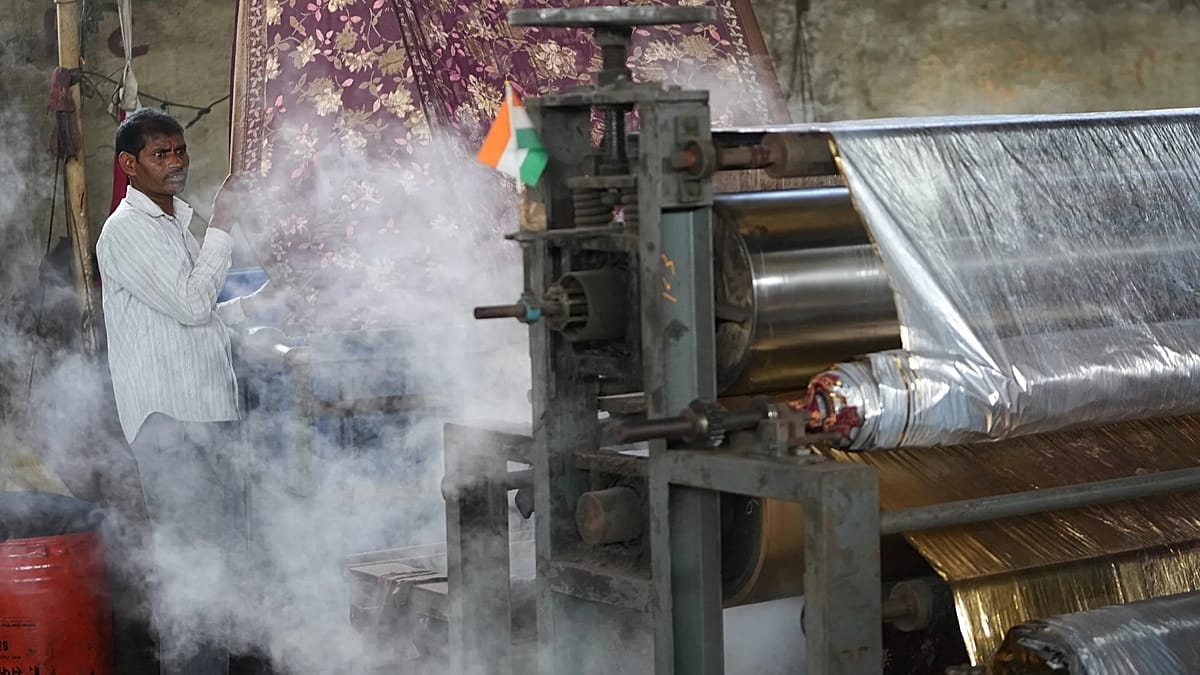
According to the Apparel Impact Institute’s report, textile processing accounts for about 51% of apparel emissions, followed by raw-material production at 26%.
That puts the spotlight on the factories producing fabrics and fibres, many of which are outside the EU.
The bloc can regulate what is sold on its single market, but most of the emissions associated with European consumers’ clothes occur in global supply chains, resulting in a clash between EU industrial and climate policy.
With this backdrop, European policymakers are under pressure to decarbonise supply chains while simultaneously responding to concerns from industry about regulation, costs and competitiveness.
The same tension arises from the industry’s perspective, according to the report. Manufacturers frequently lack the financing to invest in energy efficiency and renewable power, while clean electricity and alternatives to coal can remain unavailable or too expensive in key production countries. In many cases, sustainable materials can also cost more than conventional alternatives.
The report argues that brands need to share the financial and operational burden with suppliers through longer-term purchasing commitments, project financing and closer partnerships.
It also calls for climate targets to be converted into actual factory-level investment, particularly in energy- and heat-intensive textile processing.
“This includes improving access to appropriate finance, sharing project costs and risks, providing stable and longer-term purchasing commitments and aligning commercial relationships with decarbonisation objectives,” reads the report.
More sustainable fashion
Swedish major international fashion retailer H&M reduced the number of supplier factories using on-site coal boilers from 118 in 2022 to just 10 by the end of 2025, the report reveals.
Industrial electrification is also emerging as an alternative. Heat pumps are being deployed for processes such as laundry, dyeing and drying, while Lenzing, a company that produces wood-based cellulosic fibers, and power generation company VERBUND have commissioned a 14 MW power-to-heat facility in Austria that uses renewable electricity to provide industrial heat.
However, under business-as-usual assumptions, apparel emissions could reach 1.277 gigatonnes in 2030, compared with the 489 million tonnes the sector would need to reach to remain on a 1.5°C-compatible trajectory under the UN Paris Agreement.
Even if factories become more efficient and switch to cleaner energy, the report warns, it will not be enough if the industry keeps producing more carbon-intensive materials like fiber.