
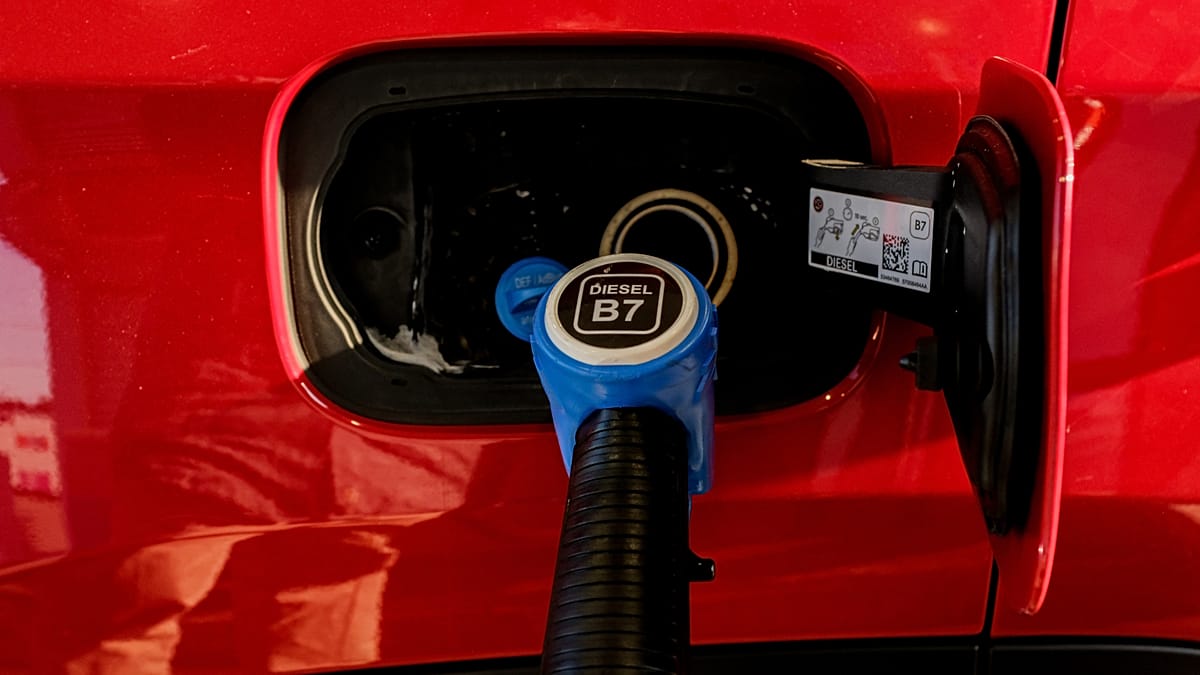
Spain has received the European Union’s green light to temporarily cut taxes on petrol and diesel below the bloc’s normal minimum levels to lower fuel prices for households and businesses hit by the Middle East energy crisis, an official European Commission document reveals.
The EU normally sets minimum excise-duty rates for petrol and diesel. Countries can tax fuel above those floors, but going below the EU minimum requires specific flexibilities under the EU’s Energy Taxation law, which Spain secured from July to September because of the exceptional energy crisis triggered by the US and Israel’s war on Iran and the ensuing closure of the Strait of Hormuz.
Excise duties are special taxes added to the price of specific goods, like alcohol, tobacco and fuel. Governments use this tax to raise money and to discourage people from buying harmful or unhealthy products.
“The European Council recognised that targeted solutions are needed in the short term to ensure availability of affordable energy,” reads the document, dated 25 August.
The move comes as the conflict in the Middle East continues to drive energy market volatility, with uncertainty about the future of free navigation through the Strait of Hormuz keeping prices above pre-crisis levels.
The impact is being felt by consumers in everyday life. In August 2025, drivers in Spain paid an average of approximately €1.48 per litre for petrol and €1.41 per litre for diesel. As of 24 August this year, petrol is standing at €1.72 and diesel €1.86.
Spain has specifically asked Brussels to let it go below those EU minimums because of the exceptional oil-price shock in a letter dated 28 June.
The Commission sees the measure as justified, citing Spain’s particular reliance on cars, buses and road transport for everyday travel and freight. Inaction would lead to higher fuel prices, which could quickly feed into household and business costs.
Commission President Ursula von der Leyen had previously urged EU countries to take “targeted and temporary’ measures to address rising fuel prices. Brussels also eased measures like loosening state aid rules as a short-term solution.
“The Commission examined the requested authorisation and found it unlikely to hinder the proper functioning of the internal market,” reads the document. “The Commission considers the requested derogation to be adequate and proportionate, given its short duration, the exceptional circumstances linked to the geopolitical situation, coupled with an exceptionally high market price of oil.”
What’s the deal?
For July, Spain’s tax cut is equivalent to about 15 cents per litre compared with the rates that applied before the conflict started on 28 February. The document states that the government can increase the cuts if petrol and diesel prices rise more than 15% above their pre-crisis levels.
In August, the tax cut will drop to 10 cents per litre, then to 5 cents per litre in September.
However, this is the reduction in the tax, not necessarily a 15-cent fall in the pump price, which also depends on the underlying oil price, refining costs, distribution margins and VAT.
Brussels has also warned that cheaper fuel can encourage people and businesses to use more fossil fuels, and that cutting taxes also means governments collect less money.
Against this backdrop, the Commission says the measure must remain temporary and that its impact on fuel consumption and public finances should be monitored.
Other countries have also reduced fuel taxes or introduced fuel-price support, but they didn’t receive exactly the same flexibility as Spain, which was explicitly allowed to set its effective rates below the EU floor.
Italy, Portugal, Slovenia, Hungary, Spain and Ireland have reduced excise taxes on petroleum products since the onset of the energy crisis.
Italy has been running excise duty cuts on diesel and petrol until 26 August and the government is seeking a further extension, according to local media.