
Published on
US President Donald Trump said on Tuesday he was delaying 50% US tariffs on $20 billion (€17.27 billion) worth of Canadian imports after the two countries reached a last-minute deal hours before the sanctions were to go into effect.
The announcement, which Trump made on his social media platform, buys time for more negotiations and avoids, for now, another strain in already tense relations between the historic allies and direct neighbours.
“I have paused the 50% Tariffs against Canada, that were scheduled to kick in tomorrow morning for a three-day period, based on the fact that Canada and the USA, subject to the finalisation of documents, have a DEAL!” Trump posted on Truth Social less than two hours before the midnight Wednesday deadline.
If the tariffs had gone into effect as scheduled at 12:01 am on Wednesday, Trump’s import taxes would have hit Canadian products ranging from hockey sticks to tongue depressors.
But the political impact would likely have been bigger than the economic one. Canada had threatened to retaliate against any new tariffs with levies of its own, aggravating a trade fight between countries that sold each other $880 billion (€760 billion) worth of goods and services last year.
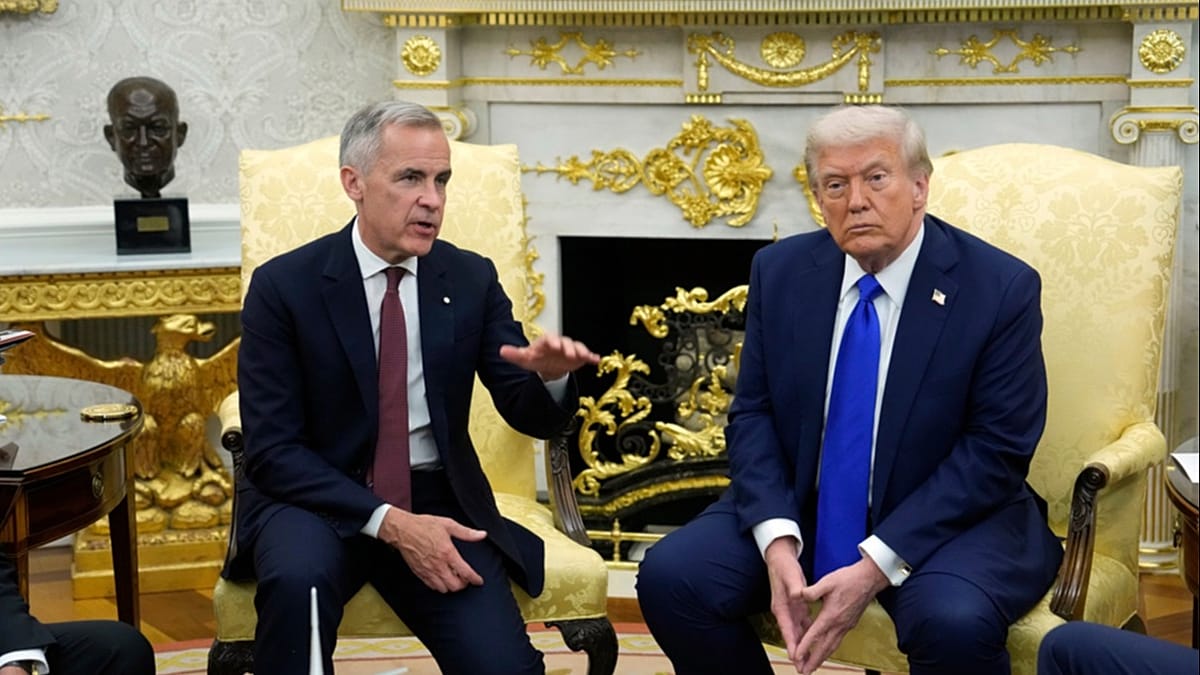
Canadian Prime Minister Mark Carney and Trump had spoken twice by phone in the past two days about the ongoing negotiations, including a call on Tuesday afternoon, Carney’s office said, underscoring the last minute push for a deal.
Both countries had reason to step back from the brink. Nearly 72% of Canada’s goods exports last year went to the United States.
And the Trump administration would be taking a risk by imposing a hefty new tariff — paid by US importers who try to pass along the cost to consumers via higher prices — ahead of November’s midterm elections, adding to an already prevalent cost of living crisis in the US.
“I don’t think either side really wants these tariffs to come into effect,’’ Ryan Majerus, a partner at King & Spalding and a former US trade official, said before the delay was announced. “There’s a pretty strong push on both sides to find an off-ramp here.’’
Trump’s approach to dealing with Canada marks an extraordinary departure from the traditionally cooperative relationship between the two countries.
Trump has hit Canadian goods with tariffs — in a push to bring manufacturing back to the US — and has repeatedly made inflammatory comments about turning the country into 51st US state.
The Republican president has made tariffs the centrepiece of his second-term economic agenda. Last year, he imposed double-digit import taxes on almost every country, justifying them by declaring the longstanding US trade deficit a national emergency.
The Supreme Court in February ruled that he’d overstepped his authority, striking down those tariffs and setting the stage for the federal government to pay refunds to importers.
Looking for other legal means to hit Canada, Trump reached back to the Great Depression, invoking Section 338 of the Tariff Act of 1930 to threaten 50% tariffs on products that account for about 5% of Canadian exports to the United States.
Nearly a century ago, with the US and world economies in collapse, Congress passed the 1930 tariff law, imposing taxes on imports from around the world, a policy that became notorious among economists and historians for limiting world commerce and making the Great Depression era significantly worse.
Section 338 tariffs have never been used before. They authorise the president to impose tariffs of up to 50% on imports from countries that have discriminated against US businesses. No investigation is required to justify the levies. Nor is there any limit on how long the tariffs can stay in place.
Washington is currently renegotiating a North American trade pact — the US-Mexico-Canada Agreement — that Trump strong-armed America’s neighbours into accepting in his first presidential term.
The threat of Section 338 tariffs gives the United States leverage to seek fresh concessions from Canada.
Additional sources • AP