
Published on •Updated
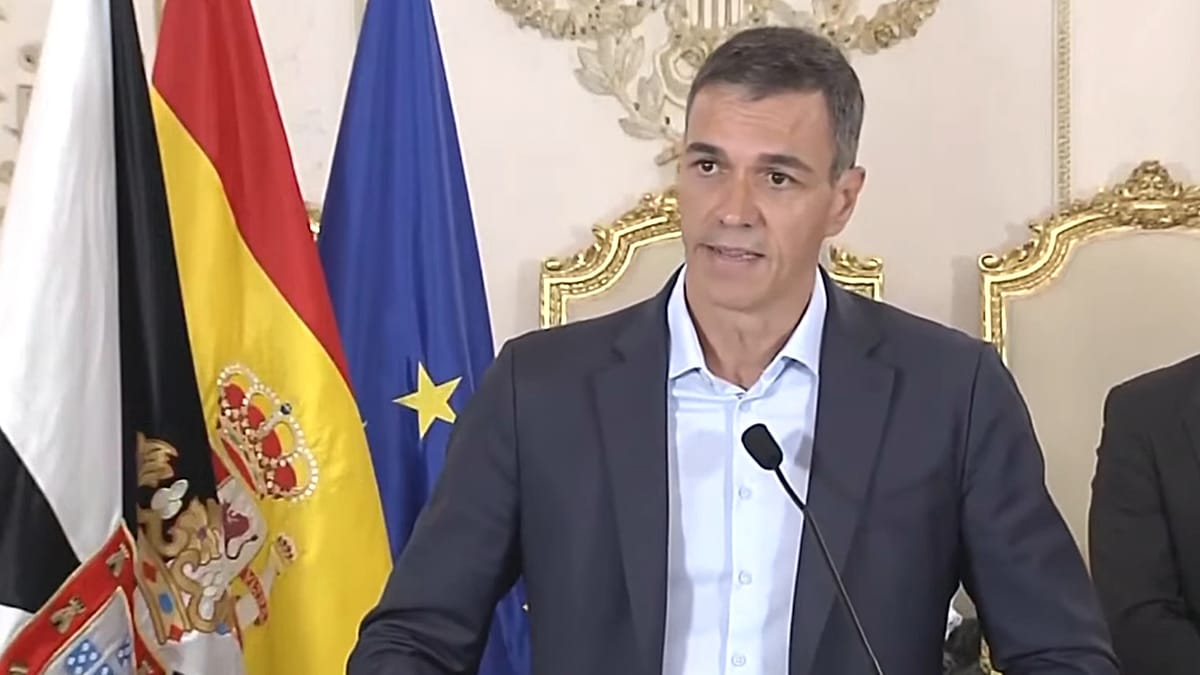
During a TV address on Friday morning, Pedro Sánchez also vowed to “remain resolute in guaranteeing security in the face of any challenge, any eventuality and under any circumstances.”
He was speaking from Ceuta, the Spanish autonomous city on the northern coast of North Africa which saw at least 60,000 migrants cross over from Morocco in recent days, according to Spanish authorities.
If the figure is confirmed, the event would be the largest single surge in irregular arrivals ever recorded on EU territory and Spain’s biggest ever migrant crisis.
Most migrants came by sea, swimming from the Moroccan border town of Fnideq. They reached several beaches, especially El Tarajal, one of the closest to the border.
Sánchez also sent a message of support to the people of Ceuta, saying that “the whole of Spain stands with them” and acknowledging the “anguish” the population is going through. “We understand the emotional strain the people of Ceuta are under,” he said.
He attributed the surge to migrant-trafficking networks, noting that “criminal gangs” had purposefully misinterpreted a July Spanish Supreme Court ruling, believing it banned the immediate return of sea-arrival migrants without a trial.
“What has emerged from our talks with Moroccan authorities is that trafficking mafias took a self-serving interpretation of a Supreme Court ruling,” he said. That interpretation “spread like wildfire in recent hours.”
The prime minister also recalled that Melilla – another Spanish autonomous city in North Africa – had experienced a similar influx of migrants in 2021 and stressed that both autonomous territories require the government’s utmost attention.
The prime minister defended his government’s migration policy and pointed out that Spain has managed to steadily reduce irregular migration flows. “We have seen a systematic reduction of more than 30% in irregular arrivals,” he concluded.