
Close Menu
Daily Guardian EuropeDaily Guardian Europe
  • Home
  • Europe
  • World
  • Politics
  • Business
  • Lifestyle
  • Sports
  • Travel
  • Environment
  • Culture
  • Press Release
  • Trending
What's On

Video. MEP: Russians can’t sip margaritas in EU while Putin bombs Ukraine

October 16, 2026

Germany set to hike tobacco tax: Cigarette packs could reach close to €12 by 2030

October 16, 2026

‘Well, it worked’: Elon Musk unveils new Tesla Roadster that can fly

October 16, 2026

These are the world’s best destinations for ‘golden hour’, according to a meteorologist

October 16, 2026

pourquoi la Cour des comptes européenne pourrait avoir plus de mal à les repérer – POLITICO

October 16, 2026
Facebook X (Twitter) Instagram
Web Stories
Facebook X (Twitter) Instagram
Daily Guardian Europe
Newsletter
  • Home
  • Europe
  • World
  • Politics
  • Business
  • Lifestyle
  • Sports
  • Travel
  • Environment
  • Culture
  • Press Release
  • Trending
Daily Guardian EuropeDaily Guardian Europe
Home»Europe
Europe

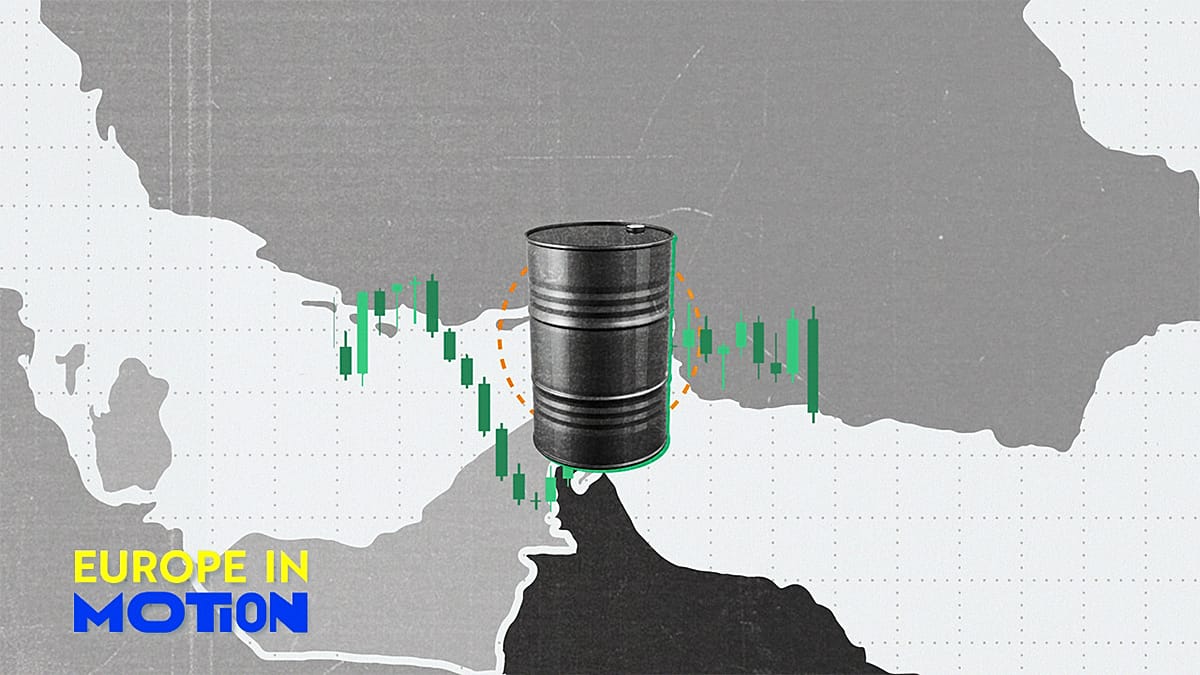
Hormuz crisis puts Europe’s oil market under further strain following post-ceasefire relief

By staffJuly 27, 20263 Mins Read
Hormuz crisis puts Europe’s oil market under further strain following post-ceasefire relief
Share
Facebook Twitter LinkedIn Pinterest Email
By&nbspAlessio Dell’Anna&nbsp&&nbspvideo by Léa Becquet

Published on
27/07/2026 – 9:45 GMT+2

Sailing through the Strait of Hormuz, the crucial shipping lane between Iran and Oman, remains a highly dangerous venture.

In recent days, there have been several reports of attacks on oil tankers by both Iran and Yemen’s Iran-backed Houthi Rebels.

The United States insists that the passageway is open, but, at the same time, it threatens to target Iran’s bridges and power plants if the attacks continue.

Experts say the latest strikes have mainly targeted large, international merchant vessels rather than ships trading locally, but they are nevertheless taking a huge toll on Europe’s oil prices.

June: Italy and Cyprus only EU countries where petrol prices kept growing

Last month, after Washington and Tehran agreed on a 14-point memorandum of understanding — which included a ceasefire — fuel prices finally stopped inflating across Europe, if only temporarily.

Compared to May, diesel prices decreased by 6.4% and petrol by 4.2% in June, according to recent Eurostat data.

The largest decreases occurred in the Czech Republic (-11.3%), Poland (-9.7%) and Bulgaria (-9.4%), while the smallest were in Hungary (-0.6%), Italy (-1.4%) and Slovenia (-1.6%).

When it comes to petrol prices, Cyprus (+0.7%) and Italy (+0.5%) were the only EU countries registering increases between May and June 2026. All other countries recorded decreases, with the largest in Sweden (-7.8%), Belgium (-7.0%) and Poland (-6.6%).

But this new phase of heightened tension and disruption — with no settlement in sight — is sending fuel prices through the roof again. Globally, crude oil prices passed $100 a barrel last week, the highest rate since the beginning of June.

Year-on-year: Eastern Europe suffers highest disruption, while Spain and Poland hold up thanks to tax cuts

On a year-on-year basis (June 2025 to June 2026), the biggest price swings happened in Bulgaria, Lithuania and Romania, all more than 23%.

Some non-EU countries reported even higher increases: nearly 32% in Turkey and almost 30% in Georgia.

How do Spain, Hungary and Poland keep fuel prices low?

Malta aside, the lowest fuel price spikes across the EU were in Hungary (2.3%), Poland (5.8%) and Spain (7.9%).

Hungary moved to cap fuel prices, while Spain and Poland have managed to contain the spike thanks to VAT cuts on petrol and diesel.

The move, however, ruffled a few feathers in Brussels, as the EU recommended cutting excise duties instead.

Spain can also count on significant downstream resilience.

Although it’s heavily reliant on crude oil imports, Madrid has a large network of oil refineries, which makes it less dependent on finished fuels and supply costs.

“Spain enjoys a unique oil infrastructure system with wide geographic and interconnecting coverage, including 11 oil port terminals, an extensive network of pipelines and storage capacity connected to refineries”, the International Energy Agency says.

Share. Facebook Twitter Pinterest LinkedIn Tumblr Email

Keep Reading

Video. MEP: Russians can’t sip margaritas in EU while Putin bombs Ukraine

Ukraine’s Zelenskyy turns to Brussels as US support falters

Live – Europe Today: Zelenskyy in Brussels as Kyiv looks to Europe amid tension with US

EU’s AI rules face first enforcement test over lab incidents

Romania says seven people missing after fire on San Marino-flagged tanker in Black Sea

EU leaders enter crunch talks on energy, China and the budget

BBC asks court to compel Trump deposition in €8.6bn defamation case

Inconclusive sparring at EU summit puts budget timeline into question

At least 19 injured as minibus collides with train near Channel Tunnel

Editors Picks

Germany set to hike tobacco tax: Cigarette packs could reach close to €12 by 2030

October 16, 2026

‘Well, it worked’: Elon Musk unveils new Tesla Roadster that can fly

October 16, 2026

These are the world’s best destinations for ‘golden hour’, according to a meteorologist

October 16, 2026

pourquoi la Cour des comptes européenne pourrait avoir plus de mal à les repérer – POLITICO

October 16, 2026

Subscribe to News

Get the latest Europe and world news and updates directly to your inbox.

Latest News

Ukraine’s Zelenskyy turns to Brussels as US support falters

October 16, 2026

Video. Turkey: Worst rainfall in 80 years unleashes deadly floods near Istanbul

October 16, 2026

Lisbon airport taxis: Fixed fares aim to end ‘tourist trap’

October 16, 2026
Facebook X (Twitter) Pinterest TikTok Instagram
© 2026 Daily Guardian Europe. All Rights Reserved.
  • Privacy Policy
  • Terms
  • Advertise
  • Contact

Type above and press Enter to search. Press Esc to cancel.