
Iran’s Revolutionary Guard said on Tuesday that it struck US military assets in Bahrain and Kuwait, state media reported.
The IRGC claimed it hit two air defence systems and a radar at two different US posts in Bahrain, as well as missile defence radars and satellite receiving systems in Kuwait.
“With this radar sweep, the enemy should prepare for even more decisive and powerful waves of drone and missile attacks,” it wrote in a statement.
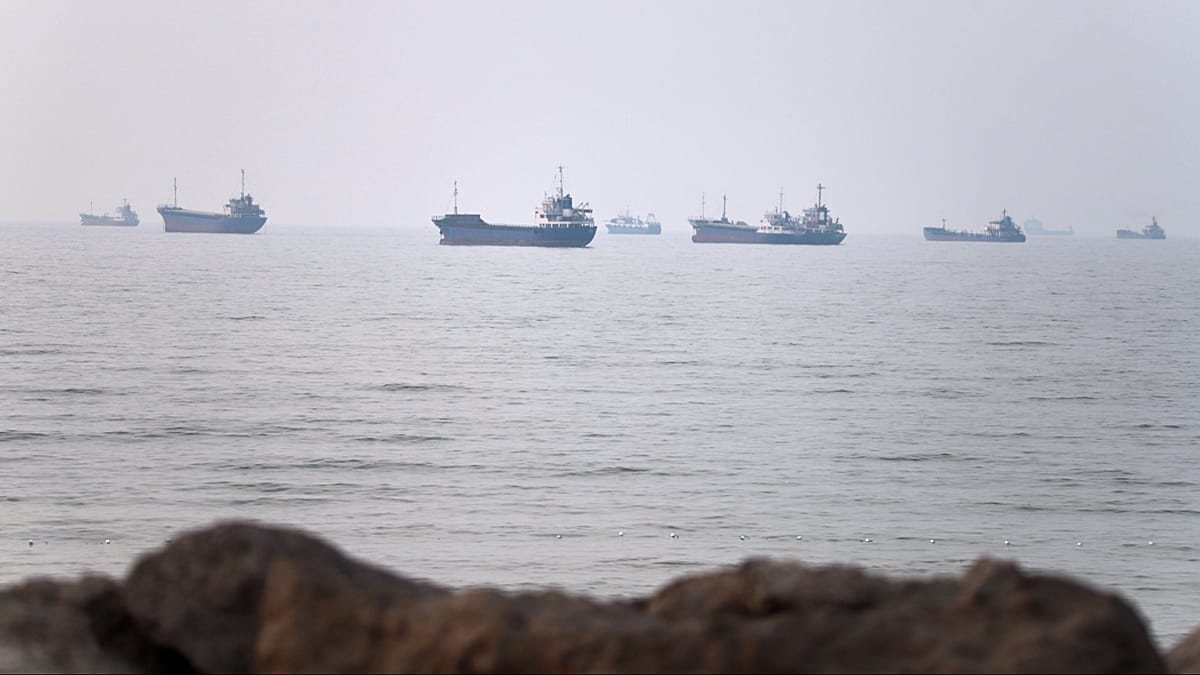
The Guards also said they stopped “two non-compliant oil tankers” attempting to pass through the “unsafe southern route of the Strait of Hormuz” after explosions caused fires on the vessels.
The United Kingdom Maritime Trade Operations agency (UKMTO) said it received reports on Tuesday of a tanker in the waterway off Oman, that had been hit by an unknown projectile, forcing the crew to abandon the ship.
“The crew have abandoned the vessel and are currently embarked in a lifeboat,” it wrote in a post on X.
The chain of incidents follow shortly as the US military announced it completed its tenth consecutive night of strikes against Iran, targeting sites in an effort to counter Tehran’s ability to attack ships transiting the strait.
“US forces struck Iranian military command centers, maritime capabilities, missile and drone launch sites, and air defence systems to degrade Iran’s ability to continue attacking commercial vessels flowing through the Strait of Hormuz,” CENTCOM wrote Tuesday in a statement on X.
“American forces remain postured and prepared to hold Iran accountable for unwarranted aggression toward civilian mariners seeking to freely and openly transit the strait,” the statement added.
In recent week, fighting has intensified between both sides over control of the Strait of Hormuz, a crucial waterway for global oil and natural gas transport.
As a result, traffic through the strait has come to an almost complete halt, pushing oil prices higher in recent weeks.
Brent crude, the international benchmark, rose 3.2% to $90.95 per barrel, while US benchmark crude climbed 2.8% to $84.04 per barrel.
Despite the escalation, Pakistan, a key meditor in the conflict, appears to be pushing forward with diplomatic efforts.
On Monday, Iranian Interior Minister Eskandar Momeni arrived in Islamabad, a key meditor in the conflict, for talks with Prime Minister Shehbaz Sharif and other Pakistani officials. It is, however, still unclear whether the talks will be linked to Pakistan’s mediation efforts.
A day prior, US Secretary of State Marco Rubio also signalled a willingness to open the door to diplomacy, telling reporters that the US is willing to negotiate with Iran but that the deal must be “real” and one that Iran is “willing to live by”.