
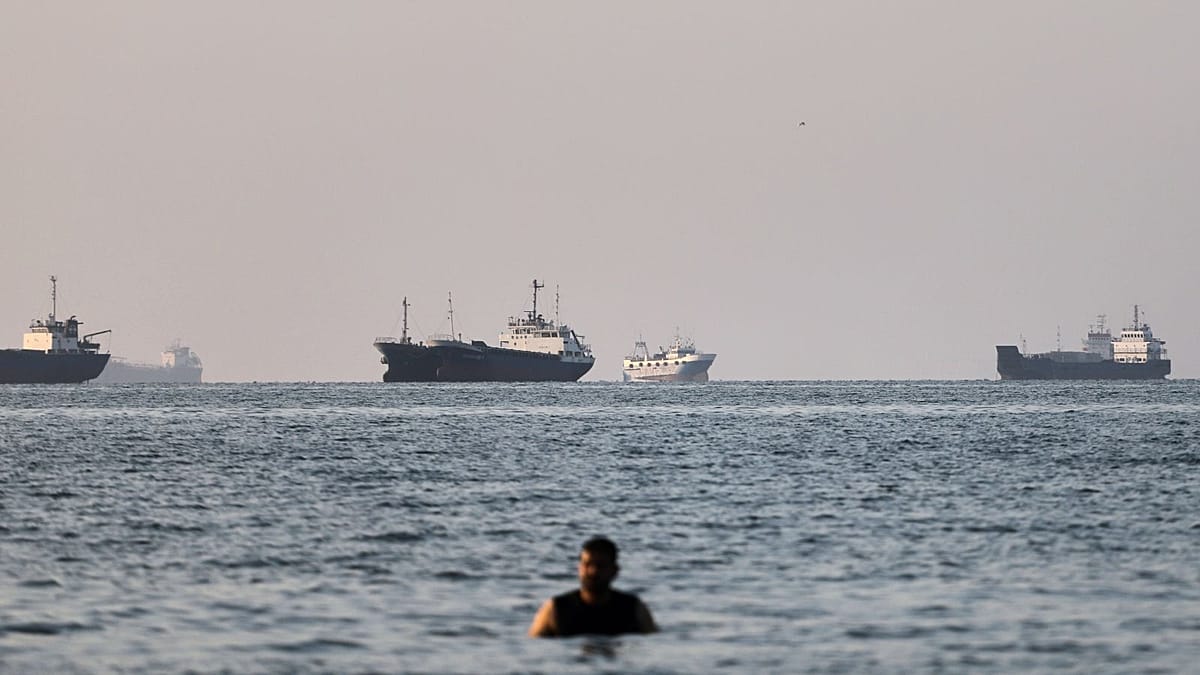
US military has resumed its air strikes against Iran in broad daylight on Wednesday, as Washington said it was intensifying its campaign aimed at limiting Tehran’s ability to threaten commercial shipping in the Strait of Hormuz.
According to US Central Command (CENTCOM), a new 90-minute wave of precision strikes against Iranian targets on Wednesday morning targeted coastal defence systems as well as cruise missile storage and launch sites on Greater Tunb Island.
CENTCOM said the strikes were intended to further reduce Iran’s ability to attack commercial vessels passing through the strategic waterway.
The operation marks a further escalation in the US military campaign against Iran, following Tehran’s repeated attacks on ships in the Persian Gulf.
Iran had struck at least seven commercial vessels over the past week, according to CENTCOM.
A shift in tactics
Several areas across Iran were targeted by airstrikes and bombardments overnight on Wednesday, and it had been expected that the operations would stop once daylight arrived.
However, the continuation of the attacks and the start of a new wave of strikes in the middle of the day indicate Washington’s intent to pursue a prolonged military campaign around the clock, limiting the other side’s ability to recover and respond while rapidly degrading Iran’s strategic infrastructure.
Iranian authorities said the latest US strikes caused further casualties.
Iran’s army reported that seven military personnel were killed in a missile strike on a barracks near the southeastern city of Iranshahr.
An Iranian Health Ministry official said overnight US airstrikes injured more than 260 people, including three women and six people under the age of 18.
Previously, Iran’s Health Ministry had said that 17 people had been killed and more than 115 injured during US strikes targeting six Iranian cities.
Iranian authorities have also claimed that a total of 3,514 people have been killed during the war since its opening salvo in February. The figure cannot be independently verified.
Calls in Tehran for a tougher response
Meanwhile, political rhetoric inside Iran has hardened.
Manouchehr Mottaki, Iran’s foreign minister during Mahmoud Ahmadinejad’s presidency and now a parliamentarian, suggested during a live television programme that Tehran should consider seizing US military bases in the region and taking soldiers captive, rather than relying solely on missile attacks against those facilities.
His comments came amid growing calls from hardliners for a stronger response to US military operations.
Meanwhile, public messaging in Tehran has also escalated following the renewed exchange of fire, with a new mural at Tehran’s Enghelab Square depicting US President Donald Trump inside a coffin.
Another billboard in Palestine Square carries the slogan “Blood for Blood” in Persian and Hebrew, alongside images depicting coffins bearing the names of members of the Trump and Netanyahu families.
The displays have been presented by Islamic Republic authorities and state-linked media as symbols of retaliation following the death of Ayatollah Ali Khamenei on 28 February, or day one of the ongoing war.
Iran insists Strait of Hormuz remains closed
The future of the Strait of Hormuz remains at the centre of the confrontation.
Iranian officials said the waterway remains closed and warned that any vessel attempting to pass without authorisation would face consequences.
A few hours after the US reimposed its naval blockade on Iranian ports on Wednesday, the Islamic Revolutionary Guard Corps (IRGC) announced that the Strait of Hormuz will remain closed until Washington ends what it described as its “aggressive actions”.
In the same statement, the IRGC also warned that other regional oil export routes could become targets.
“The enemy should know that now that its naval aggressors have closed the Indian Ocean route to global oil and gas exports, thereby endangering the interests of America’s economic rivals, it should also expect the closure of other oil and gas export routes that serve the interests of the United States and its allies,” the statement said.
The IRGC did not specify which other routes it was referring to.
“Oil and gas exports from this region will either be possible for everyone or for no one,” the statement concluded.
Former Iranian diplomat and economist Hossein Adeli told state-run IRNA television that deterrence in the Strait should not be measured only by the movement of ships.
According to Adeli, Iran’s control over the waterway relies on three pillars: military capability, political will and management of maritime traffic.
He argued that the essence of deterrence lies in exercising sovereignty over the strait, adding that if Tehran’s vital interests are threatened, closing the waterway should remain an option.