
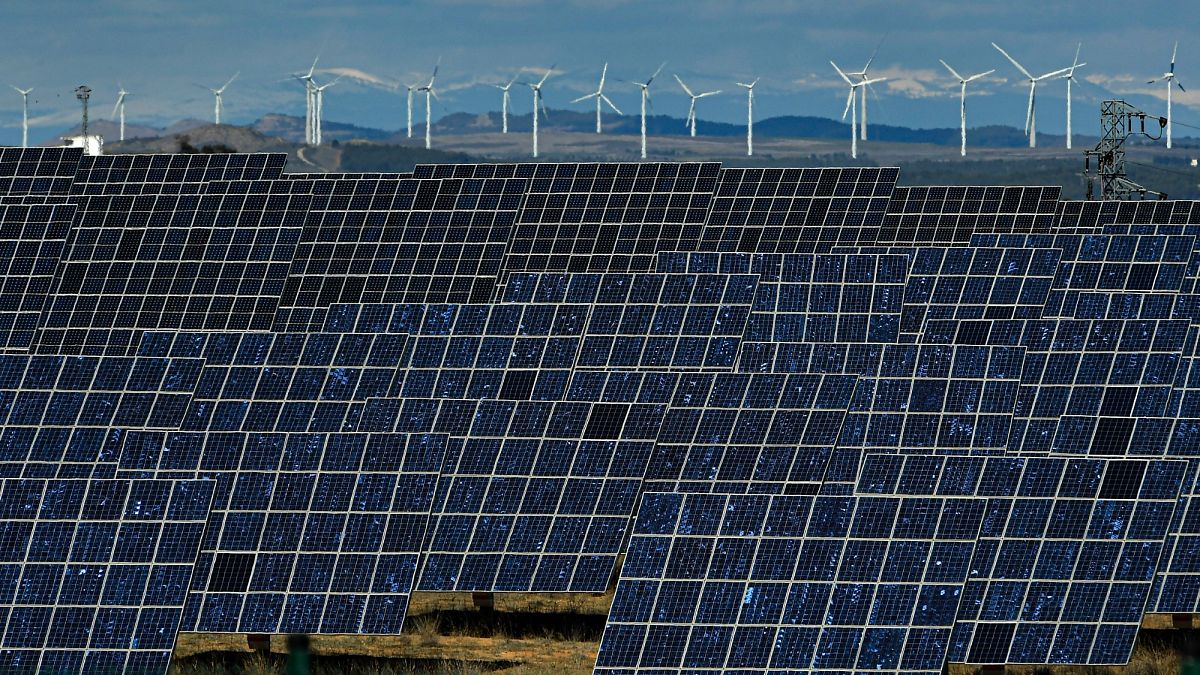
The agreement tackles a problem that has become urgent with Europe’s green transition: how to store growing energy surpluses from intermittent renewable sources, such as wind and solar.
While the share of renewable energy resources is growing (23 per cent in 2020 to 25.2 per cent in 2024), the bloc’s storage capacity remains too limited to absorb it all. Europe wastes renewable energy surpluses generated during seasonal peaks, forcing it to increase fossil-fuel power generation.
The deal expands the EU’s storage capacity to keep extra energy and maintain a reliable energy supply during sudden increases in demand, reduce dependence on imported fossil fuels, and stabilise energy prices.
Member states, financial institutions, clean energy producers, and energy-consuming industries are the main players, ensuring annual energy storage forecasts, stable energy demand, predictable energy costs, and access to finance.
“For the first time, the EU has established a clear political direction, turning storage from enabling technology to a delivery priority”, Walburga Hemetsberger, CEO of SolarPowerEurope said.
What the EU needs
Solar and wind generate electricity according to weather patterns, not peaks in human demand. Without optimised storage, the EU remains dependent on imported fossil gas to fill gaps when the sun sets or winds fade. Despite renewables supplying 44 per cent of EU electricity, the bloc still imports around 55 per cent of its total energy, including oil and gas.
Electricity demand is rising rapidly. The International Energy Agency projects AI and data centre consumption will double by 2030. These facilities already account for around 3 per cent of electricity supply and are expected to exceed 28 GW.
Data centres require constant 24/7 power. They cannot pause AI operations when renewable generation falls. Without 200 GW of storage by 2030, operators may have to rely on fossil-fuel plants to maintain reliability, undermining EU net-zero goals. Storage allows excess solar power generated during the day to supply digital infrastructure overnight.
Europe is also electrifying transport and heating, shifting two carbon-intensive sectors from fossil fuels to the grid. The EU aims to put more than 30 million electric vehicles on the road and install 50 million heat pumps by 2030. Meeting this demand will require large-scale storage to balance renewable supply.
“I think the biggest issue will be to not treat energy storage as essential infrastructure,” said Jacopo Tosoni, Deputy Secretary General at Energy Storage Europe. “If we don’t put flexibility at the heart of the energy system, we waste the cheap renewable electricity we already have while industry continues paying high energy prices.”
By early 2026, Europe had seen record periods of negative electricity prices as solar and wind generation exceeded grid capacity. In the first quarter alone, EU day-ahead markets recorded 1,223 hours of negative prices, roughly twice previous levels, with Germany and Spain among the hardest hit.
When supply exceeds demand, grids must curtail renewable generation, wasting clean electricity and reducing project revenues. Storage addresses this by absorbing excess power when prices are low and returning it when demand rises.
“We already are in a version of gridlock,” Tosoni said. “Negative prices are becoming common because we have a surplus of renewables and not enough storage to use that power later.”
The agreement
The agreement scales up Europe’s capacity to store more solar and wind power and use it during a sudden increase in energy demand. It aims towards at least 20 per cent (45 GW) more capacity than the annual installed capacity in 2025 (12 GW) between 2026 and 2028. Storage supplies should cover around 10 per cent of peak demand, up from around 5 per cent in 2025. Greater energy security balances the grid and maintains grid stability while lowering energy prices.
Larger storage capacity means Europe can increasingly rely on in-house green energy and move towards its 2030 target of at least 42.5 per cent of renewable energy production. It also reduces dependence on imported fossil fuels, which the EU is working hard to cut but remains high. In 2024, oil and petroleum accounted for 67 per cent of energy imports, according to a March 2026 Eurostat report.
“If we want to get to the 200 gigawatt that the European Commission has set out in Accelerate EU, we need to see a bit more of an ambition. But it’s a very good first step The real test is now in the implementation”, according to Hemetsberger.
In practice, the EU needs to expand its current storage facilities through increased market flexibility, Hemetsberger said. While it’s important to expand all types of energy storage, batteries are the real “game changer”. They can be installed very quickly, are highly scalable and cut 55 billion euros per year on power system operating costs, along with reducing gas import and lower electricity prices, she explained.
The parties signing the agreement
Storage systems and renewable energy developers will provide annual estimates of new storage capacity. Energy-intensive industries will develop on-site storage projects, monitor electricity demand, and provide long-term forecasts. Financial institutions, including national and regional banks, will finance these initiatives and attract investment.
The European Investment Bank plans to expand its €500 million corporate power purchase programme. The goal is to include storage solutions and increase its €1.5 billion support for grid manufacturing to cover new storage technologies.
The Commission will monitor the agreement’s progress annually, accelerate project finance, and support the decarbonisation of energy-intensive industries through the Industrial Decarbonisation Bank.
Member states’ commitments
EU countries decide how much new storage to build. 22 national governments have signed the agreement, and 17 have submitted concrete commitments. Yet the agreement is not binding, making it all the more important that we really closely monitor and track progress”, Hemetsberger said.
Commitments range from 5,000 megawatts in Austria, 500 in Portugal, 11,000 in Poland, and 376 in Slovakia. Germany, the Netherlands, Greece, Finland, and Denmark will join by year-end. Overall, EU countries will add 30-35 gigawatts of storage capacity by 2028, increasing the bloc’s total capacity to approximately 65 gigawatts.
This amount remains well below the EU’s 2030 200-gigawatt target. Member states may need to double down on storage projects by accelerating permitting, opening up revenue streams, a predictable regulatory environment, and a quick connection to the grid infrastructure, Hemetsberger explained.
National governments also agreed to facilitate storage deployment by removing regulatory barriers and accelerate project approvals. They will also revise pricing rules, allowing national authorities to set non-discriminatory network tariffs. Storage deployment and manufacturing are supported through national and EU funds only if they comply with state aid rules. The Commission will accelerate state aid approval.
For member states, failing to meet the targets means missing out on competitiveness, including lower energy prices, Hemetsberger explained. “If we do not meet those storage targets, if we’re not investing in battery storage, it means we will be using gas more frequently than we would want to, and gas sets the electricity price”, she added.
For citizens and for businesses
Electricity bills remain high and volatile, largely driven by gas prices. Households still pay more when gas-fired plants are needed to cover periods of low wind or solar generation.
Millions of homeowners with solar panels receive little value for excess electricity because the grid cannot absorb it all. Consumers have limited ability to respond to market fluctuations and remain passive participants in an outdated energy system.
If the agreement delivers 200 GW of storage capacity by 2030, households could benefit from lower and more stable prices.
“Electricity prices are currently set by the most expensive generator needed to meet demand, and that’s gas,” Tosoni said. “If you’re able to remove gas from the equation by storing renewable electricity, electricity costs go down.”
Stored renewable energy can replace expensive gas-fired generation during peak demand. Batteries and smart technologies would also allow consumers to become active participants, charging electric vehicles or home batteries when electricity is cheap and selling power back when prices rise.
Local and community storage would strengthen grid resilience, reducing the risk of outages during extreme demand or weather events.
Tripling storage-linked Power Purchase Agreements would help heavy industries secure 24/7 renewable power, meet sustainability targets, and protect operators’ revenues by reducing renewable curtailment during periods of oversupply. The Clean Industrial State Aid Framework could accelerate funding and permitting for clean technology manufacturers, improving competitiveness.
Tosoni warned that delaying storage deployment could intensify competition for electricity between households and expanding AI infrastructure. Without storage, new data centres may increasingly depend on fossil-fuel backup or add pressure to the grid. “If we do it right,” he said, “the AI boom can actually be quite good for the energy system… lowering costs for households and industry.”