
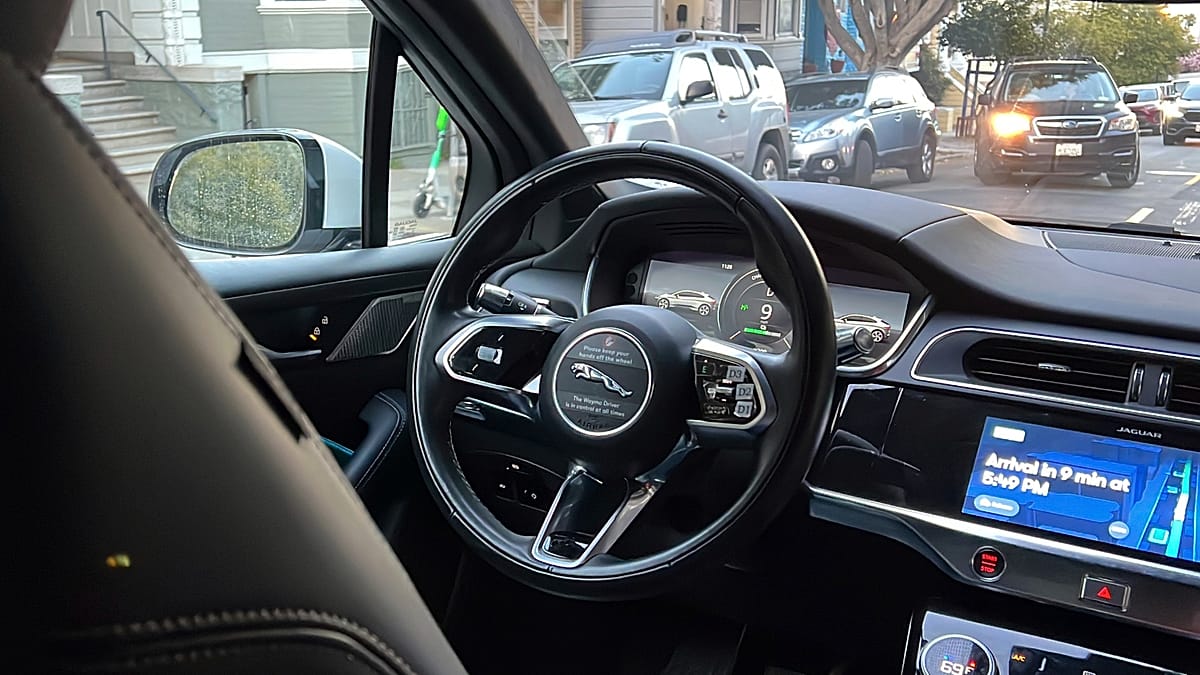
Vehicles equipped with self-driving systems will soon be allowed to be tested on public roads in Portugal. After a decree-law authorising tests with autonomous vehicles on Portuguese roads was approved by the Council of Ministers at the end of April, it was published in the Official Gazette (source in Portuguese) last Monday and will enter into force next July.
According to the legislation, autonomous driving will “help democratise mobility by promoting the inclusion of citizens who are unable to drive because of physical or other constraints”.
At the same time, it will “enable new and different solutions for individual and collective mobility, helping to optimise the vehicle fleet and reduce the inefficiencies inherent in the current mobility model based on privately owned, individually used vehicles”, the government believes.
In practice, the decree establishes the legal framework for public roads to be used for testing autonomous driving technology, subject to a licence and compliance with a set of technical, operational and safety requirements.
The trials will be carried out by research laboratories, higher education institutions and companies in the automotive, infrastructure and transport sectors.
One of the main requirements under this regime is stronger compulsory insurance. The minimum cover is set at four times the usual level and must pay for bodily injury or material damage caused to third parties by autonomous vehicles.
Organisations will also have to submit a risk mitigation plan and demonstrate that they have adopted cybersecurity measures capable of preventing unauthorised access to vehicle systems.
The tests must also be notified in advance. At the end, a test report must be submitted “including, among other elements, a description of any accident, serious incident or incident that occurred while they were being carried out”.
In addition, both the driver and the operator responsible for highly automated or fully automated systems must have held a driving licence for at least six years and must not have committed any road traffic crimes or offences in the past five years.
During the tests, the speed limits set out in the Highway Code will be reduced by 20 kilometres per hour. Blood alcohol limits will be aligned with those for professional drivers, and neither the driver nor the operator may perform their duties for more than three consecutive hours, and must take breaks of at least one hour.
During autonomous driving trials, the vehicles used in the tests must be equipped with systems capable of recording detailed information, such as the characteristics of the automated system, identification of whoever is exercising dynamic control of the car, and indicators such as speed, steering and braking performance, and the history of any interventions by the driver or operator.
The vehicles must also store information on remote commands and on communications established with other vehicles, road infrastructure and different digital connection points.
Licences issued abroad will also be valid in Portugal, provided an application for recognition is submitted to the chair of the board of the Institute for Mobility and Transport (IMT).