
Close Menu
Daily Guardian EuropeDaily Guardian Europe
  • Home
  • Europe
  • World
  • Politics
  • Business
  • Lifestyle
  • Sports
  • Travel
  • Environment
  • Culture
  • Press Release
  • Trending
What's On

Ebola alert in Italy: Two suspected cases in Lombardy after return from Uganda

May 25, 2026

Video. Climbers race up giant bun tower at Hong Kong’s colourful Bun Festival

May 25, 2026

Inside the world’s largest AI personality contest: Are virtual influencers the future?

May 25, 2026

These are the world’s best countries to move to – and number one is in Europe

May 25, 2026

Five EU countries call for tougher trade weapons to tackle China – POLITICO

May 25, 2026
Facebook X (Twitter) Instagram
Web Stories
Facebook X (Twitter) Instagram
Daily Guardian Europe
Newsletter
  • Home
  • Europe
  • World
  • Politics
  • Business
  • Lifestyle
  • Sports
  • Travel
  • Environment
  • Culture
  • Press Release
  • Trending
Daily Guardian EuropeDaily Guardian Europe
Home»Lifestyle
Lifestyle

What is China’s Shenzhou-23 mission? Inside the year-long space experiment

By staffMay 25, 20263 Mins Read
What is China’s Shenzhou-23 mission? Inside the year-long space experiment
Share
Facebook Twitter LinkedIn Pinterest Email

Published on
25/05/2026 – 14:14 GMT+2

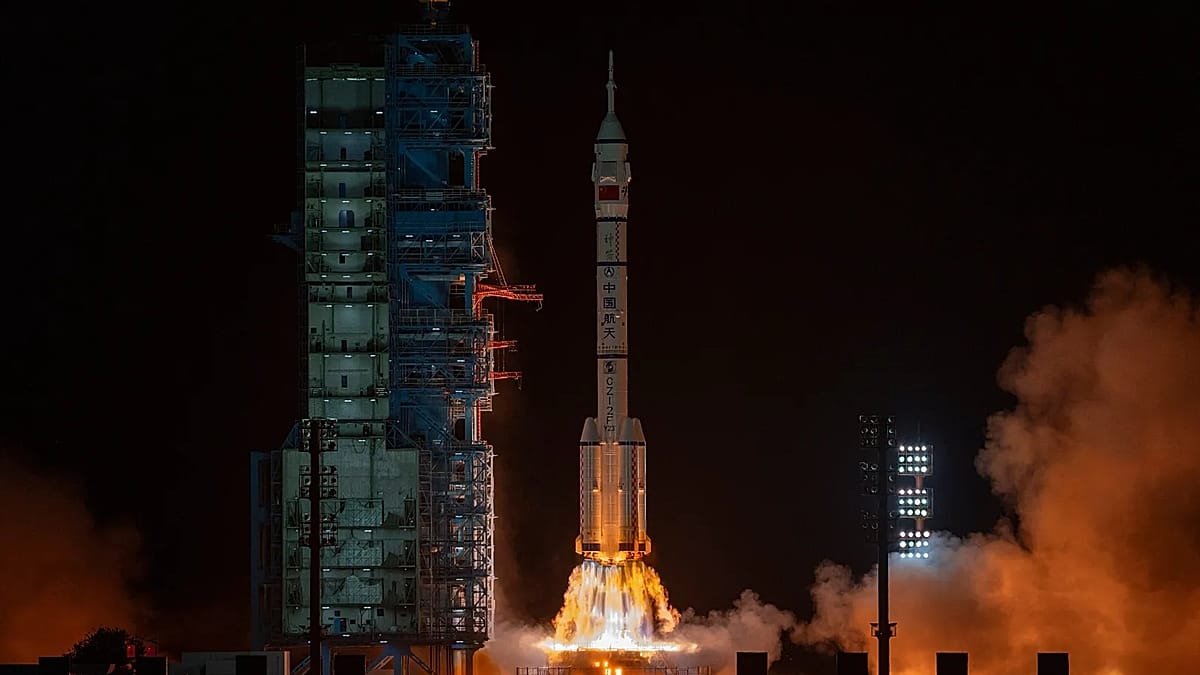
Over the weekend, China launched the Shenzhen-23 mission to its space station with three astronauts, including one who is set to stay in space for a year.

The spacecraft blasted off from the Jiuquan Satellite Launch Centre in China’s northwestern Gobi Desert with three astronauts onboard: commander Zhu Yangzhu, Zhang Zhiyuan, and Lai Ka-ying.

The astronauts will be conducting dozens of experiments while in space, including an in-orbit rotation with the crew of Shenzhou-21, the mission before them that has been at the Tiangong space station for more than 200 days.

This latest mission comes as China gears up for its first crewed lunar landing by 2030. Here’s what to expect from this latest mission.

Studying the impact of a year in space on the human body

One of the astronauts on the Shenzhou-23 crew will carry out a one-year in-orbit experiment, according to Chinese media.

The longest single mission to date by a Chinese astronaut was on the previous mission, the Shenzhou-21 crew, who have already spent 204 days in orbit. The world’s longest single space mission is 437 days, held by Russian astronaut Valeri Polyakov.

During the year-long mission, China is starting its first human body research programme, which will collect health data from the astronaut to prepare for future missions that will go further in space.

That data will be used to upgrade medical and protective systems within the spacecraft, officials said.

The astronaut’s mission is to “explore human adaptability and performance limits” in long-duration spaceflight environments, state media reported.

Growing embryos in space

While in orbit, the crew will conduct more than 100 scientific experiments, including an “artificial embryos” experiment to see whether new life can grow in space.

The astronauts will be using zebrafish and mouse embryos to establish what state media describes as an “space embryonic research system”, which will see whether different types of animals, such as those with no spines and mammals, can grow in space.

Chinese scientists are also sending rice seeds to the space station and growing them in orbit. The goal is to see how living in space affects plants over multiple generations.

For the first time, they plan to grow two generations of rice entirely in space. Scientists want to learn whether long-term exposure to microgravity changes the rice genetically or affects its stability.

The astronauts will also run biology experiments to study how microgravity affects the human body, especially how fat is processed in liver cells. State media reports that this research could help prevent fatty liver disease during longer space missions.

Plant seeds will also be exposed to radiation outside the spacecraft for up to five months to see how radiation adapts their growth in space.

The crew will also be doing support work, such as moving cargo and conducting space walks during their time in space.

Share. Facebook Twitter Pinterest LinkedIn Tumblr Email

Keep Reading

Inside the world’s largest AI personality contest: Are virtual influencers the future?

Why European businesses are not using AI tools

‘We have no time to waste’: Germany launches €125M push to build Europe’s frontier AI

The internet is not safe for children, say UK police bosses

SpaceX delays rocket launch amid €1.51tn IPO plans

Greece opens laser ground station as Europe races to strengthen satellite links

Meta accused of using “momfluencers” to shape child safety narrative amid scrutiny

Are lasers the key to GPS like navigation on the Moon?

Google announces sweeping AI overhaul of its search engine

Editors Picks

Video. Climbers race up giant bun tower at Hong Kong’s colourful Bun Festival

May 25, 2026

Inside the world’s largest AI personality contest: Are virtual influencers the future?

May 25, 2026

These are the world’s best countries to move to – and number one is in Europe

May 25, 2026

Five EU countries call for tougher trade weapons to tackle China – POLITICO

May 25, 2026

Subscribe to News

Get the latest Europe and world news and updates directly to your inbox.

Latest News

Strait of Hormuz turmoil ‘serious’ risk for Europe, top UAE adviser warns

May 25, 2026

What is China’s Shenzhou-23 mission? Inside the year-long space experiment

May 25, 2026

‘Devastating blow’: Three major luxury hotels in France lose ‘palace’ status

May 25, 2026
Facebook X (Twitter) Pinterest TikTok Instagram
© 2026 Daily Guardian Europe. All Rights Reserved.
  • Privacy Policy
  • Terms
  • Advertise
  • Contact

Type above and press Enter to search. Press Esc to cancel.