
Close Menu
Daily Guardian EuropeDaily Guardian Europe
  • Home
  • Europe
  • World
  • Politics
  • Business
  • Lifestyle
  • Sports
  • Travel
  • Environment
  • Culture
  • Press Release
  • Trending
What's On

Live classical music sessions are helping students in Amsterdam focus during exam season

March 28, 2026

Jewish life in Europe: ‘J’accuse. Never again is a lie’

March 28, 2026

Time zone quirks around the world that travellers may not know about

March 28, 2026

Video. Latest news bulletin | March 28th, 2026 – Morning

March 28, 2026

Oil, energy and food: Which countries in Europe are most exposed to higher food prices?

March 28, 2026
Facebook X (Twitter) Instagram
Web Stories
Facebook X (Twitter) Instagram
Daily Guardian Europe
Newsletter
  • Home
  • Europe
  • World
  • Politics
  • Business
  • Lifestyle
  • Sports
  • Travel
  • Environment
  • Culture
  • Press Release
  • Trending
Daily Guardian EuropeDaily Guardian Europe
Home»Europe
Europe

Are Europeans satisfied with the European Union’s global role?

By staffMarch 25, 20263 Mins Read
Are Europeans satisfied with the European Union’s global role?
Share
Facebook Twitter LinkedIn Pinterest Email
By&nbspNoa Schumann&nbsp&&nbspvideo by Léa Becquet

Published on
25/03/2026 – 17:26 GMT+1

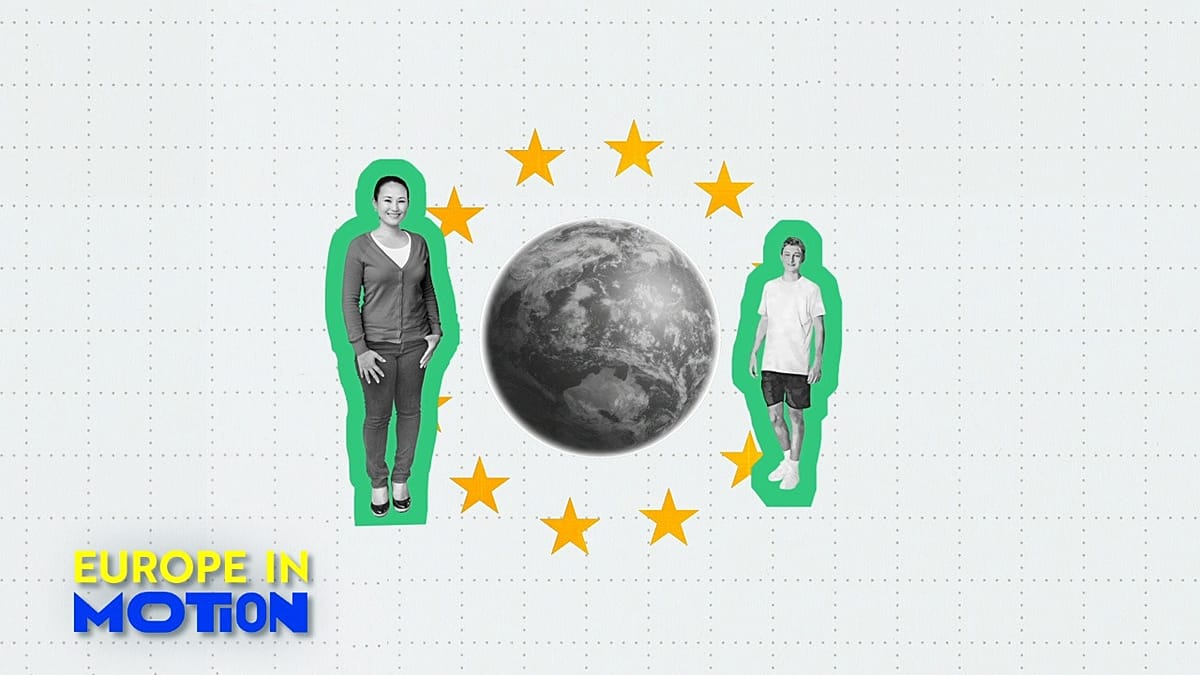
While the EU is still widely regarded as a key global player, new data suggests confidence in its influence is beginning to waver amid growing geopolitical instability.

A survey by Euroconsumers, drawing on responses from nearly 10,000 people across ten countries — Belgium, Denmark, France, Germany, Hungary, Ireland, Italy, Poland, Portugal and Spain — sheds light on how Europeans perceive the bloc’s global standing.

A recognised power — but with clear limits

A majority of Europeans continue to view the EU as a major force on the world stage. Around 63% consider it a leading economic power, and 60% see it as an influential political actor.

However, perceptions shift significantly when it comes to military strength. Only 36% regard the EU as a credible hard power, highlighting a gap between its economic weight and defence capabilities.

Views are also mixed when it comes to specific crises. In Ukraine, 42% of respondents say the EU has demonstrated strong leadership. By contrast, 41% believe it has failed to do so in Gaza.

Internal divisions are seen as a key obstacle: roughly two-thirds of those surveyed say disagreements between member states are undermining the EU’s global influence.

A cooling transatlantic relationship

The survey points to a weakening of trust in the United States as a long-term partner. Just 28% of respondents believe Washington will remain reliable in the years ahead.

Doubts are particularly pronounced in countries such as Denmark, Germany, Portugal, Ireland, Belgium and Spain, where significant shares of respondents question the durability of the transatlantic alliance.

In this context, around half of respondents say the EU should prioritise building new partnerships beyond the United States. Meanwhile, 51% support deepening trade relations with Asian economies such as Japan and South Korea, while 37% favour closer economic ties with China.

Trade tensions appear to be a key factor, with 70% backing EU countermeasures in response to US tariffs.

At the same time, opinions are divided on how Brussels has handled Donald Trump’s policies. Some 38% of respondents disapprove of the EU’s response, compared to 34% who support it.

Consumer behaviour is also shifting. Around 44% say they have reduced or stopped buying American products — a figure that rises to 55% in Denmark.

Calls for greater autonomy

Support for a more self-reliant European Union is strong. Around 80% of respondents back increased investment in European technology to reduce dependence on external powers.

There is similarly broad backing for strengthening defence capabilities and diversifying trade partnerships.

Yet expectations remain measured. While many Europeans favour a more assertive EU on the global stage, concerns about the economic impact persist — particularly as households continue to grapple with rising living costs.

Share. Facebook Twitter Pinterest LinkedIn Tumblr Email

Keep Reading

Video. ‘Ukraine is not a bargaining chip,’ says Renew Europe chief

Europe Today: Rubio joins crucial G7 talks in France as Iran war set to dominate second day

Watch the video: Pole and Hungarian, brothers be?

Europe can still win next tech race if it completes internal market – European patent chief

More resignations after referendum: Gasparri quits, Craxi leads Forza Italia in Senate

Europe’s gas prices on the brink as Qatari LNG flows stall

France bids farewell to former Prime Minister Lionel Jospin who ‘fought for justice and freedom’

US drones await clearance to land at Lajes after Portugal seeks more information

EU Chemicals Agency backs ‘forever chemicals’ ban, with final decision to the Commission

Editors Picks

Jewish life in Europe: ‘J’accuse. Never again is a lie’

March 28, 2026

Time zone quirks around the world that travellers may not know about

March 28, 2026

Video. Latest news bulletin | March 28th, 2026 – Morning

March 28, 2026

Oil, energy and food: Which countries in Europe are most exposed to higher food prices?

March 28, 2026

Subscribe to News

Get the latest Europe and world news and updates directly to your inbox.

Latest News

Iran says it will ‘facilitate and expedite’ humanitarian aid through Strait of Hormuz

March 27, 2026

Austria to ban social media for under-14s – POLITICO

March 27, 2026

Orbán’s spies were hunting me, says Hungarian journalist accused of espionage – POLITICO

March 27, 2026
Facebook X (Twitter) Pinterest TikTok Instagram
© 2026 Daily Guardian Europe. All Rights Reserved.
  • Privacy Policy
  • Terms
  • Advertise
  • Contact

Type above and press Enter to search. Press Esc to cancel.