
Published on
Egypt has become more diplomatically active in recent days amid heightened tensions after a wave of escalation in the conflict involving Iran, Israel and the United States, holding talks with Gulf leaders and calling for de-escalation.
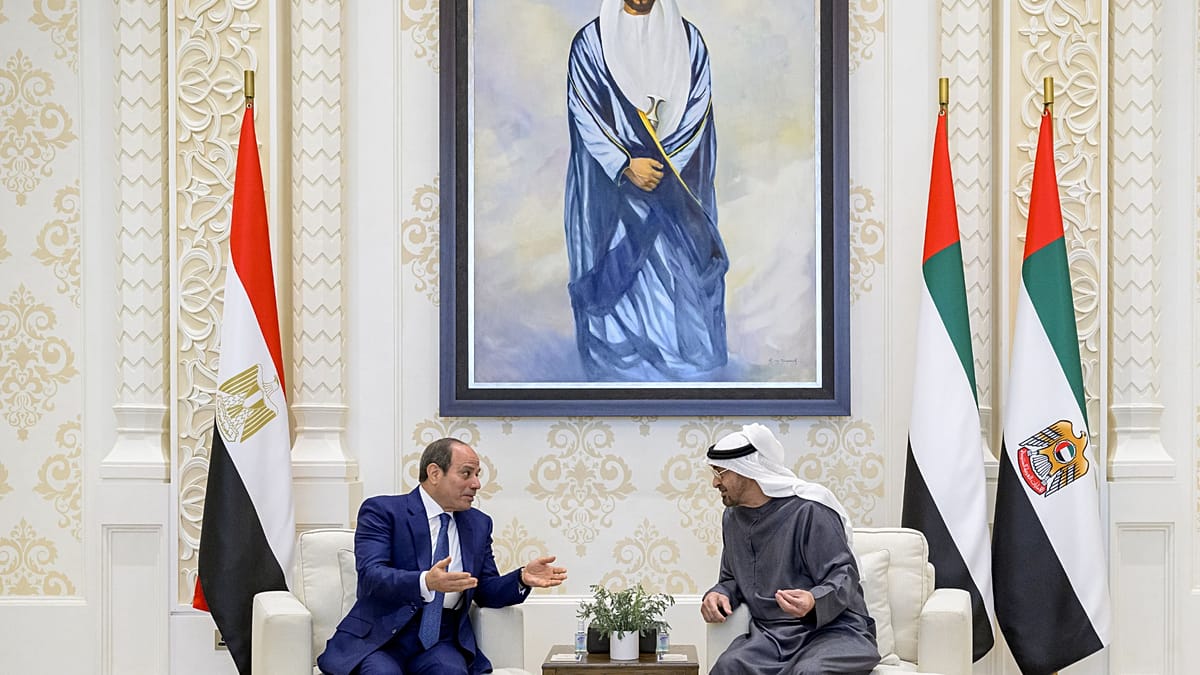
President Abdel Fattah el-Sisi’s visits to the United Arab Emirates and Qatar this week underlined Cairo’s effort to show solidarity with Gulf states under attack, while stressing that their security is part of Egypt’s own.
The outreach comes as tensions have become more dangerous, with attacks expanding to energy infrastructure and growing concern it could spill further across the region.
Cairo has condemned what it called “unacceptable and unjustified” Iranian strikes on Gulf countries, while maintaining contacts with regional and international actors in an effort to contain the situation.
Egypt has also maintained contact with Iran, including recent calls between Sisi and Iranian officials, as part of efforts to contain the escalation.
But despite this increased engagement, analysts say its role remains limited.
“Egypt is trying to signal relevance without overextending,” said H.A. Hellyer, a senior associate fellow at the Royal United Services Institute.
He said the Doha visit shows Cairo wants to coordinate with Gulf states rather than lead independently.
He described this as “tactical engagement”, adding that Egypt is staying present in regional diplomacy while avoiding commitments it cannot deliver.
Active, not leading
Egypt’s recent moves have focused on coordination rather than leadership.
Foreign Minister Badr Abdelatty has toured several Gulf capitals, carrying a message of solidarity and warning that the region is close to “exploding” if the conflict continues. At the same time, Cairo has stressed that it has not been asked to intervene militarily.
Instead, Egypt appears to be positioning itself as a diplomatic connector, maintaining channels with Gulf states, Western partners and, to a more limited extent, Iran.
But that does not amount to mediation.
“Egypt doesn’t have the leverage for meaningful mediation between Israel and Iran,” Hellyer said.
He added that Egypt’s role is limited to facilitating coordination among Arab states and relaying messages, describing it as “useful convening, not mediation”.
A careful balancing act
Cairo’s stance reflects a careful balancing act. On one hand, Egypt has aligned itself clearly with Gulf partners, reiterating support for their security and condemning attacks on their territory.
On the other, it has avoided direct confrontation with Iran, instead calling for a return to diplomacy and keeping communication channels open.
This reflects a broader regional approach, where states are trying to contain the crisis without being drawn directly into it.
“Gulf states will welcome Egyptian alignment as reinforcement of the broader Arab hedging posture,” Hellyer said.
He added that the approach is based on staying engaged without taking major risks.
For Israel, Egypt’s role is likely to be seen as “procedural rather than substantive”, while Iran is unlikely to view Cairo as a credible interlocutor.
“Egypt is managing perceptions, not driving outcomes,” he said.