
Europe doesn’t have an innovation problem, but a scale problem, says the latest report from the International Energy Agency (IEA), noting how the continent excels at research and pilot projects, but consistently fails to convert technological breakthroughs into large-scale industrial deployment.
The hefty report was presented on Wednesday as energy ministers gather on the sidelines of the IEA’s ministerial meeting to take stock of the latest technological achievements in the energy sector.
Among the technologies assessed are the development of small modular reactors (SMRs), fusion energy, or carbon capture and storage – all set to play a role in the future of the European Union’s energy security and decarbonisation goals.
Europe’s real risk is not falling behind in ideas, the IEA said, but becoming a testing ground for technologies that are ultimately commercialised, produced, and monetised elsewhere. The warning aligns with the bloc’s current policymaking, which is heavily focused on boosting domestic industries to enhance global competitiveness.
Environmentalists argue that European policymakers’ current path amounts to a complete reversal of the bloc’s pledges to achieve climate neutrality by 2050. Meanwhile, the IEA’s report endorses innovative technologies that could help trap or avoid millions of tonnes of CO2 from the atmosphere.
In 2023, the Paris-based IEA estimated that about 35% of the CO2 reductions required by 2050 would depend on technologies not yet commercially available. Its latest report, however, puts that figure closer to one-quarter, reassuring energy policymakers.
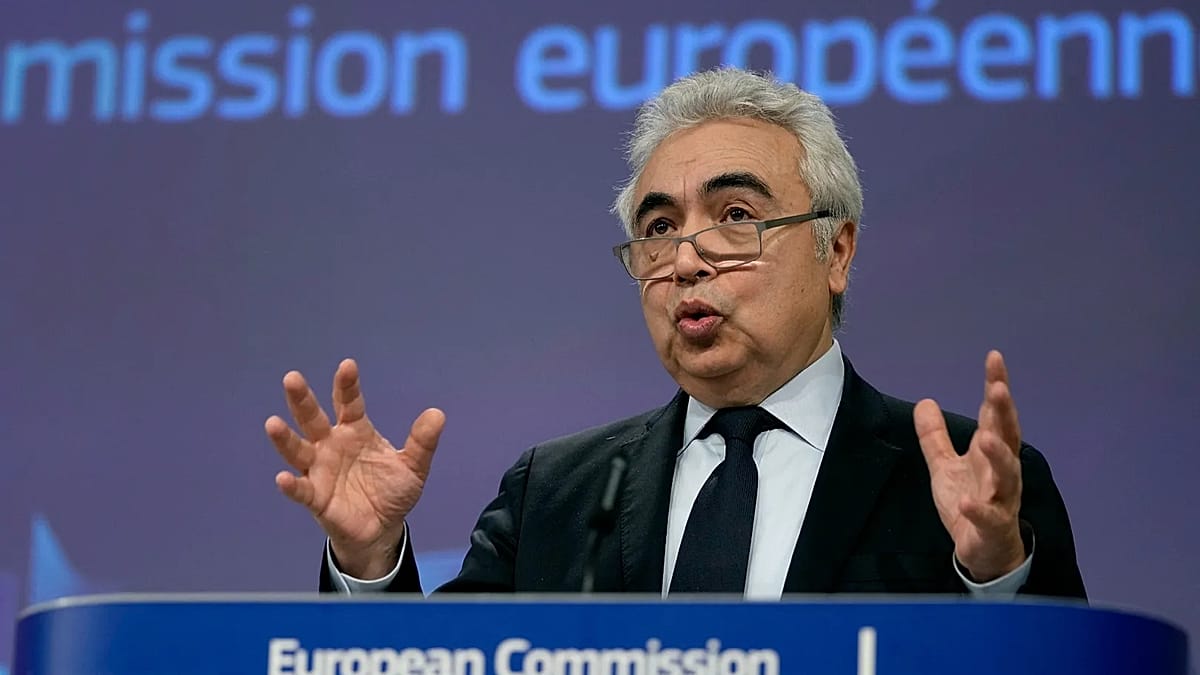
“Energy innovation has become a strategic priority for governments around the world,” said the IEA’s Executive Director, Fatih Birol. “With energy security and industrial competitiveness at the top of the agenda, countries that sustain investment in research, demonstration and early deployment will be best positioned to lead the next generation of energy technologies.”
The IEA identified more than 150 major innovative breakthroughs, ranging from air conditioning and perovskite solar cells to fusion energy, sodium-ion batteries, and next-generation geothermal systems.
More energy-technology patents
The IEA’s report emphasises that energy technologies have become strategic economic assets, with patents, domestic technological capabilities, and supply chains increasingly tied to national competitiveness.
In Europe, start-ups captured 25% of global energy venture capital in 2025, up from 15% five years earlier, according to the report, with the region accounting for over 40% of energy start-ups securing their first funding round.
By contrast, the United States accounted for nearly half of all energy venture capital in 2025, leading across a wide spectrum of technologies, while Japan remains strongly specialised in batteries and is also making advances in perovskite solar, hydrogen-based fuels, and fusion energy.
However, challenges remain as energy-technology patenting has declined across major European economies, and European start-ups generally achieve smaller funding rounds than their US counterparts.
But Europe continues to punch above its weight in innovation, the IEA’s report said, namely on fusion energy, underground hydrogen storage, industrial electrification, power grid stabilisation, CO2 storage, synthetic fuels, and methane detection.
Notably, 40% of the projects in the advanced stages of the IEA’s tracker of technology projects crucial for achieving energy security by 2030 are based in Europe, underlining the continent’s central role in next-generation energy technologies.
EU Competitiveness Fund to the rescue?
The report identifies the EU Competitiveness Fund, a €410 billion tool to boost industrial competitiveness, which will soon be scrutinised by the EU co-legislators, as a key response to Europe’s SME and start-up challenges.
The IEA said the Fund reflects a growing impetus to strengthen domestic technological capabilities and secure critical supply chains, alongside initiatives such as the US Genesis Mission.
“Aligning EU funding with innovation is key to turning public investment into real impact for companies. Innovations left on university shelves do not bring benefits until they reach the market,” said Cecilia Bonefeld-Dahl, director general of the industry body representing digital transformation in the EU27, Digital Europe.
European Commissioner for Energy and Housing Dan Jørgensen said in a statement that the clean energy transition is not a distant scenario but is happening now around the globe.
“Between 2019 and 2024 the expansion of wind and solar generation in the EU is estimated to have avoided around €59 billion in fossil fuel import costs,” said Jørgensen, explaining that the ultimate goal is not only to decarbonise but to strengthen the bloc’s energy security and achieve independence.
“For Europe, the clean energy transition is an industrial strategy. Renewables, electrification, and modern grids are not costs to manage but strategic assets that help us lower prices and protect our consumers from energy supply shocks,” he added.