
Hungary’s fierce election campaign is pitting Prime Minister Viktor Orbán’s party, Fidesz, against Péter Magyar’s centre-right Tisza party, which independent pollsters say has a strong chance of displacing one of Europe’s longest-serving and most controversial premiers.
In the run-up to the 12 April vote, Tisza is having to demonstrate its capacity to govern a country that had been dominated by Fidesz for the past 16 years.
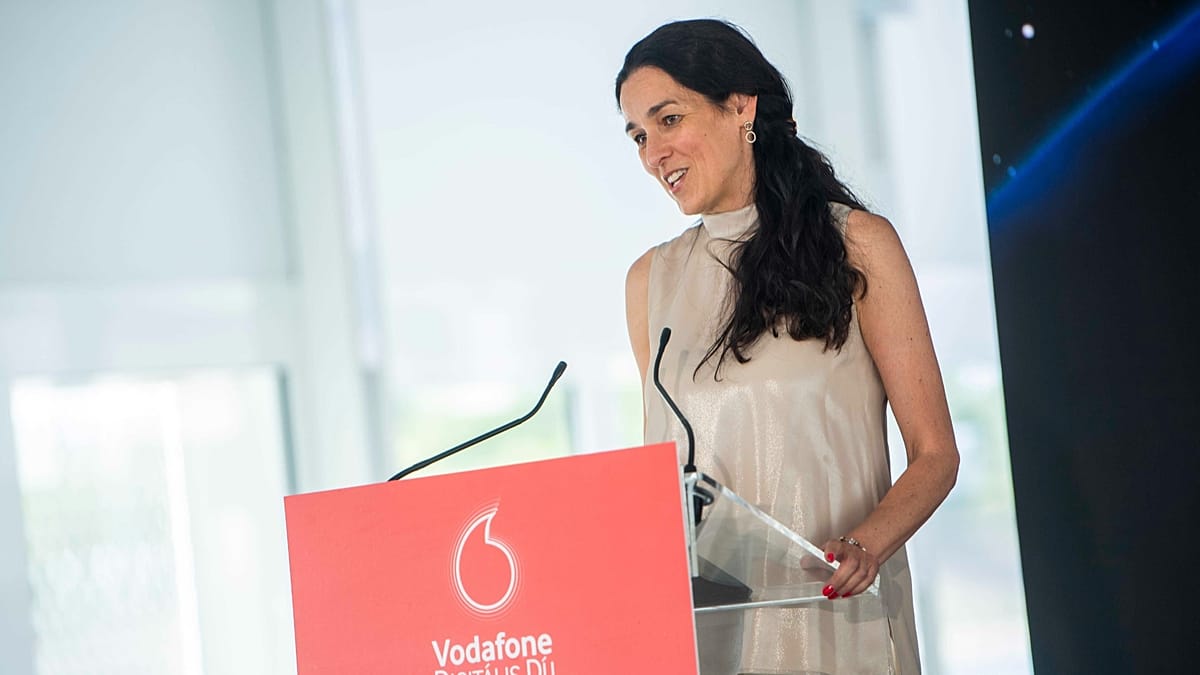
Tisza has addressed the issue by recruiting István Kapitány, a global director of Shell, as an energy and economic expert, and Anita Orbán (no relation to the prime minister), a top manager and energy expert who most recently worked for Vodafone as a global director responsible for public and government relations.
A self-made woman aged 52 coming from a small village in eastern Hungary, Anita Orbánhas an impressive track record of working as a top manager for multinational companies (Tellurian LNG and Cheniere, for instance), but she also has a history with Fidesz.
She was the editor of Heti Válasz, a weekly founded by business circles close to Fidesz during its opposition years. As an energy expert, she criticised Hungary’s previous socialist governments for their lack of clear foreign policy direction and limited efforts to move away from Russian energy dependence.
Having initially been selected as Fidesz’s candidate for a Budapest constituency in 2010, she withdrew from the contest due to unspecified health concerns. When Fidesz went on to win a landslide victory, she was appointed as the government’s Ambassador-at-Large for Energy Security, a role she kept until 2015.
Between 2010 and 2014, Hungary’s foreign policy was largely defined by János Martonyi, whose policy had a clear transatlantic orientation. Hungary’s shift towards its current, more nationalistic policy started after Fidesz won its second constitutional majority in 2014, when current Foreign Minister Péter Szijjártó took Martonyi’s place.
Anita Orbán left her government position soon after and concentrated on her international career, but all ties were not severed: in 2020, she applied for the position of NATO Assistant Secretary General, and the Fidesz-led government supported her candidacy throughout the entire process.
This included preparation provided by the Ministry of Foreign Affairs, led by Szijjártó, and being accompanied by the Hungarian NATO embassy to her final round of interviews.
The end of ‘inflated vetoes’
The Tisza Party’s proposes a decisive shift to anchor Hungary firmly within the Western alliance system, bringing an end to the current “swing policy”. She advocates for a non-confrontational style of diplomacy that prioritises Hungarian security and economic prosperity over “loudness contests”.
Instead of frequently deploying Hungary’s veto at the EU level, a tool that she says has been “inflated”, she would rely on alliances and negotiations.
“If you are not at the table, you are on the menu”, she said in her first appearance as Tisza’s foreign policy lead.
Central to her vision is the restoration of the alliance with Poland and the revitalisation of regional cooperation through the Visegrád Group to enhance Hungary’s influence within the EU. In terms of energy policy, she proposes ending unilateral dependence on Russian gas by diversifying supply through liquid natural gas and regional infrastructure projects.
Finally, she intends to transform the relationship with Russia into a transparent, sovereign-to-sovereign partnership, moving on from an era of what she calls “backdoor deals”.
She also promises meaningful support for the Hungarian minority living in neighbouring countries.
While the Orbán government has been outspoken in its defence of the Hungarian diaspora, but has also been known to support politicians in neighbouring countries who used anti-Hungarian sentiment to garner popularity, like Georghe Simion in Romania or Robert Fico in Slovakia.
Fidesz condemns ‘globalist elite’
Foreign Minister Péter Szijjártó has claimed to be personally acquainted with Anita Orbán, alleging that she has “peddled” her connections to the US Democratic Party and lobbied for major Western energy firms.
He asserted that she had attempted to persuade the government to stop purchasing “cheap Russian gas” and concluded that she is an “ideal choice for Brussels and Kyiv”.
Media outlets close to the Hungarian government frame her current role as a betrayal, suggesting she now serves the “globalist elite” and the “financial world” rather than Hungarian interests.
With the elections due on 12 April, independent pollsters state that Tisza party is leading by a significant margin, while government-related pollsters and think-tanks claim Fidesz is set to win.
Because the Hungarian election system created by Viktor Orbán strongly favours Fidesz – the OSCE has several times described it as “free but not fair” – even a 2-4% Tisza lead in the popular vote could result in a win for Fidesz, meaning the result is hard to predict.
Orban told his supporters during a rally last weekend that “if we work, we will win, if we don’t, we will lose”, pointing to mobilisation of voters as the key factor.