
Published on •Updated
The full rollout of the EU’s new Entry/Exit System (EES) is due to come into force on 10 April 2026.
But third-party nationals entering the Schengen Zone this summer may still go through manual passport stamping.
This is because the European Commission has allowed member states “certain flexibilities” that will help ease potential congestion during peak traffic periods, a spokesperson confirmed on Friday.
The new border controls launched in October 2025 and are gradually being implemented at the bloc’s airports and ports.
The scale-up of the biometric technology has already experienced teething problems, causing significant delays for air, ferry and Eurotunnel passengers.
Lisbon Airport suspends EES after excessive delays
At airports where the EES is operational, visa-exempt travellers from the UK, US and other non-EU countries must register their biometric data at dedicated kiosks.
Initially, the threshold for EU countries to register third-country arrivals was set at only 10 per cent. From 9 January, this increased to 35 per cent, with the system launching at dozens more airports and ports.
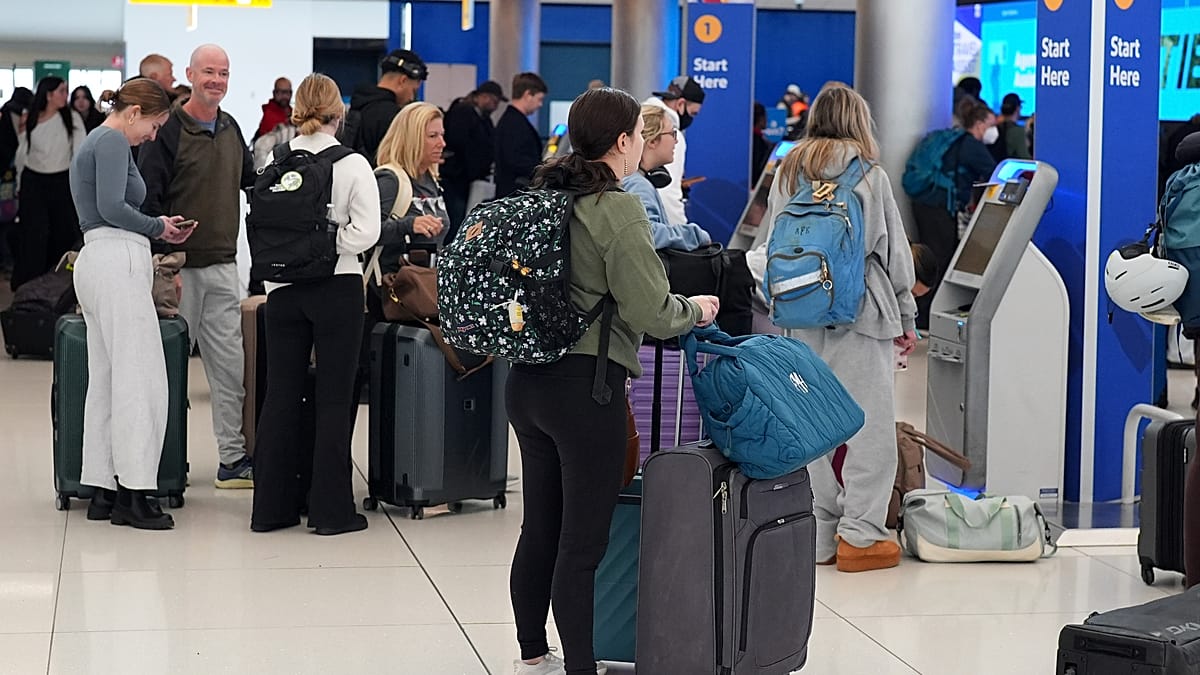
The new border checks are already causing headaches for passengers, who have reported long lines as people navigate the processing procedures for the first time.
In some cases, delays have resulted in passengers missing their flights.
A report published at the end of last year from Airport Council International (ACI) Europe found that the progressive rollout of the biometric system has resulted in border control processing times at airports increasing by up to 70 per cent, with waiting times of up to three hours in peak traffic periods.
In December, Lisbon Airport was forced to suspend the EES for three months after “serious deficiencies” at border control resulted in excessive waiting times, which reportedly reached seven hours.
Will EES lead to summer travel chaos?
As of 10 April 2026, member states are required to have EES technology implemented at all border crossings and to register all third-party nationals entering the country.
However, after this date, member states will still be able to partially suspend EES operations where necessary during an additional 90-day period with a possible 60-day extension to cover the summer peak.
“Rolling out such a large-scale system is a complex task,” European Commission spokesperson Markus Lammert said at a press briefing on 30 January.
“By extending the flexibility for the summer period, we give Member States the tools necessary to manage potential problems and, most importantly, avoid summer travel chaos.”
The decision means member states have greater flexibility to manage the transition to biometric data collection based on how their transport hubs are coping.
For travellers, this means you may still get your passport manually stamped at borders over the next few months.
The move comes after ACI Europe’s criticism of the “significant discomfort … being inflicted upon travellers”.
In December, Olivier Jankovec, Director General of ACI Europe, cautioned that the expanding rollout “will inevitably result in much more severe congestion and systemic disruption for airports and airlines”.
He warned that this could result in “serious safety hazards”.
In January, travel trade association ABTA urged greater use of contingency measures by EU border officials to facilitate the scale-up.
“We are urging border authorities to do all they can to minimise delays. They have contingency measures at their disposal – such as standing down the system or limiting checks – and we want them to be utilised to help manage the flow of people,” said Mark Tanzer, Chief Executive of ABTA.
“Where problems have been experienced so far, some of these could have been avoided if the contingency measures were applied.”
This article has been edited to reflect comments from the European Commission.