
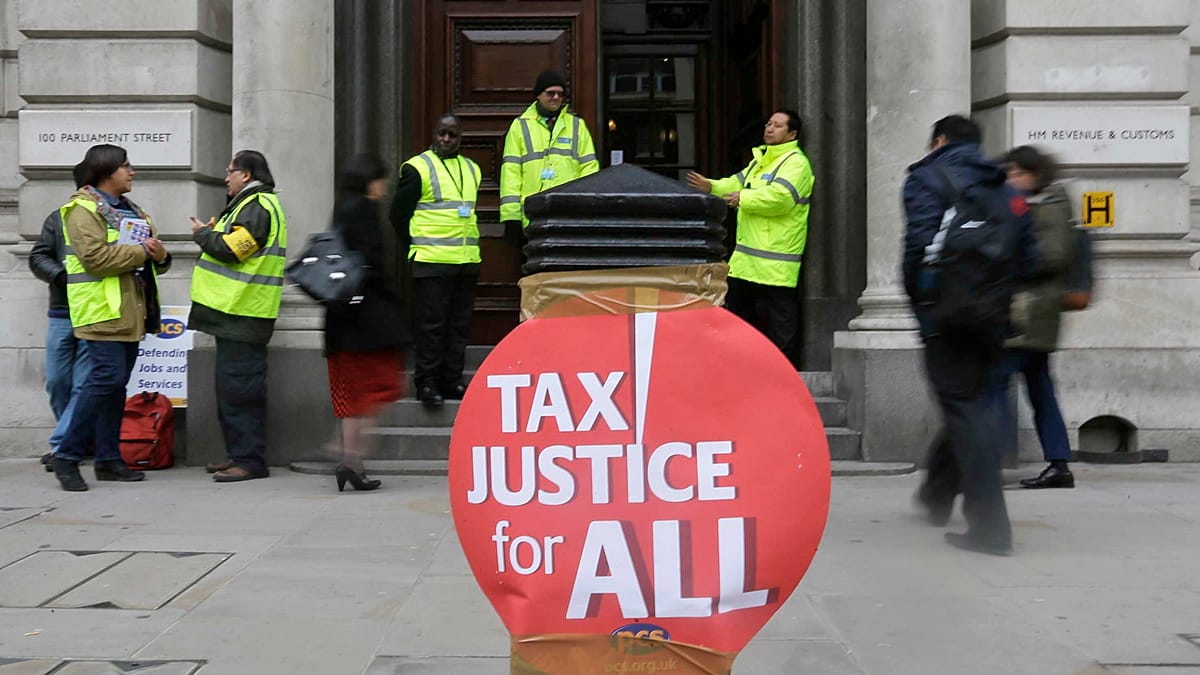
EU countries lose an estimated €59.3bn a year in tax revenue as multinational companies shift profits across borders, according to the Tax Justice Network. The organisation links about €8bn of these losses to the UK and its Overseas Territories and Crown Dependencies, equivalent to 13.6% of the EU total.
The UK and these jurisdictions also account for more than 30% of the global corporate tax abuse risk measured by the organisation’s Corporate Tax Haven Index.
Profit shifting can happen when companies record profits in lower-tax jurisdictions rather than where the underlying business activity takes place. This can involve payments between companies within the same group, such as interest or royalties, which reduce taxable profits in higher-tax countries.
The OECD says most such schemes are not illegal, although some are. It says these practices undermine the fairness of tax systems and cost governments an estimated $100bn to $240bn (€89bn to €214bn) a year, equivalent to 4% to 10% of global corporate income tax revenue.
Which EU countries lose the most tax revenue?
The Tax Justice Network published its analysis alongside the 5 November update to its Corporate Tax Haven Index. The country figures are for 2022 and cover losses linked to multinational companies rather than individuals.
France leads the list with an estimated loss of €13.1bn in 2022, the latest year for which data are available, followed by Germany at €11.8bn. Together, they account for €24.9bn, or 42% of the EU total.
The estimated annual tax loss exceeds €4bn in Spain (€4.8bn), Poland (€4.7bn) and Belgium (€4.1bn).
The loss is also more than €3bn in Italy (€3.6bn), the Netherlands (€3.5bn) and Luxembourg (€3.2bn).
It exceeds €1bn in Ireland (€2.2bn), Sweden (€1.6bn) and Austria (€1.1bn). The loss is below €1bn in all other EU countries.
Lithuania (€59mn), Malta (€61mn), Latvia (€68mn), Estonia (€73mn) and Croatia (€75mn) have the lowest estimated tax losses, all below €100mn.
How much of the EU’s tax loss is linked to UK tax havens?
The Tax Justice Network says this is the first time it has estimated how much each EU country loses through corporate profit shifting linked to the UK’s network of tax havens. It puts the combined loss at about €8bn.
France and Germany have the largest estimated losses linked to the UK network. In France, the network is linked to €2.8bn, or 21.3% of the country’s estimated losses from corporate profit shifting. That is the highest share in the EU. In Germany, the equivalent figures are €1.4bn and 11.9%.
The estimated losses linked to the UK network are €570mn for Luxembourg, €475mn for Spain, €438mn each for Poland and Italy, and €415mn for Belgium.
UK network linked to a third of global corporate tax abuse risk
The Corporate Tax Haven Index ranks jurisdictions by the risk that their tax rules and financial activity enable multinational corporations to reduce the tax they pay elsewhere. It combines an assessment of laws and regulations with the scale of foreign direct investment entering and leaving each jurisdiction.
Four British jurisdictions rank in the top 10 of the index. The British Virgin Islands, the Cayman Islands and Bermuda rank first, second and third, while Jersey ranks eighth. Two more British jurisdictions, Guernsey and the Isle of Man, rank in the top 20, with the UK in 19th place.
Together, the UK and these six jurisdictions account for 31% of the global corporate tax abuse risk identified by the index.
The index also includes Gibraltar, Anguilla, the Turks and Caicos Islands and Montserrat. Including these four British Overseas Territories brings the combined share to 33.3%.
The Crown Dependencies set their own tax rules, and tax policy in the British Overseas Territories is generally decided locally. The UK retains powers to intervene in the territories, although it rarely legislates on their domestic affairs.
Euronews Business contacted HM Treasury for comment on the findings.
The Tax Justice Network also ranks the UK among the countries with the largest losses from corporate profit shifting. It estimates that the UK itself loses £12.8bn (€14.7bn) a year as multinationals shift profits to tax havens around the world. This is an annual average for 2018 to 2022.
“The Corporate Tax Haven Index continues to demonstrate the UK’s oversized role in the landscape of global corporate tax abuse risk. The UK and EU stand to gain the most from the changes the UN tax convention aims to deliver, but they remain opposed to them,” Moran Harari, the Tax Justice Network’s index lead, said in the release.
“They continue to hold on to the discredited and unscientific fantasy of ‘tax competition’, but our findings today again confirm that this only leads to a race to the bottom with no winners.”
The organisation said that despite years of international efforts to tackle corporate tax abuse through the OECD, many countries still fail to require companies to disclose the basic information tax authorities need to detect it.
Global losses rise when wealthy individuals are included
When wealthy individuals are included, the estimated tax loss is much larger. The State of Tax Justice 2024 report puts global losses at €416bn ($492bn) a year. This covers both profit shifting by multinational corporations and tax evasion involving undeclared offshore wealth held by wealthy individuals. Companies account for about 71% of the total.