
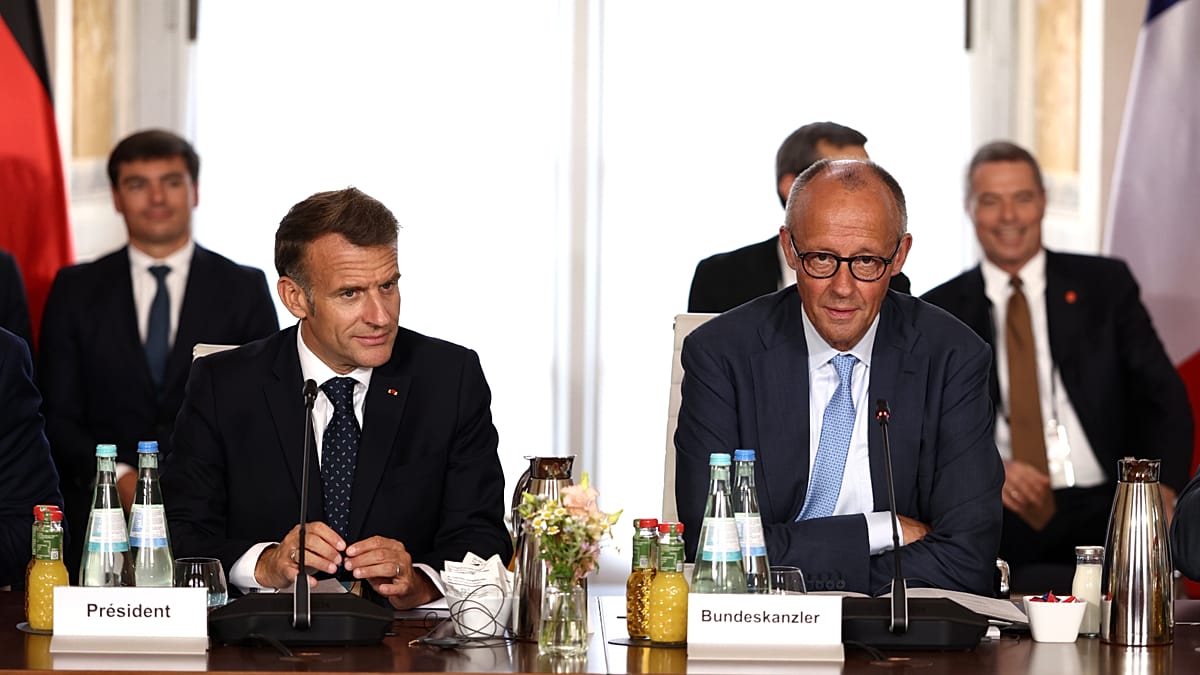
France and Germany struck a deal on Friday to soften the European Union’s effective ban on new combustion-engine cars from 2035 in exchange for tougher rules favouring European-made products.
Berlin has long opposed the 2035 rules, seeking to protect its automotive industry, while Paris has pushed for strict “Made in Europe” requirements to counter competition from Chinese manufacturers in the EU market.
The agreement was reached on the sidelines of a gathering of EU leaders in Brussels. It links a revision of the 2035 rules on new petrol and diesel cars to the debate over introducing a European preference in public procurement, proposed by the European Commission in March and championed by France.
The announcement comes as EU lawmakers review a European Commission proposal to amend the legislation that would effectively end sales of new petrol and diesel cars and vans from 2035.
“Our shared ambition is clear: to successfully transform our automotive industry while maintaining our climate ambition and ensuring that the cars of the future are produced in Europe,” the joint statement said.
Under the agreement, 70% of car components, excluding batteries, would have to be produced in Europe, while 10% of battery content would have to come from European sources.
“This creates a European preference to ensure that our factories do not become mere assembly plants,” an Élysée source said.
Carmakers would have to reduce their fleet-average CO2 emissions by 90% by 2035, without offsetting the remaining 10%, contrary to an initial proposal from the Commission.
A joint position to influence EU negotiations
The political compromise reflects shared concerns in Paris and Berlin that European carmakers are being squeezed by high production costs, the expensive transition to electric vehicles and growing competition from Chinese manufacturers.
However, the two countries have different priorities when it comes to addressing these challenges.
“France and Germany propose a comprehensive package that combines an ambitious European decarbonisation pathway with the regulatory flexibility needed to reflect different market realities and technological conditions. It also provides concrete incentives for investment, research and development, European production, and resilient supply chains,” the joint statement said.
Germany, home to major carmakers including Volkswagen, BMW and Mercedes-Benz, has called for greater technological flexibility to protect manufacturers seeking to continue selling some combustion-engine and hybrid models after 2035.
France, which has advocated strengthening Europe’s industrial base, has pushed for a strict European preference limited to the EU’s 27 member states.
“Made in Europe” rules have been central to the debate over the Commission’s Industrial Accelerator Act, proposed in March, which would introduce such a preference.
Germany, however, has advocated a broader approach that would include trusted non-EU countries.
Under Friday’s agreement, several non-EU countries with close ties to the bloc — Norway, Iceland, Switzerland and the UK — would be eligible to participate in the European preference, with products from these countries considered “Made in Europe” for the purposes of the rules.
These countries would have to sign agreements with the EU to ensure that European companies can compete for public contracts and access government funding in their markets on fair terms. They would also have to ensure that other countries cannot use them as a backdoor to circumvent the EU’s “Made in Europe” requirements.
The Franco-German deal establishes a joint national position, paving the way for other member states and EU lawmakers to decide whether to support it.
However, Merz could face resistance at home, as Germany’s Social Democratic environment minister has advocated a 95% emissions reduction target, with the remaining 5% offset through the use of low-carbon steel.
A potential rethink of car emissions rules
The EU’s original rules required new cars and vans to achieve a 100% reduction in fleet-average CO2 emissions from 2035, effectively ending sales of new conventional petrol and diesel vehicles.
Although the rules would not ban existing combustion-engine cars from the roads, they have faced sustained opposition from parts of the automotive industry.
In December 2025, the Commission proposed revising the rules in response to pressure from Germany, Italy and carmakers concerned about weak demand for electric vehicles and competition from China.
The proposal would replace the 100% emissions reduction requirement with a 90% target, leaving room for certain technologies and fuels under specified conditions. The change would not amount to an unrestricted return to conventional combustion engines.
“France and Germany are determined to build on this momentum and work swiftly with their European partners towards an agreement,” the statement said.
MEPs are due to vote on the Commission’s proposal in plenary in Strasbourg on 23 November.
The European Parliament and EU governments will then need to agree on how far to relax the bloc’s planned 2035 target for zero CO2 emissions from new cars, including whether to allow greater flexibility for combustion-engine and hybrid vehicles.