
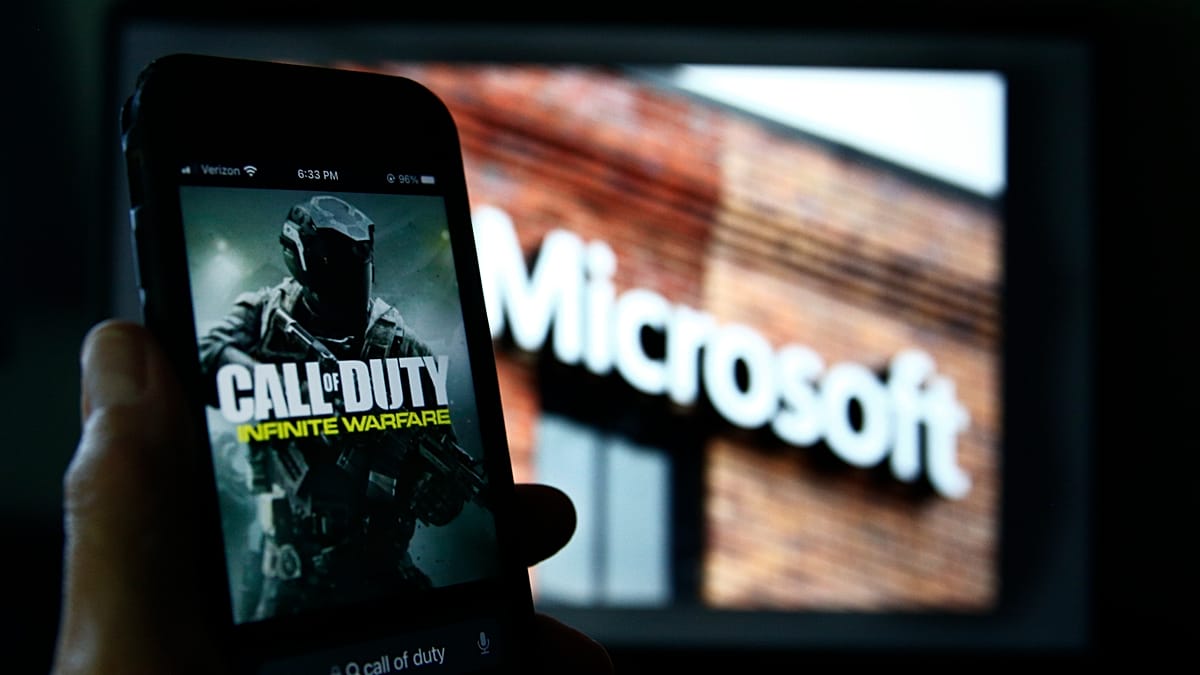
Italy’s antitrust authorities have launched an investigation into Microsoft-owned gaming company Activision Blizzard amid claims it has used predatory game monetisation such as “loot boxes” and pay-to-progress designs in its popular mobile games Diablo Immortal and Call of Duty Mobile to target and exploit children and other players.
Italy, supported by consumer protection authorities in Norway and Denmark, is first seeking to find if the games company’s practices constituted a “widespread infringement” of EU consumer protection rules following player and public backlash in recent years.
Activision Blizzard is one of Microsoft’s most well-known game publishers, known worldwide for genre-defining game series Call of Duty, Warcraft, StarCraft and Diablo, among others, and was bought by the big tech company in 2023 for $75.4 billion (€67.29bn)
Should the company be found in breach of the Italian Consumer Code it could face fines of up to 4% of its annual turnover in each of the affected countries, according to the European consumer law framework.
Italy’s investigation is part of a wider EU coordination launched at the end of September by the European Commission’s Consumer Protection Cooperation (CPC) Network, with actions set to launch across the EU with the aim of strengthening the protection of gamers’ rights targeting nine video games companies.
The CPC Network is coordinating action against Activision Blizzard UK Limited, Crytek GmbH, InnoGames GmbH, King.com Limited, Mojang AB, Plarium Europe S.à.r.l., PLR Worldwide Sales Limited, Riot Games Limited, Supercell Oy and Ubisoft EMEA SAS.
Italy’s investigation is the first step of this EU-wide approach.
Chief among the Italian authorities’ concerns is how the company’s practices have targeted children who are more at risk of gaming addiction and unable to understand or keep track of how much they are spending, especially as the company relies on virtual currencies paid for with real money to make purchases of in-game items, benefits and features.
Authorities highlighted the “lack of transparency and fairness in the use of virtual currencies” within the games, said the Authority in a statement.
The move is part of a wider drive at European and global level against tech companies over concerns their platforms’ and games’ designs negatively harm young people’s mental health, following a spate of suicides.
Just last month, the European Commission unveiled a proposal to protect children online known as the EU Kids Act, which aims to introduce a requirement for digital service providers to first prove that their platforms are “safe by design” and age-appropriate before children can use them.
The proposal specifically targets video games, including a ban on loot boxes — virtual mystery packages containing random items such as equipment and cosmetic gear — for children, as well as a requirement to clearly display real currency costs for in-game purchases and purchase alerts.
The proposal also aims to curb addictive behavior in children including banning “streak” mechanics that require players to login regularly or even daily as well as notifications encouraging children to resume or keep playing longer than they want.
The EU-wide action follows an open dialogue launched by the CPC Network with the video games industry last year, which the organisation diplomatically saying that it “did not bring satisfactory results,” especially in addressing monetisation and virtual currencies practices.
Parallel to these actions, the Commission is expected to present an EU Digital Fairness Act later this year, with measures including banning “dark patterns” (manipulative designs and false urgency), unfair personalization practices and subscription traps.
The CPC Network is also investigating Activision Blizzard UK Limited to see if they are complying with EU consumer law in their games.
“Roughly half of Europeans play video games… With that reach comes responsibility. The industry must ensure that its games do not expose players — especially children — to harmful or unfair practices,” said Michael McGrath the EU’s consumer protection commissioner.
“The game must be fair, and the rules must be respected. National authorities, with the support of the Commission, will make sure they are enforced,” he added.
Many gamers have also complained over the years over what they see as pay-to-win mechanics being employed more frequently by video game publishers.
These mechanics reward players who have spent more money in game, giving them an unfair advantage over players who have not despite them being more skilled.
This reduces the game to a battle of bank accounts rather than skill or merit. Games companies have often defended this decision by saying their games are free to play, and that paying is optional.
In a July 2022 interview with the Los Angeles Times, the former head of Blizzard Entertainment Mike Ybarra defended their gaming business model saying the company “gives a free Diablo experience to hundreds of millions of people, where they can literally do 99.5% of everything in the game”.
He also claimed the vast majority of players had not spent any money and that players could complete the game without paying.