
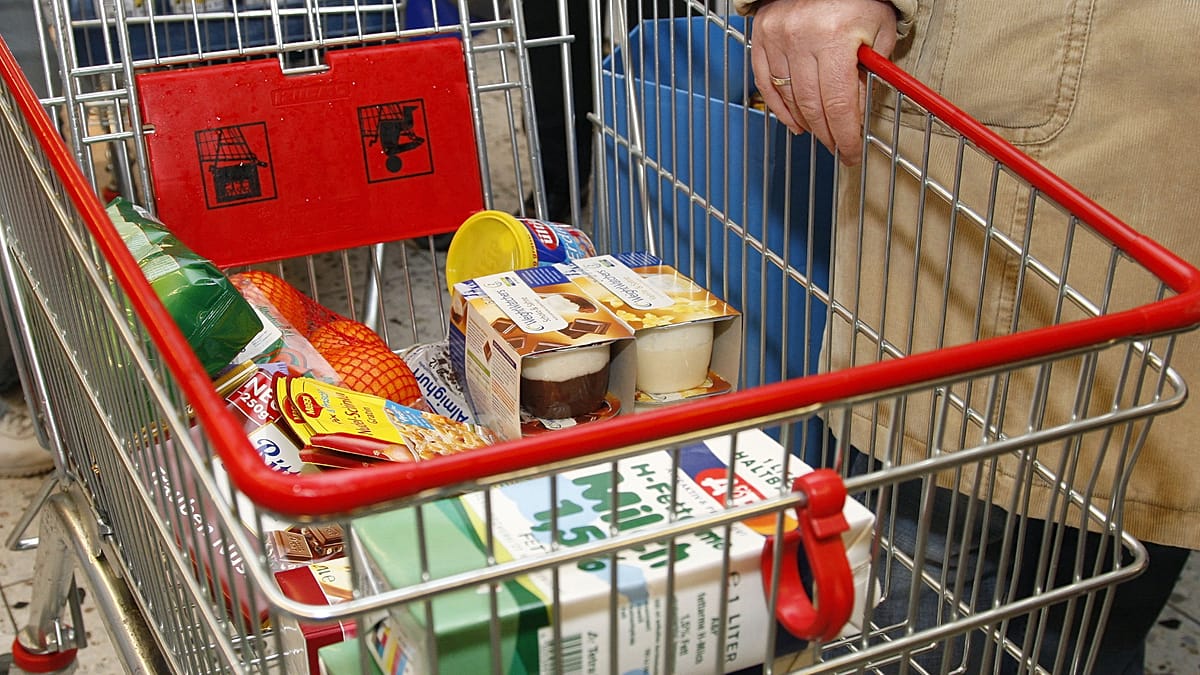
Inflation continues to climb on the back of rising energy prices due to the disruption cause by the Iran war. In Italy, just like in Spain, price increases are now at the highs of the recent years.
According to preliminary estimates released by Istat, in September the national consumer price index for the whole community (NIC) jumped by +0.7% month-on-month, with a year-on-year acceleration that pushes the annual rate to +4.2% (from +3.3% in August).
To find a higher level of inflation we have to go back three years, to September 2023, when the annual change reached 5.3%.
The “invisible monster”: a psychological and social tax
Economists often describe inflation as the “most unjust tax”, because it hits everyone and silently drains purchasing power. For Italy’s collective memory, the return of inflationary pressure recalls ghosts from the past that were never entirely laid to rest.
Those who lived through the 1970s and 1980s remember all too well what it meant to live with double-digit inflation, which even exceeded 20% at the height of the oil crises of 1974 and 1980, amid the race between wages and prices and the loss of value of a lifetime’s savings stashed away in post office passbooks.
Although today’s figures are still, fortunately, far from those dramatic peaks, the psychological impact on citizens follows the same pattern.
Every percentage increase, however limited it may look on paper, translates in human terms into forced choices: giving up a Saturday night meal out, postponing a small purchase for the home, or watching the display at the petrol pump with a touch of anxiety as the counter ticks up too fast.
The loss of peace of mind about the future is the highest price that inflation demands of households.
The energy surge and its impact on food prices
Returning to Istat’s survey, this latest spike in prices is driven almost entirely by the energy sector, which is experiencing a sharp flare-up: the overall increase in the cost of energy goods rises from +17.1% to +22.3%.
The acceleration affects both components of the sector as regulated energy jumped from +18.6% to +25.9% with a clear month-on-month increase of +5.9% in September alone), and unregulated energy: rises from +17.0% to +22.2% (+4.4% on a monthly basis).
Alongside energy, Italian households are also feeling the squeeze from unprocessed food products (such as fresh fruit and vegetables), whose annual growth rate quickens from +3.8% to +5.5% (+2.2% compared with August).
Recreational and cultural services (+2.9%) and transport-related services (+1.6%) are also rising at a faster pace, although the latter record a seasonal monthly decline (-2.5%).
Core inflation holds up and the goods-services gap widens
There is partial reassurance from so-called “core inflation”, calculated net of energy goods and fresh food: the index shows a modest increase from 1.5% to 1.7%, while the measure excluding only energy goods rises from 1.7% to 2.0%.
This confirms that the current inflationary tensions are, for now, mainly concentrated on energy commodities and fresh fruit and vegetables.
By contrast, the gap between the movement in goods prices and services prices is widening significantly with goods accelerating from +4.1% to +5.4%, services grow more moderately, moving from +2.4% to +2.6%.
The gap between the two sectors also widened to -2.8% from -1.7 in August).
Looking at the Harmonised Index of Consumer Prices (HICP), the monthly change stands at +2.0% (an effect linked to prices returning to normal after the end-of-season summer sales), taking the annual figure to +4.1%.
Prices fall at the pump but price lists remain a sticking point
On the mobility front, the Ministry for Business and Made in Italy (Mimit) notes that data from the Fuel Observatory show a slight easing in pump prices.
Road network (self-service) is averaging €2.111/l for petrol and €2.316/l for diesel, while motorway network (self-service) has an average of €2.138/l for petrol and €2.345/l for diesel.
However, Mimit points out a “significant gap” between the various retailers around the country: the introduction of a price cap by major operators such as Eni, IP and Q8 means that their stations are offering significantly lower prices, at €1.99/l for petrol and €2.19/l for diesel.
Confidence collapses
The hard economic data are immediately reflected in the public mood, with Istat recording a simultaneous and widespread decline in the climate of confidence: the consumer confidence index drops from 94.5 to 91.2 points, while the composite indicator for businesses falls from 97.0 to 95.9.
When the perception of inflation puts the brakes on consumption, a chain reaction is almost inevitable, leading families to postpone non-essential spending and companies to freeze new hires and investment.
The fear of bills and the rising cost of living is thus turning into a collective caution that points to an uncertain autumn, reminding us that the economy depends above all on the confidence people are able to place in tomorrow.